
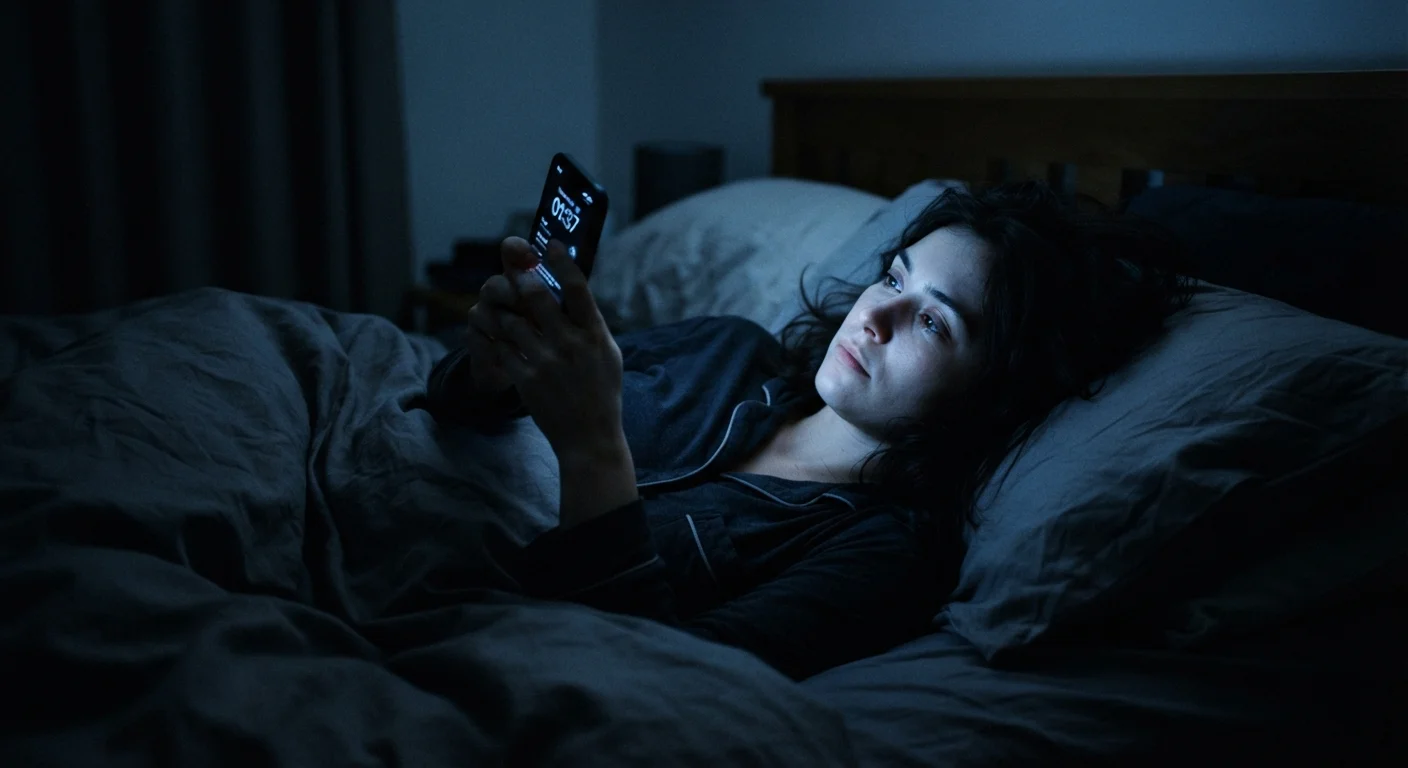
Why the Screen-Sleep Story Is More Complicated Than Headlines Suggest
For the past decade, evening screen use has been cast almost universally as the enemy of good sleep. The mechanism most often cited is blue light - a component of LED display emissions that can suppress melatonin production and signal to the brain that it's still daytime. The science behind this is real, but it's also regularly overstated.
Sleep is regulated by two primary systems: the circadian rhythm (your internal clock, sensitive to light) and sleep pressure (the accumulation of adenosine, a chemical that builds up the longer you stay awake). Screens can interfere with the first system through light, but they interact with the second system in subtler, often more significant ways - through the mental and emotional engagement of the content you consume.
Understanding both mechanisms is the first step toward making smarter, evidence-informed choices about your evening habits - rather than simply banning all devices after 8 p.m. and wondering why you're still lying awake. If racing thoughts are part of your experience, the neuroscience behind nighttime rumination is worth understanding too.
Myth
Blue light from screens is the primary reason phones and tablets disrupt sleep.
Fact
Blue light plays a role, but research increasingly points to mental and emotional stimulation from content as a more significant disruptor.
Blue light - the short-wavelength light emitted by LED screens - does suppress melatonin, the hormone that signals your body it's time to sleep. But the magnitude of this effect from typical consumer devices has been called into question. A 2019 study published in Sleep Medicine found that while blue light filtering reduced melatonin suppression, it had limited measurable impact on actual sleep onset time compared to the stimulating nature of the content itself. Scrolling emotionally engaging social media or watching suspenseful content activates the brain's arousal systems in ways that outlast any light-based effect.
Myth
Switching your phone to night mode or dark mode fully protects your sleep.
Fact
These settings reduce blue light output but don't address the cognitive and emotional arousal that comes from engaging screen content.
Night mode features - which shift display color toward warmer amber tones - are a useful partial measure, not a complete solution. The visual stimulus is reduced, but if you're reading stressful news, responding to work emails, or playing stimulating games, your nervous system remains activated regardless of screen color temperature. Sleep researchers generally note that what you're doing on a device matters at least as much as the light it emits. Dimming your screen's brightness is also effective and often overlooked as a simple, immediate step.
Myth
Any screen use within two hours of bedtime will ruin your sleep.
Fact
The relationship is more nuanced - calm, low-engagement screen activities may have minimal impact on sleep for many adults.
The blanket two-hour rule is a simplification. Reading a low-intensity e-book, watching a familiar, relaxing show, or using a guided meditation app are forms of screen use that tend to have far less impact on sleep architecture than high-stimulation activities. Context, content type, and individual sensitivity all factor in. That said, the closer to sleep onset, the more worthwhile it is to shift toward genuinely low-stimulation activities - screen-based or otherwise. For a broader framework, see our article on what sleep hygiene actually means.
Myth
Children and adults are affected by evening screens in the same way.
Fact
Children and adolescents show greater melatonin suppression from light exposure and are more vulnerable to sleep disruption from evening device use.
Developing brains are more sensitive to both light cues and the psychological stimulation of interactive media. Research published in pediatric sleep journals consistently finds stronger associations between evening screen use and delayed sleep onset in children and teenagers than in adults. Parents and caregivers should apply a more conservative approach for younger users - and consult a pediatrician for specific guidance. The general principles of a consistent wind-down routine remain broadly applicable across age groups.
Myth
Using a sleep-tracking app on your phone will help you sleep better.
Fact
Sleep tracking apps can raise awareness but may also create anxiety about sleep metrics, which can itself worsen sleep quality.
Consumer sleep tracking apps vary widely in accuracy, and excessive focus on sleep scores has been associated with a pattern some researchers call orthosomnia - anxiety driven by the pursuit of perfect sleep data. While tracking can surface general trends, treating nightly numbers as definitive can paradoxically increase sleep-related worry. Our article on the trade-offs of health tracking explores when monitoring genuinely helps and when it becomes counterproductive.
What the Evidence Actually Supports - and Practical Steps Worth Taking
The research landscape on screens and sleep is active and evolving, but some practical takeaways hold up well across studies. The most consistent finding is that timing, content type, and individual sensitivity matter more than a single universal rule.
90%
Adults who use a device before bed
A National Sleep Foundation poll found approximately 9 in 10 Americans reported using some form of electronic device in the hour before sleep at least a few nights per week.
~30 min
Average delay in melatonin onset from bright screen use
Research from Harvard Medical School estimates that exposure to bright light from screens in the evening can delay melatonin release by roughly 30 minutes, depending on intensity and duration.
1 in 3
U.S. adults not getting sufficient sleep
According to the CDC, more than one-third of American adults regularly sleep less than the recommended seven hours per night - a trend influenced by multiple behavioral and environmental factors.
Steps that tend to make a meaningful difference include: reducing screen brightness in the final hour before bed (not just enabling night mode), shifting toward passive or low-stimulation content in the evening, and building a consistent pre-sleep routine that doesn't end with a device in hand. How your mornings are structured also shapes your circadian rhythm - see what behavioral science says about morning habits for a complementary perspective.
Don't Overlook Underlying Sleep Disorders
Chronic poor sleep is not always caused by screen habits. Conditions such as insomnia disorder, sleep apnea, or restless legs syndrome require professional evaluation. If lifestyle adjustments don't improve sleep over several weeks, speak with a healthcare provider rather than self-diagnosing based on screen use alone.
There is no single threshold of screen time that applies to everyone. If your evenings involve calm reading on a tablet at low brightness, you may find minimal impact on your sleep. If they involve heated social media debates or work deadlines, the problem is less the device than the activity. Pay attention to your own patterns - that honest self-assessment is often more useful than any app score.
This article is for general informational and educational purposes only and does not constitute medical advice. Always consult a qualified healthcare professional for personal guidance on sleep or health concerns.