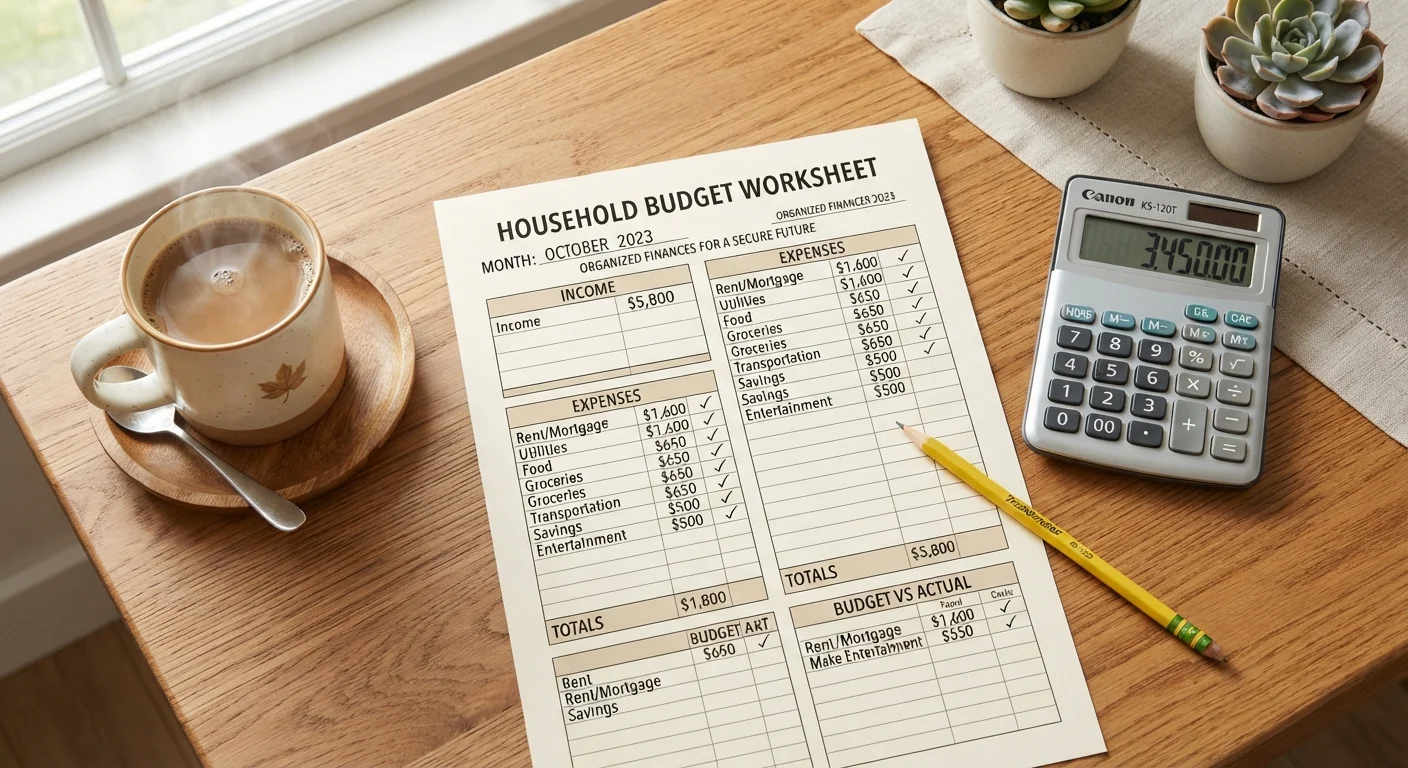

Why a Monthly Reset Matters
Most budgets fail not because the numbers are wrong but because they go stale. You set a spending plan once, life shifts, and by week three you're making decisions based on last month's assumptions. A monthly reset fixes that by giving you a deliberate, structured pause - a chance to close out what happened and intentionally plan what comes next.
This isn't the same as a deep-dive financial audit. Think of it as a cockpit check before takeoff: quick, systematic, and non-negotiable. If you want a fuller retrospective on where your money went, the Monthly Money Audit covers that ground. This checklist focuses specifically on getting your next month's plan built correctly before the calendar turns.
Run through this list during the last few days of the month. Thirty to sixty minutes of focused attention now prevents a month of reactive spending decisions later.
Bank or credit union account access
Pull actual transaction history to reconcile last month's spending against your budget.
Spreadsheet or budgeting app
Record income, fixed costs, and category allocations in a format you can reference throughout the month.
Calendar (digital or paper)
Identify upcoming irregular expenses - appointments, travel, deadlines - before the month begins.
Bill and subscription log
Maintain a running list of recurring charges and their amounts to catch price changes or unwanted renewals.
How to Use This Checklist
Work through each group in order. The sequence matters: you confirm what happened last month, verify your income for the coming month, lock in your fixed obligations, then allocate what remains. Skipping ahead - say, planning discretionary spending before you've confirmed fixed costs - leads to the budget gaps that frustrate most people.
If you share finances with a partner or household, run this reset together. Decisions made in the same room (or call) require less renegotiation mid-month. For a broader framework on building a budget from the ground up, see Household Budgeting from the Ground Up.
Budget to Your Actual Take-Home Pay
Always base your monthly budget on the money that actually lands in your bank account - after taxes, benefits deductions, and retirement contributions - not your gross salary. Budgeting to gross income is one of the most common reasons people come up short before the month ends. If your net pay varies, use the lowest paycheck from the past three months as your baseline.
Close Out Last Month
Confirm Next Month's Income
Lock In Fixed and Recurring Obligations
Plan for Irregular and One-Time Costs
Assign Savings and Debt Payments
Allocate Discretionary Spending
After the Checklist: Keeping It Current
A completed reset is a living document, not a filed receipt. Put the new budget somewhere you'll actually see it - a notes app, a spreadsheet, a whiteboard - and do a brief mid-month check to confirm you're tracking. If a large unexpected expense appears, adjust the remaining categories rather than abandoning the plan entirely.
Pay particular attention to subscriptions and recurring charges that renew quietly. The Auditing Your Monthly Bills checklist is a useful companion for that specific task. And if you notice that your emergency fund never quite gets funded, that's a signal worth acting on - what financial educators recommend for emergency savings may be more than you think.
Finally, use each reset as a data point. Over three to four months, patterns emerge: the categories you consistently overspend, the months with predictable cost spikes, the savings goals that keep getting deferred. That pattern recognition is where a monthly habit becomes real financial progress.
This article is for general informational and educational purposes only and does not constitute personalized financial advice. Consult a qualified financial professional for guidance specific to your situation.