The Core Idea: A Plan Before the Money Moves
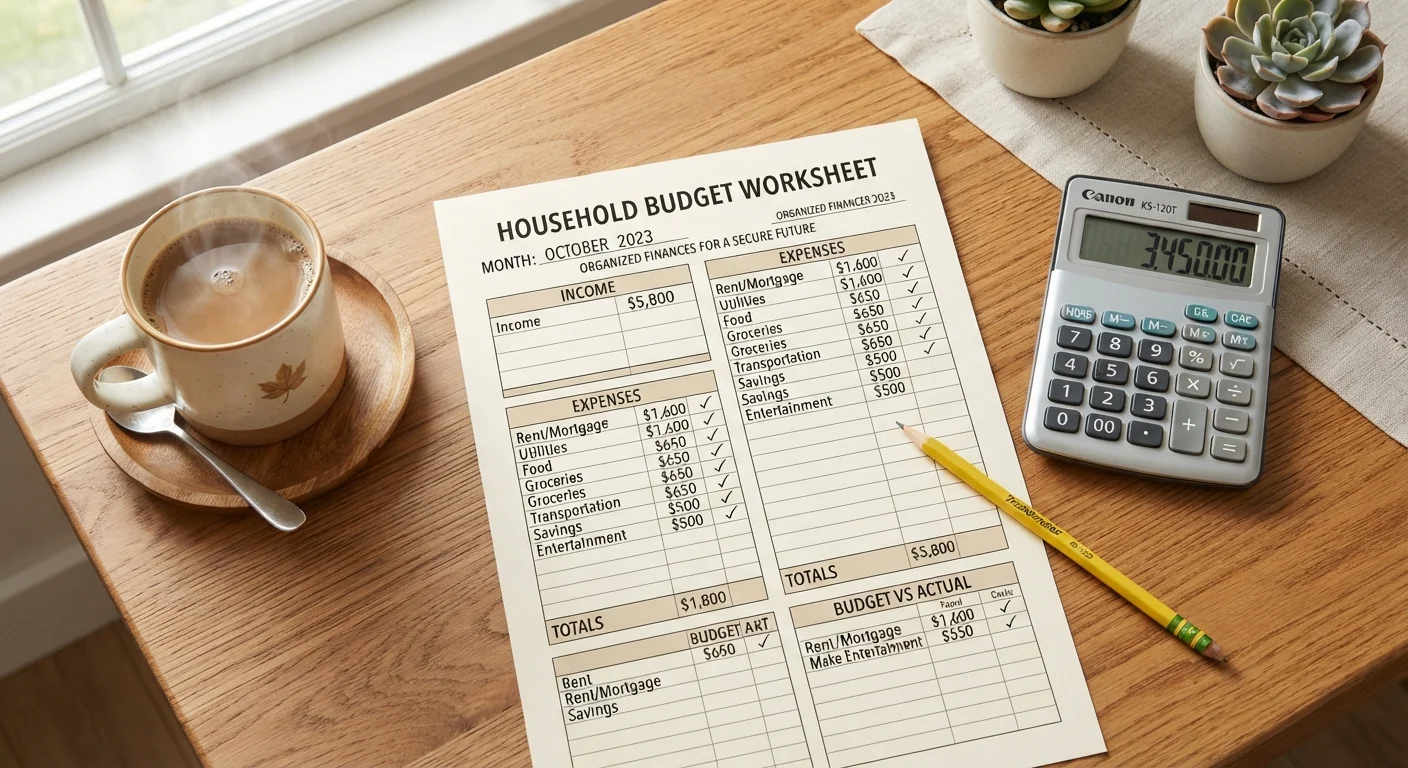
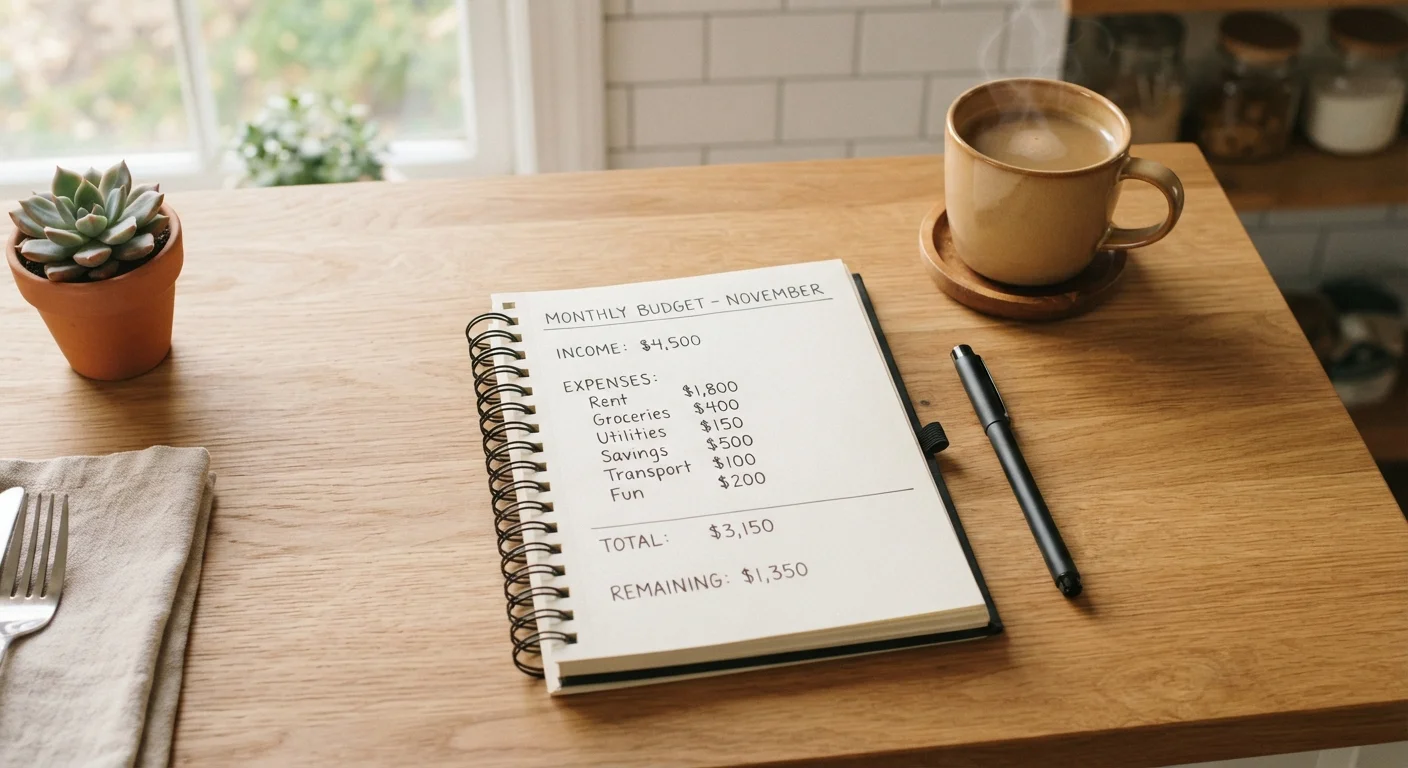
A household budget is simply a written plan that matches your expected income to your intended expenses for a given period - usually a month. It's made before you spend, not after. That timing is what separates a budget from a spending report.
Think of it this way: a budget is a decision. You're deciding that rent comes first, that the car payment is non-negotiable, that groceries get a defined amount, and that whatever is left can go toward savings or the things you enjoy. That decision - made deliberately, in advance - is what gives a budget its power.
For a deeper look at putting this into practice, see our complete household budgeting roadmap, which walks through income calculation, expense categories, and long-term adjustments.
Start With One Month of Real Numbers
Before building your first budget, gather one month of actual bank and credit card statements. This gives you a realistic baseline for what you're already spending - rather than guessing - so your planned categories reflect reality from day one.
What a Household Budget Is Not
Much of the resistance to budgeting comes from misunderstanding what it actually requires. A budget is not:
- A restriction on everything you enjoy. A well-built budget includes room for dining out, entertainment, and personal spending - it just makes those choices visible and intentional.
- A sign that you're in financial trouble. People at every income level use budgets. The tool is neutral; financial stress is not a prerequisite for using it.
- A set-it-and-forget-it document. Budgets are living plans that need regular updates as income and expenses shift.
- The same thing as tracking your spending. Tracking is retrospective; budgeting is prospective. Both matter, but they serve different purposes.
If you've been held back by assumptions about what budgeting demands, our article on common budgeting myths addresses the most persistent misconceptions head-on.
Budgeting and Expense Tracking Work Together
Many people confuse budgeting with tracking, or assume they're the same thing. Tracking tells you what happened; budgeting tells you what to do next. Used together, they create a feedback loop: your tracked data informs a more accurate budget, and your budget gives tracked data a benchmark to measure against.
What Goes Into a Household Budget
A complete budget has two sides: money in and money out.
Income includes every reliable source: wages, salaries, freelance pay, government benefits, child support, rental income, or any other regular inflow. If income varies month to month, many planners use a conservative baseline - the lowest amount they can reasonably expect.
Expenses fall into a few broad categories:
- Fixed expenses - amounts that don't change month to month, like rent or mortgage, loan payments, and insurance premiums.
- Variable necessities - costs that fluctuate but are unavoidable, like groceries, utilities, and gas.
- Discretionary spending - money you choose to spend on non-essentials: subscriptions, dining out, hobbies, gifts.
- Savings and financial goals - money set aside for emergencies, retirement, or specific targets. Many budgeting frameworks treat this as an expense to be assigned before discretionary spending.
For guidance on managing specific spending categories, the Spending by Category hub offers targeted strategies across major household line items.
~33%
Americans who maintain a detailed household budget
A Gallup survey found that roughly one-third of U.S. adults report keeping a detailed written or tracked budget, suggesting the majority of households operate without a formal plan.
$6,081
Average monthly household spending in the U.S.
According to the U.S. Bureau of Labor Statistics Consumer Expenditure Survey, the average American consumer unit spends approximately $72,967 annually, underscoring the scale of what a budget is meant to organize.
Why the Framing Matters
The language surrounding budgets shapes how people feel about them. Describing a budget as a "restriction" or a "diet" loads it with negative connotations before a person ever tries it. Evidence from behavioral finance research consistently suggests that people who view budgeting as a tool for autonomy - rather than deprivation - are more likely to maintain the habit.
A budget doesn't tell you what you can't have. It tells you what you've already decided to do with your money, which is a meaningful distinction. If you've allocated $150 to dining out this month and you spend it thoughtfully, that's not restraint - that's a choice you made on your own terms.
“A budget is telling your money where to go instead of wondering where it went.”
— John C. Maxwell, Author and leadership speaker, widely quoted on personal development and financial habits
For more on reframing this mindset, see our article on why budgeting isn't about deprivation - and how a spending plan can actually expand your sense of financial freedom.
If you're looking for practical day-to-day strategies that align with a budget, the Everyday Budgeting hub covers how to manage daily expenses without constant second-guessing.
This article is for general informational purposes only and does not constitute personalized financial advice. Consider consulting a licensed financial professional for guidance tailored to your specific circumstances.