
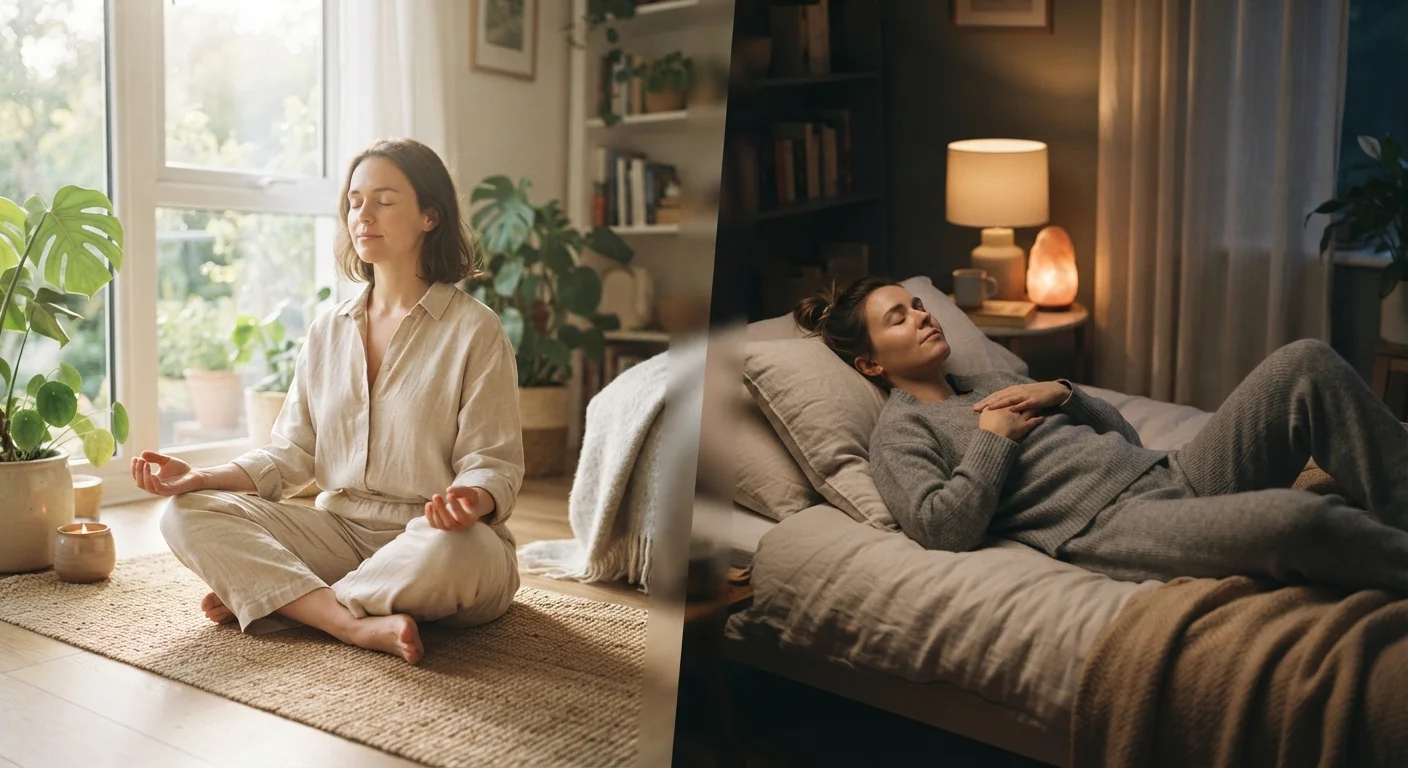
What Each Approach Actually Involves
Mindfulness meditation is a practice of deliberately directing attention to present-moment experience - breath, bodily sensations, sounds - without judging or trying to change what arises. It originated in Buddhist contemplative traditions and has been adapted extensively in secular clinical settings, most notably through Mindfulness-Based Stress Reduction (MBSR). The goal is not to empty the mind but to cultivate a stable, non-reactive awareness. Over time, practitioners typically aim to carry that awareness into everyday life.
Relaxation techniques is a broader category that includes methods like diaphragmatic (deep) breathing, progressive muscle relaxation (PMR), guided imagery, and autogenic training. These approaches primarily target the body's physiological stress response - the autonomic nervous system - with the aim of activating the parasympathetic (rest-and-digest) state. Most require little prior training and can produce noticeable physical calm relatively quickly.
Understanding why deep breathing works physiologically can help clarify what relaxation techniques are actually doing in the body.
| Criterion | Mindfulness Meditation | Relaxation Techniques |
|---|---|---|
| Primary mechanism | Attention and awareness training | Physiological arousal reduction |
| Learning curve | Moderate to steep initially | Low - usable almost immediately |
| Time to benefit | Weeks to months of practice | Minutes to hours for acute relief |
| Session length | Typically 15-45 minutes | Flexible - can be 2-15 minutes |
| Best evidence for | Stress, anxiety, emotional regulation | Acute stress, tension, sleep onset |
| Addresses thinking patterns | Yes - core focus | Indirectly through body calming |
| Portability | High with experience | High - usable almost anywhere |
How the Research Compares
Both approaches carry meaningful scientific support, though the nature of that evidence differs. Mindfulness meditation has been studied extensively in clinical populations. Research published across peer-reviewed journals - including work on MBSR - suggests consistent associations with reductions in perceived stress, anxiety symptoms, and improvements in emotional regulation. Effects tend to be moderate rather than dramatic, and they generally grow with sustained practice over weeks or months.
Relaxation techniques have a longer track record in mainstream medicine. Progressive muscle relaxation, developed by Edmund Jacobson in the early 20th century, and diaphragmatic breathing have been studied for decades in the context of anxiety management, hypertension, and sleep difficulties. The evidence supports their effectiveness for acute stress relief and as adjuncts to broader treatment plans.
~43%
Reduction in psychological distress
A meta-analysis in JAMA Internal Medicine found mindfulness meditation programs produced a moderate reduction in anxiety, depression, and stress compared to control conditions.
5-10 min
Time for breathing to shift nervous system
Research on slow-paced breathing (around 6 breaths per minute) suggests measurable increases in heart rate variability - a parasympathetic indicator - within a single brief session.
8 weeks
Standard MBSR program duration
The Mindfulness-Based Stress Reduction program developed at the University of Massachusetts runs for eight weeks and is one of the most studied structured mindfulness interventions.
It's worth noting that several popular beliefs about stress management don't hold up well under scrutiny - for both approaches, modest, consistent practice tends to outperform dramatic but unsustained effort.
Stress also has real physical consequences over time. For a broader picture, see our overview of how chronic stress affects the body.
Practical Differences That Shape Your Choice
One of the most meaningful practical differences is the learning curve. A basic relaxation technique - such as slow belly breathing for five minutes - can be practiced with minimal instruction and yields results quickly. Mindfulness meditation, by contrast, tends to feel frustrating or elusive at first; many beginners report difficulty staying focused and question whether they are doing it correctly.
Time commitment is another factor. Many relaxation techniques can be used in short bursts throughout the day. Mindfulness programs like MBSR typically involve 20-45 minutes of daily practice for eight weeks, though shorter informal practices exist. Neither approach requires special equipment or cost, which levels the playing field.
The psychological target also differs. Relaxation techniques work primarily on the body's arousal level. Mindfulness works more directly on the relationship between thought, emotion, and attention. If your stress tends to live in the body - tight shoulders, shallow breathing, racing heart - relaxation techniques may be a natural fit. If it manifests as persistent worried thinking or emotional reactivity, mindfulness may address the root more directly.
Stress management is rarely a single-practice endeavor. A range of everyday behaviors also support mental well-being beyond either of these approaches.
This article is for general informational and educational purposes only and is not a substitute for professional medical or mental health advice. If stress, anxiety, or related symptoms are significantly affecting your life, please consult a qualified healthcare provider.