
Why Fat Became the Dietary Villain - and Why That Story Was Incomplete
For decades, dietary fat was cast as the primary cause of heart disease and obesity. The low-fat movement of the 1980s and 1990s produced shelves of fat-free products that replaced fat with sugar and refined starches. Rates of obesity continued to rise. The science, it turned out, was far more nuanced than a single-nutrient narrative could capture.
Research in subsequent years revealed that fat type, not fat itself, was the critical variable. The blanket demonisation of fat obscured meaningful differences between food sources - lumping olive oil in the same category as partially hydrogenated shortening. Understanding those differences is now central to evidence-informed nutrition. This connects to a broader pattern of nutrition misconceptions explored in our overview of persistent nutrition myths.
~60%
Fat content of the human brain by dry weight
Fatty acids, including DHA (an omega-3), make up a substantial share of brain tissue and are critical to neurological function throughout life.
9 kcal/g
Energy provided per gram of dietary fat
Fat provides more than twice the calories per gram of carbohydrates or protein (each at 4 kcal/g), making it the body's most energy-dense macronutrient.
4
Fat-soluble vitamins requiring dietary fat for absorption
Vitamins A, D, E, and K all require fat to be properly absorbed in the digestive tract, underscoring fat's role beyond energy provision.
The Essential Roles Fat Plays in the Body
Fat is not optional. Every cell membrane in the human body contains phospholipids - fat molecules - that regulate what enters and exits cells. The brain is roughly 60% fat by dry weight, and myelin, the sheath protecting nerve fibres, depends on fatty acids to function properly.
Fat also acts as a carrier for vitamins A, D, E, and K. These fat-soluble vitamins cannot be absorbed without dietary fat present. A meal of leafy greens eaten with a small amount of olive oil, for instance, delivers significantly more vitamin K than the same greens eaten plain.
Beyond absorption, fat provides a concentrated energy reserve, cushions vital organs, and supports hormone production, including reproductive and stress hormones. Severely restricting fat can disrupt these systems - a reality particularly important for understanding how food processing changes nutritional profiles.
Choose Whole Food Fat Sources When Possible
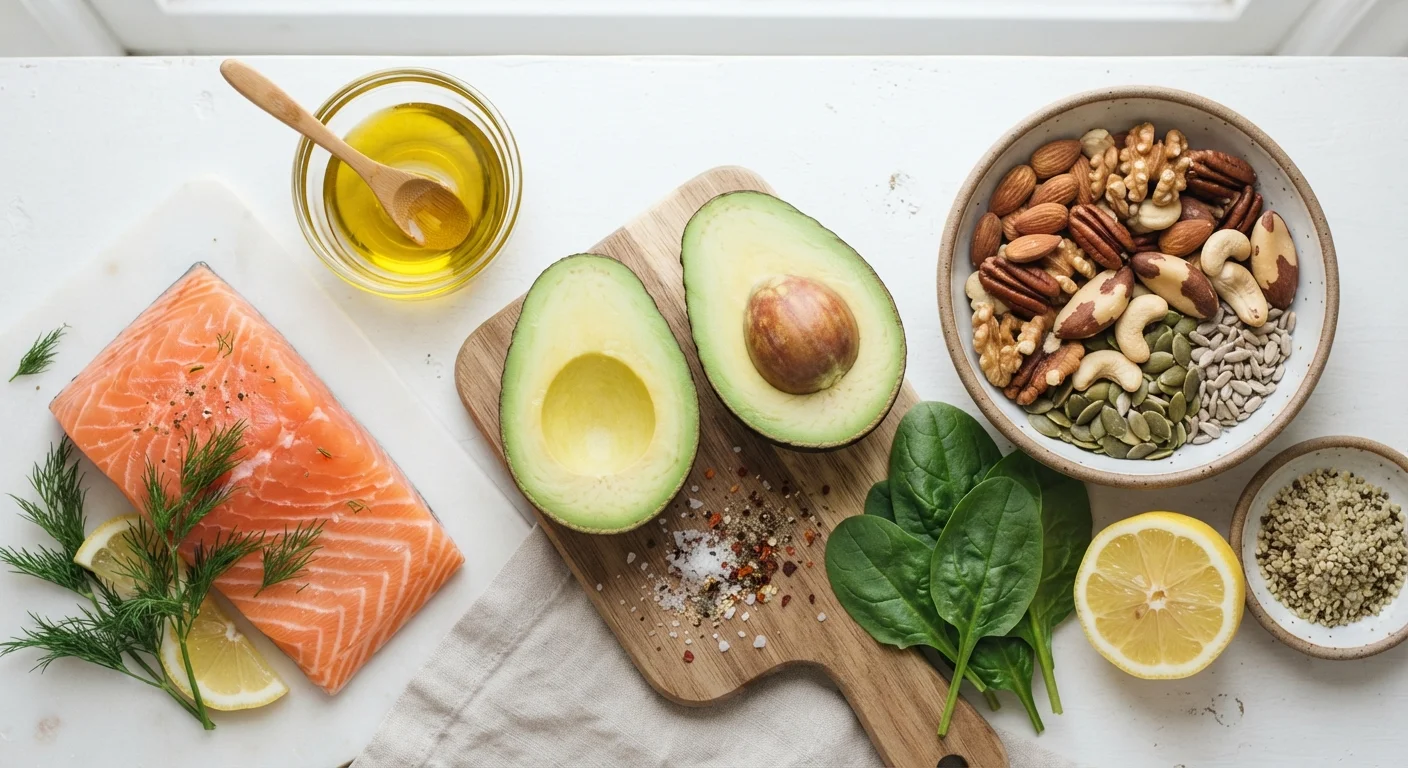
Nuts, seeds, avocados, and fatty fish deliver fat alongside fibre, protein, vitamins, and minerals - a nutritional package that refined oils and processed snacks rarely replicate. Prioritising whole food sources of fat tends to support overall diet quality rather than focusing on grams of fat alone.
Saturated, Unsaturated, and Trans Fats Explained
The three main categories of dietary fat differ in chemical structure and in how they interact with cardiovascular health markers.
Saturated Fats
Found primarily in animal products - beef, pork, butter, full-fat dairy - as well as coconut and palm oils, saturated fats are solid at room temperature. Research has linked high saturated fat intake to elevated LDL (low-density lipoprotein) cholesterol, a risk factor for cardiovascular disease. Current nutritional guidance from bodies such as the American Heart Association generally recommends moderation, though this area continues to evolve in scientific literature.
Unsaturated Fats
Unsaturated fats divide into two groups. Monounsaturated fats - found in olive oil, avocados, and many nuts - are associated with improved cholesterol profiles when they replace saturated fats in the diet. Polyunsaturated fats include omega-3 and omega-6 fatty acids. Omega-3s, concentrated in fatty fish, flaxseeds, and walnuts, have been extensively studied for their role in reducing inflammation and supporting heart and brain health.
Trans Fats
Industrially produced trans fats - created by partially hydrogenating liquid vegetable oils - were used widely in processed foods for their stability and shelf life. Evidence linking them to raised LDL cholesterol and lowered HDL (high-density lipoprotein) cholesterol led the FDA to determine that partially hydrogenated oils were no longer generally recognised as safe. By 2020, they had been largely phased out of the US food supply. Naturally occurring trans fats in small amounts are present in ruminant animal products and appear to behave differently in the body.
Putting Fat in a Practical Context
Dietary fat does not exist in isolation - it is one component of an overall eating pattern. Research consistently shows that diet quality and food variety matter more than targeting or avoiding any single macronutrient. A dietary approach rich in whole plant foods, fish, and minimally processed ingredients tends to provide fat in proportions that support health, without requiring precise calculation.
Practical habits worth considering include cooking with oils higher in unsaturated fats, choosing whole food fat sources like nuts and avocados as snacks, and reading ingredient labels to identify partially hydrogenated oils if they remain in older packaged products.
Anyone managing a specific condition - including cardiovascular disease, diabetes, or lipid disorders - should work with a qualified healthcare provider or registered dietitian for guidance tailored to their situation. General nutrition principles are a starting point, not a substitute for individualised care.
This article is for general informational and educational purposes only and is not a substitute for professional medical or nutritional advice. Always consult a qualified healthcare provider before making significant changes to your diet, especially if you have an existing health condition.
Fat Recommendations Vary by Individual
General nutrition guidance provides population-level direction, but individual needs differ based on age, activity level, health status, and metabolic factors. People managing conditions such as high cholesterol, heart disease, or pancreatitis should follow the specific guidance of their healthcare team rather than applying general dietary principles directly.