
Why Most Americans Are Running Low on Fiber
Dietary fiber is one of the most consistently under-consumed nutrients in the American diet, yet it rarely gets the same attention as protein, vitamins, or omega-3 fatty acids. The shift toward heavily processed foods over the past several decades has steadily stripped fiber from what most people eat daily.
The gap matters. Diets built around refined grains, convenience foods, and limited vegetables tend to crowd out the whole plant foods where fiber is naturally concentrated. Understanding what fiber actually does - and where to reliably find it - is a practical starting point for anyone looking to make their diet work harder without overhauling it entirely.
If you're curious about other commonly misunderstood nutrition fundamentals, Nutrition Myths That Refuse to Die takes a look at popular beliefs that don't hold up to scrutiny.
~5%
Americans meeting fiber recommendations
Research published in the American Journal of Lifestyle Medicine estimates that only about 5% of Americans meet recommended daily fiber intakes.
10-15g
Average daily fiber intake in the US
National dietary surveys consistently show average American fiber consumption falls well below the 25-38g targets outlined by the Academy of Nutrition and Dietetics.
38g
Recommended daily fiber for adult men
The Dietary Guidelines for Americans identify adequate fiber intake as 38 grams per day for men and 25 grams for women under age 50.
Soluble vs. Insoluble Fiber: Two Types, Two Jobs
Not all fiber works the same way in the body. The two primary categories - soluble and insoluble - have distinct physical properties and serve different roles.
Soluble fiber dissolves in water to form a gel-like substance in the digestive tract. This slows the movement of food through the stomach and small intestine, which can moderate how quickly glucose enters the bloodstream after a meal. It also binds to certain substances, including bile acids, which plays a role in cholesterol metabolism. Common sources include oats, barley, apples, citrus fruits, carrots, and legumes.
Insoluble fiber does not dissolve in water. Instead, it adds bulk to stool and speeds up the passage of food through the intestines, supporting regularity. Whole wheat, bran, nuts, and most vegetables are strong sources. Both types are important, and most plant foods contain a mixture of the two - though in different ratios.
Getting Both Types Without Overthinking It
You don't need to track soluble versus insoluble fiber separately. Eating a varied mix of whole grains, fruits, vegetables, and legumes naturally provides a balance of both. Aiming for variety across plant food groups is a more sustainable approach than parsing fiber types at every meal.
Fiber's Role Beyond the Digestive System
Fiber's reputation as a digestion aid is well-earned, but it's only part of the picture. Research over several decades has linked higher fiber intake to a range of health indicators that go beyond gut function.
One area of active research is the gut microbiome. Certain fibers - particularly fermentable types - serve as fuel for beneficial bacteria in the colon. When these bacteria ferment fiber, they produce short-chain fatty acids, which appear to play roles in supporting the gut lining, influencing immune responses, and possibly even affecting mood and cognition through the gut-brain axis. This remains an evolving area of science, and findings are not yet fully settled.
Cardiovascular health is another domain where fiber consistently appears in the research. Soluble fiber, in particular, has been associated with modest reductions in LDL cholesterol levels in clinical studies. Blood sugar response is also relevant - the slowing effect of soluble fiber on digestion can soften post-meal glucose spikes, which is meaningful for general metabolic health.
Fiber Research Is Still Evolving
While many associations between fiber intake and health outcomes are well-documented, some areas - such as the microbiome and the gut-brain connection - involve emerging science where findings are promising but not yet fully established. Claims in these spaces should be interpreted with appropriate caution, and individual responses to dietary changes can vary significantly.
The connection between fiber and satiety is also worth noting. High-fiber foods generally take longer to eat and digest, which can support a more natural sense of fullness without deliberate calorie counting.
Practical Ways to Bring More Fiber Into Your Day
Boosting fiber intake doesn't require a dramatic diet overhaul. The most effective approach is gradually swapping refined options for whole-food alternatives and adding variety across different plant food groups.
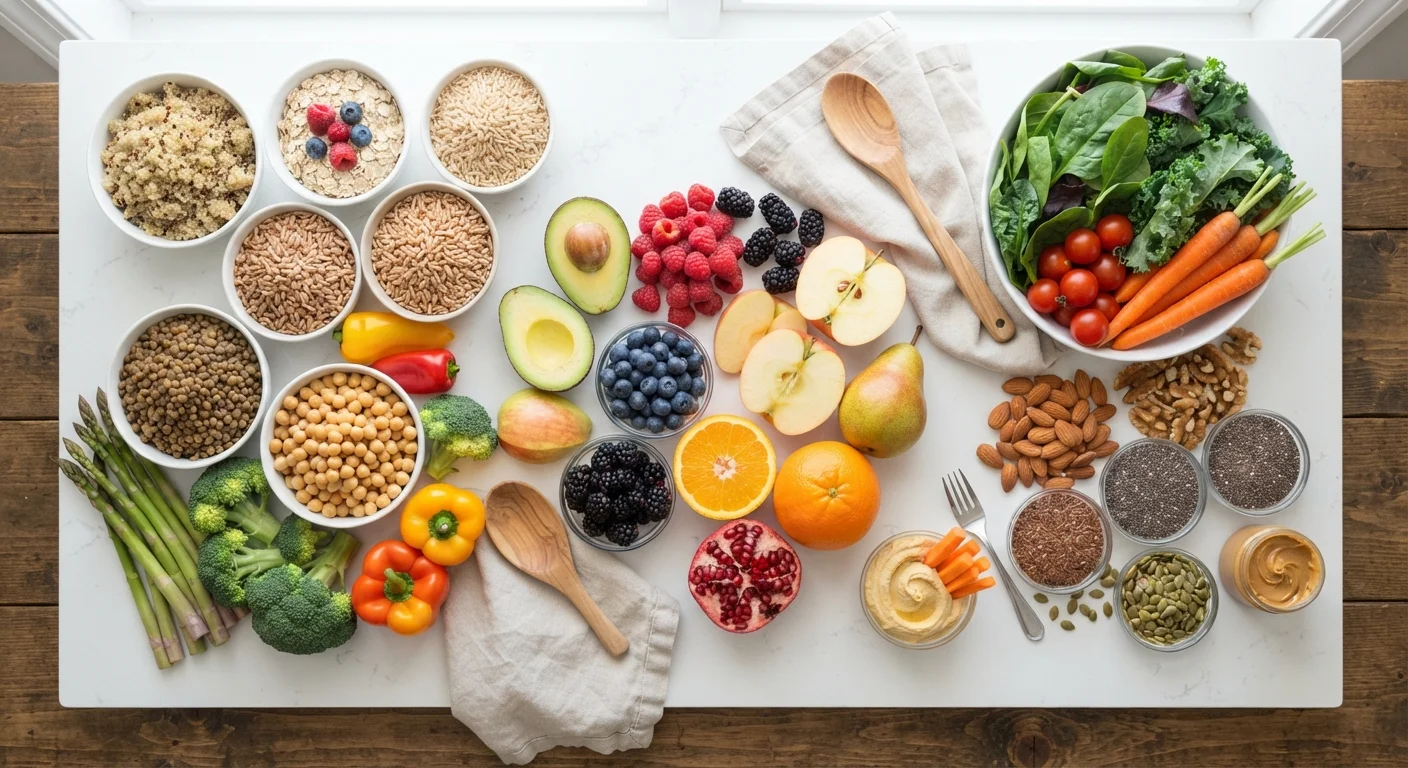
- Swap refined grains for whole grains: Whole wheat bread, brown rice, oats, and barley all offer substantially more fiber than their refined counterparts.
- Add legumes regularly: Lentils, chickpeas, black beans, and kidney beans are among the most fiber-dense foods available and are versatile in soups, salads, and grain bowls.
- Keep the skins on fruits and vegetables: Much of the fiber in apples, potatoes, cucumbers, and similar produce is concentrated in or just beneath the skin.
- Snack on nuts and seeds: Almonds, chia seeds, and flaxseeds contribute meaningful fiber alongside healthy fats.
Increase fiber gradually over several weeks rather than all at once, and drink plenty of water throughout the day. A sudden large increase can cause temporary bloating or gas as the digestive system adapts.
For a practical way to assess whether your regular grocery choices are covering nutritional gaps, Your Weekly Grocery Nutrition Audit offers a useful self-check framework. And for more on how everyday eating patterns can quietly work against good nutrition, see Sneaky Ways Eating Habits Quietly Undermine Good Nutrition.
This article is for general informational and educational purposes only and is not a substitute for professional medical or dietary advice. Consult a qualified healthcare provider for guidance specific to your health situation.