
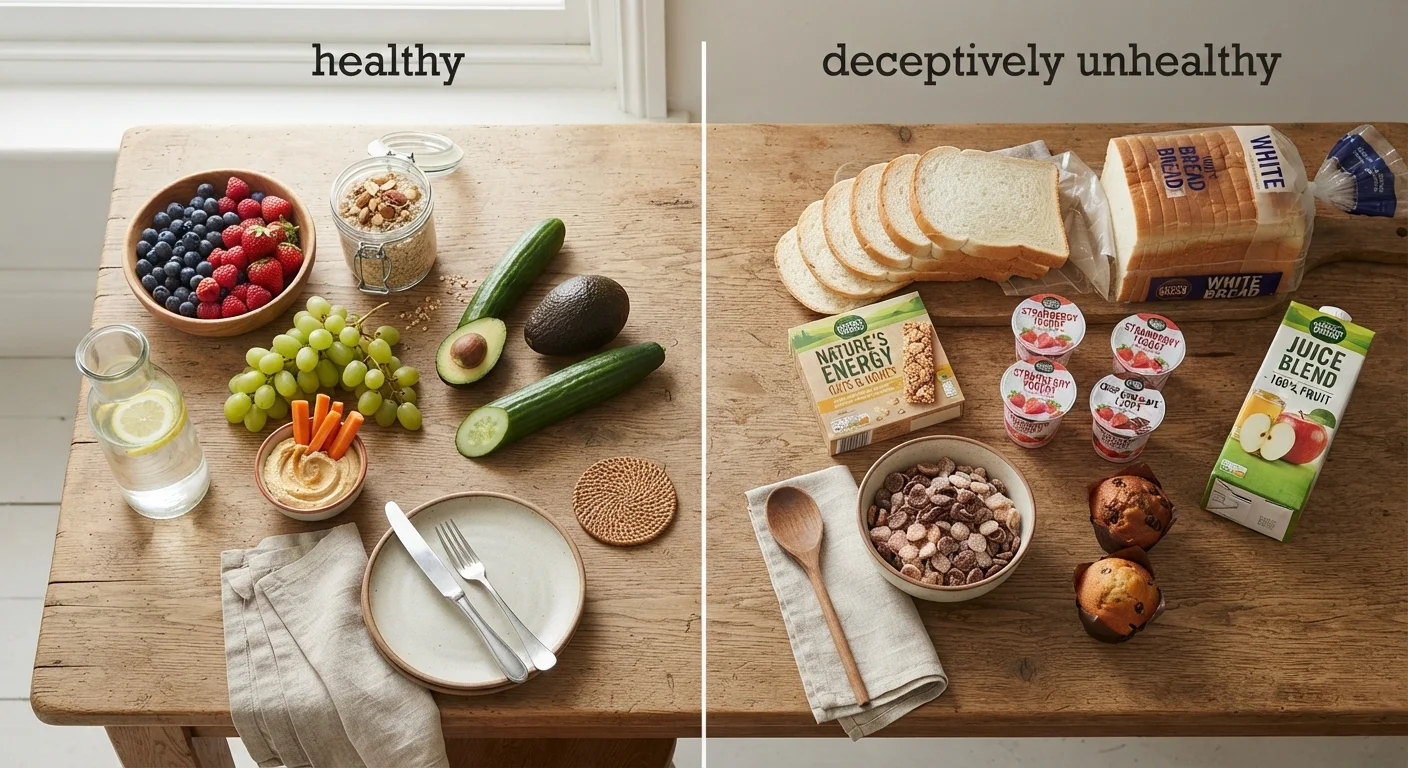
Why Even Thoughtful Eaters Hit Nutritional Blind Spots
Most people who care about their health don't eat poorly out of ignorance - they eat poorly out of habit, convenience, and the steady pull of patterns built over years. The foods that quietly undermine good nutrition are rarely the obvious culprits. They're the glass of orange juice assumed to be healthy, the skipped breakfast that seems like no big deal, or the salad drenched in dressing that effectively neutralizes its own benefit.
Understanding these patterns matters because nutrition isn't just about what you eat at your best moments - it's about what you do consistently. As our piece on why good intentions alone don't produce lasting health habits explores, awareness without structural change rarely sticks. The same principle applies to food.
Drinking fruit juice instead of eating whole fruit.
Why it happens: Juice is marketed as a health food and feels like a convenient serving of fruit. It's easy to pour a glass and feel like a nutritional box has been checked.
Eating the same limited set of foods on rotation, week after week.
Why it happens: Meal planning feels efficient when you find foods you like, and variety requires more effort and decision-making at the grocery store.
Skipping meals and then eating larger portions later in the day.
Why it happens: Busy schedules push meals back, and skipping breakfast or lunch feels like a manageable tradeoff when time is short.
Relying heavily on "health-branded" packaged foods without reading labels.
Why it happens: Words like "natural," "organic," or "high protein" on packaging create a health halo that often leads people to consume products higher in added sugar or sodium than expected.
Underestimating how much added sugar comes from condiments and sauces.
Why it happens: Condiments are consumed in small quantities per bite, so their cumulative contribution to daily sugar and sodium intake rarely registers consciously.
Not accounting for how eating habits affect hydration levels.
Why it happens: Most people think of hydration purely in terms of water intake and overlook the role that food plays in daily fluid balance.
The Habits That Do the Most Quiet Damage
These aren't fringe behaviors - they're patterns that show up across millions of Americans' daily routines. What makes them tricky is that they often feel responsible. Recognizing them is the first step toward adjusting course without overhauling everything at once.
90%
Americans not meeting vegetable intake recommendations
According to the CDC's State of Childhood Obesity and related dietary surveillance data, the vast majority of American adults fall short of federal dietary guidelines for vegetables.
17 tsp
Average daily added sugar intake per American adult
The U.S. Dietary Guidelines recommend limiting added sugars to less than 10% of daily calories; research suggests most Americans consume well above that threshold.
Less than 5%
Adults meeting daily fiber recommendations
The American Society for Nutrition has noted that dietary fiber intake remains critically low across most age and demographic groups in the United States.
If you're unsure whether your own grocery routine covers nutritional bases, the Weekly Grocery Nutrition Audit offers a practical starting framework. And if you've ever wondered whether a food's label tells the whole story, reading a nutrition label without getting confused can sharpen that skill considerably.
Health Halos Can Mislead Even Careful Shoppers
Packaged foods labeled "all-natural," "multigrain," or "lightly sweetened" are not regulated terms with strict nutritional definitions. These phrases are designed to appeal to health-conscious consumers, but they offer no guarantee about the actual nutrient composition of the product. Always cross-reference front-of-package claims with the full nutrition facts panel and ingredient list before assuming a food supports your nutritional goals.
It's also worth checking your assumptions about which foods count as "whole" or "processed" - the distinction is more nuanced than most people realize. See Whole Foods vs. Processed Foods for a clearer breakdown. And for a deeper look at the principles that reliably support nutritional balance across different eating styles, building a balanced plate lays out what most well-studied diets actually share.
This article is for general informational and educational purposes only and is not a substitute for professional medical or nutritional advice. Consult a qualified healthcare provider for guidance specific to your individual health situation.