
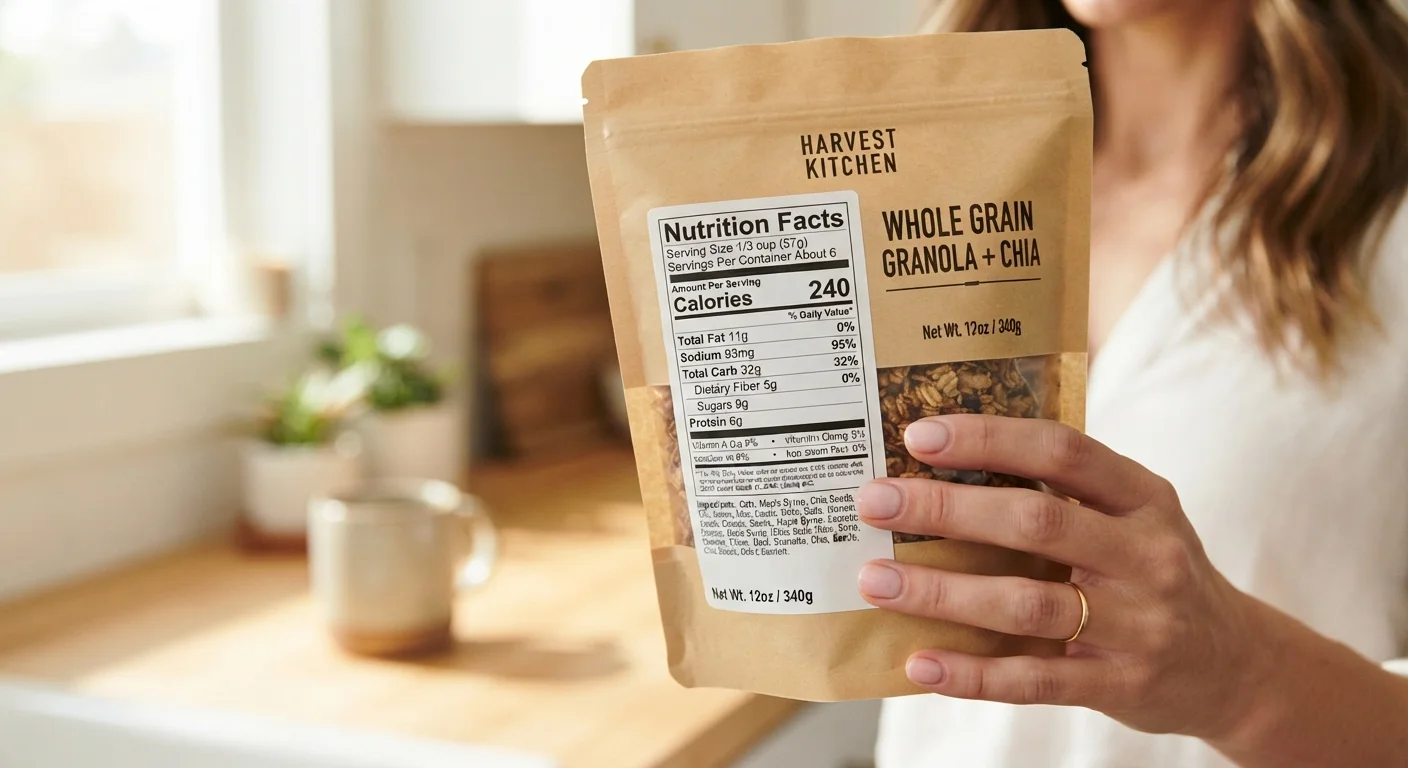
Why Nutrition Labels Are Worth Your Attention
The Nutrition Facts panel is one of the most information-dense tools available to everyday grocery shoppers. Mandated by the U.S. Food and Drug Administration (FDA) for most packaged foods, it's designed to give consumers a standardized, comparable snapshot of what they're eating. Yet surveys consistently show that many people either skip over the label or misread it - often because the layout feels dense or technical.
Understanding how to read a label doesn't require a nutrition degree. It requires knowing what each section actually means, which numbers matter most for your purposes, and how to put those numbers into context. This guide walks through that process step by step.
What you will need
Once you understand the structure, reading a label takes about 30 seconds per product - and it's a skill that compounds every time you shop. You can also apply this awareness to broader eating patterns, including the common eating habits that quietly undermine good nutrition.
How to Read a Nutrition Label
The following steps walk through the Nutrition Facts panel from top to bottom, then move to the ingredient list - the order in which the information is most usefully processed.
Nutrition Facts Panel
The standardized FDA-required label on packaged foods that lists calories, macronutrients, micronutrients, and % Daily Values.
Ingredient List
The section below or beside the Nutrition Facts panel listing every ingredient in descending order by weight.
Magnifying glass or phone camera zoom
Helpful for reading the fine print on small packages or ingredient lists with tiny text.
Start with serving size - before anything else
Every number on the Nutrition Facts panel is tied to one serving, not the whole package. The serving size is listed at the very top, often in both household units (like "1 cup" or "3 crackers") and grams. If you eat two servings, every value on the label doubles. This single detail is where most label misreadings happen.
Read calories in context of the serving
Calories represent the total energy in one serving. This number is useful for gauging energy density, but calorie counts alone don't tell you about a food's nutritional quality. A 200-calorie snack with fiber, protein, and vitamins is nutritionally different from one that's 200 calories of refined starch and sugar. For a broader perspective on this, see our article on why nutrient density matters more than calorie counting.
Understand % Daily Value (%DV)
The % Daily Value column tells you how much of a nutrient one serving contributes toward a general daily reference intake of 2,000 calories. It's a relative guide - not a target set for any individual. As a rule of thumb: 5% DV or less is considered low for a nutrient; 20% DV or more is considered high. Use these benchmarks to quickly compare similar products.
Identify nutrients to limit
Certain nutrients are flagged because most Americans already consume more than enough. These include:
- Saturated fat - associated with cardiovascular health when consumed in excess
- Sodium - heavily present in processed and packaged foods
- Added sugars - listed separately from total sugars since the 2016 FDA label update
A lower %DV for these nutrients is generally favorable, though no single food defines an overall diet.
Look for nutrients worth prioritizing
The label also highlights nutrients many Americans fall short on. These include dietary fiber, vitamin D, calcium, iron, and potassium. A higher %DV for these is generally a positive signal. Fiber, in particular, supports digestive health and helps you feel full. For a deeper look at vitamins and minerals, our micronutrients reference guide covers what each one does and where to find it naturally.
Decode the ingredient list
Ingredients are listed in descending order by weight - the first ingredient makes up the most of the product. Scan the first three to five ingredients to get a sense of what the food is mostly made of. A long ingredient list isn't automatically a red flag, but unfamiliar additives appearing near the top of the list are worth noting. If whole foods (like oats, nuts, or fruit) lead the list, that's generally a good signal.
Use Labels for Comparison, Not Judgment
Nutrition labels are most powerful when used to compare similar products side by side - for example, two brands of yogurt or two types of bread. Rather than labeling foods as "good" or "bad," use the panel as a neutral data tool. A single food item is rarely the whole story of a person's diet.
Once you're comfortable comparing labels, consider applying that same lens to your overall grocery routine. Our weekly grocery nutrition audit provides a practical checklist to assess whether your typical haul covers the nutritional bases most people miss. And for context on how macronutrients interact, see macronutrients explained.
This article is for general informational and educational purposes only and is not a substitute for professional medical or dietary advice. Consult a qualified healthcare provider or registered dietitian for guidance specific to your health needs.