
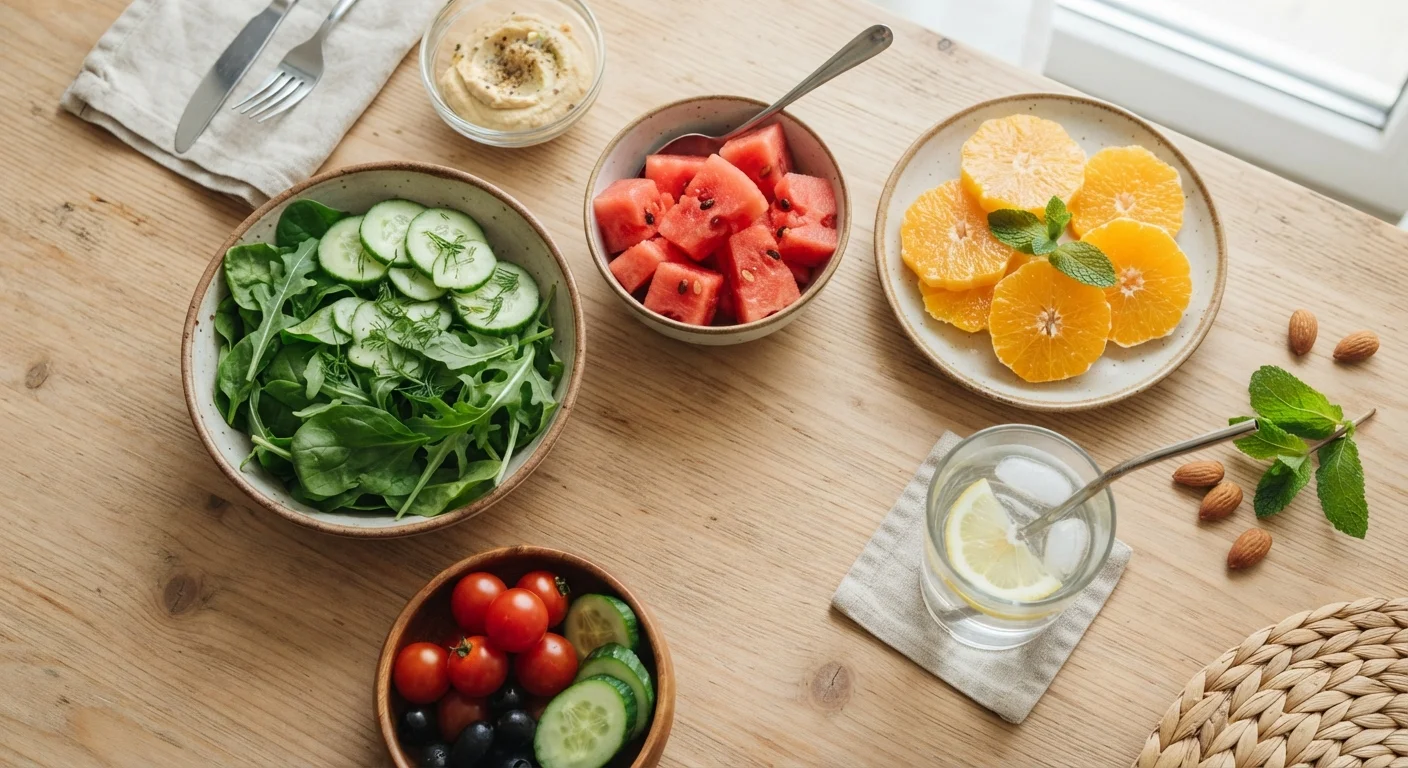
Your Plate Is Part of Your Water Intake
Most hydration advice focuses on how much to drink. But roughly 20-30% of total daily fluid intake for adults comes from food - a fact that often gets overlooked. The water embedded in your meals is just as real as the water in your glass, and the patterns of what you eat directly influence how well your body stays balanced.
This matters because two people drinking identical amounts of water can end up with very different hydration outcomes depending on their diets. A person who eats whole foods - plenty of fruits, vegetables, and legumes - gets a substantial water boost with every meal. Someone whose diet leans heavily on processed, salty, or dry foods may need to drink considerably more to compensate.
Common hydration myths often overlook this dietary dimension entirely, which can lead people to focus narrowly on fluid ounces while ignoring the food-based half of the equation.
~20-30%
Daily water intake from food
Estimates from nutrition researchers, including those published by the Institute of Medicine, suggest food accounts for roughly 20-30% of total daily water intake in typical adults.
90-96%
Water content of cucumber and lettuce
According to USDA nutritional data, cucumbers and iceberg lettuce are among the most water-dense common foods, composed of over 90% water by weight.
~3.7 L / 2.7 L
Daily total water intake recommendation (men/women)
The National Academies of Sciences, Engineering, and Medicine general reference intake for total water - from all food and beverage sources combined - is approximately 3.7 liters for men and 2.7 liters for women per day.
Foods That Contribute the Most to Hydration
Water content in food varies enormously. At the high end, cucumbers, lettuce, celery, and tomatoes are composed of 90-96% water by weight. Watermelon, strawberries, peaches, and citrus fruits are similarly water-dense. These foods deliver fluid alongside fiber, vitamins, and minerals - making them efficient contributors to overall nutrition and hydration at once.
Cooked foods also deserve recognition. Oatmeal, soups, stews, and cooked grains like rice and quinoa absorb significant water during preparation. A bowl of oatmeal made with water or milk is quite different, hydration-wise, from a handful of dry crackers - even if the calorie count were similar.
On the lower end of the spectrum, dry, processed, and packaged foods contribute very little water and may actually increase the body's fluid requirements due to their sodium content.
Eating Habits That Work Against Your Hydration
Just as some foods support fluid balance, certain dietary patterns create a hydration drag. High sodium intake is one of the most significant. When you eat more salt than your kidneys can easily excrete, the body retains water to dilute the sodium - which means it signals thirst and draws water away from cells to manage the imbalance. Over time, consistently high-sodium eating patterns raise your baseline water needs.
High sugar consumption - particularly from concentrated sweetened foods and beverages - can have a similar effect. The kidneys work harder to filter excess glucose, which can pull water into urine and contribute to increased fluid loss.
Alcohol is worth noting separately: it suppresses a hormone called ADH (antidiuretic hormone), which normally signals the kidneys to retain water. Drinking alcohol therefore increases urine output, which is why adequate fluid intake alongside alcoholic drinks is commonly recommended.
These patterns connect to broader nutritional blind spots. Eating habits that quietly undermine good nutrition often include the same high-sodium and high-sugar tendencies that also work against hydration - making the two concerns closely linked.
A Simple Way to Eat for Hydration
You don't need to track every gram of water in your food. A practical approach is to fill roughly half your plate with fruits and vegetables at most meals - these foods deliver the highest water content alongside fiber and micronutrients. On days when your meals skew toward salty or dry foods, prioritize drinking a bit more water to compensate.
Putting It Together: Diet as a Hydration Tool
Understanding the food-hydration connection is practically useful. It means that improving your eating patterns - moving toward more whole fruits, vegetables, and minimally processed foods - does double duty. You support your nutritional intake and your fluid balance simultaneously, without necessarily counting every ounce of water you drink.
It also means that on days when your diet skews toward saltier or more processed foods, you may genuinely need more water to compensate - not because of some arbitrary rule, but because your body's fluid demands have shifted.
None of this replaces the importance of drinking fluids regularly. But it reframes hydration as something shaped by your whole lifestyle, not just your water bottle. If you have concerns about your hydration status or symptoms that persist, speaking with a qualified healthcare professional is always the appropriate next step.
This article is for general informational and educational purposes only and is not a substitute for professional medical advice, diagnosis, or treatment. Always consult a qualified healthcare provider with questions you may have regarding a medical condition or personal health decisions.