
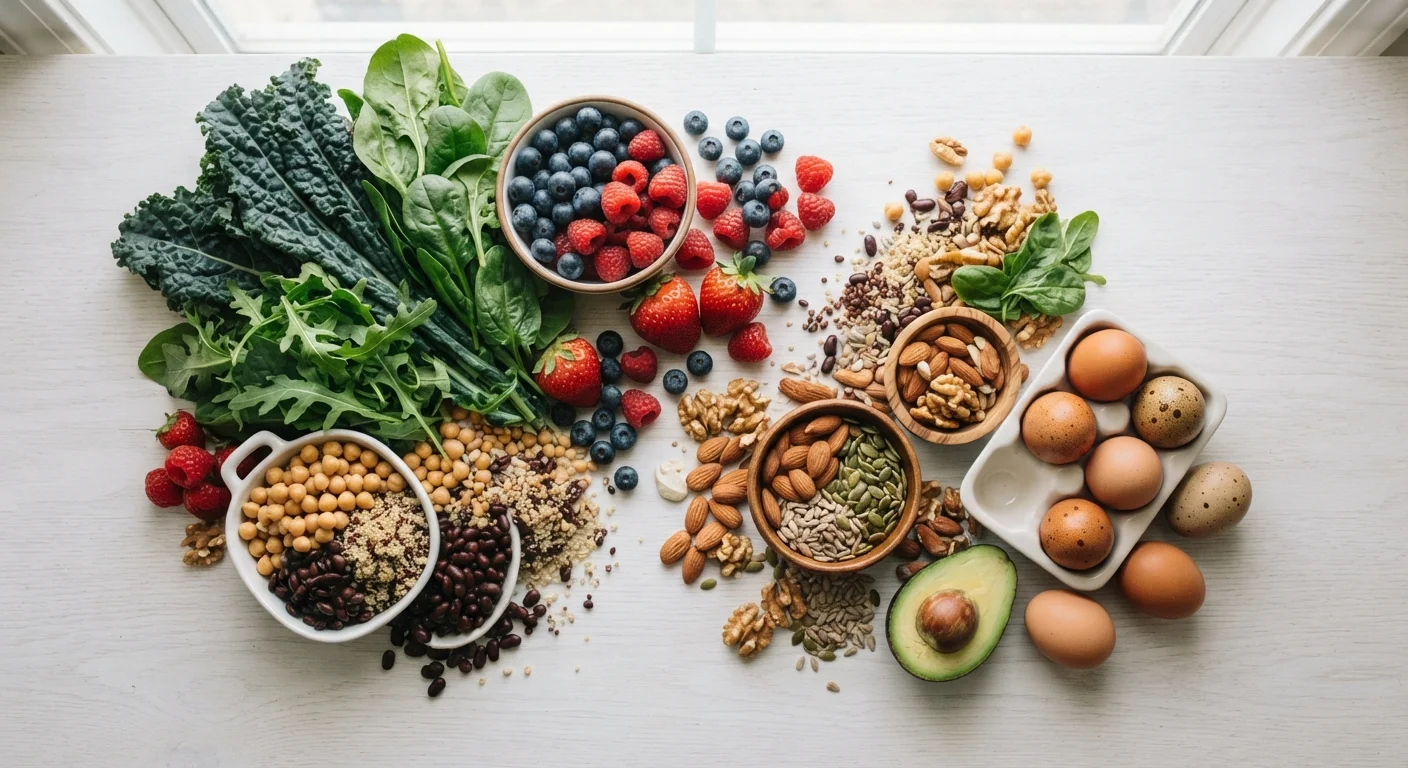
What Nutrient Density Actually Means
Nutrient density refers to the concentration of beneficial nutrients - vitamins, minerals, fiber, protein, and beneficial fats - relative to a food's calorie load. A food is considered nutrient-dense when it delivers a wide array of these compounds without contributing excessive energy.
Leafy greens are the classic example: a large portion of spinach contains iron, folate, vitamin K, and antioxidants for very few calories. By contrast, a food that delivers mostly calories with minimal micronutrients - think refined grain snacks - is considered calorie-dense but nutrient-poor.
This distinction matters because the body doesn't just need fuel. It needs the raw materials - vitamins, minerals, and phytonutrients - to carry out thousands of biochemical processes. For a deeper look at what those micronutrients actually do, see micronutrients your body relies on.
Calorie Counting: What It Measures and Where It Stops
Tracking calories is a way of measuring energy intake. The logic is straightforward: the body requires a certain amount of energy to function, and consuming significantly more or less than that amount over time affects body weight. This framework is useful, particularly in clinical settings where energy balance is a direct medical concern.
But calories are an incomplete picture. Two foods can share an identical calorie count while differing dramatically in protein content, fiber, vitamin density, glycemic impact, and satiety. A hundred calories of almonds and a hundred calories of a sugary candy deliver very different nutritional signals to the body.
| Nutrient Density Focus | Calorie Counting | |
|---|---|---|
| Primary question answered | How nutritious is this food? | How much energy does this food contain? |
| What it tracks | Vitamins, minerals, fiber, protein per calorie | Total energy (kilocalories) consumed |
| Practical difficulty | Moderate - requires food knowledge | High - requires consistent logging |
| Accounts for food quality | Yes - core to the concept | No - only quantity of energy |
| Supports long-term habit building | Generally well-suited | Can become burdensome over time |
| Best suited for | Everyday diet quality decisions | Medically supervised energy management |
Research in nutritional science increasingly recognises that food quality - not just quantity - shapes health outcomes over time. For a clear-eyed look at where the calorie model holds up and where it falls short, the calorie equation and its limits is worth reading alongside this piece.
Applying a Nutrient Density Lens in Practice
Shifting toward nutrient density doesn't require tracking apps or rigid rules. It starts with a question: what does this food give me beyond energy? Foods that tend to score high on nutrient density include dark leafy vegetables, legumes, whole grains, eggs, fatty fish, nuts and seeds, and most fresh fruits.
A Simple Swap Mindset
Rather than eliminating foods, consider whether a more nutrient-dense alternative could fill the same role in a meal. Swapping refined grains for whole grains, or a sugary snack for a small handful of nuts, gradually shifts the overall nutritional profile of your diet without requiring strict restriction. Small, consistent substitutions tend to be more sustainable than wholesale overhauls. For a structured way to audit your grocery choices, see your weekly grocery nutrition audit.
One practical effect of prioritising nutrient-dense foods is that they tend to be more satiating per calorie. Fiber and protein - two nutrients common in whole foods - slow digestion and support fullness signals, which can naturally moderate overall intake without deliberate restriction.
Understanding how macronutrients contribute to this picture also helps. what carbs, protein, and fat actually do explains how each macronutrient class contributes to the body's daily functions - a useful complement to thinking about micronutrient richness.
It's also worth noting the habits that can quietly dilute dietary quality even when intentions are good. eating habits that undermine good nutrition covers patterns that affect diet quality in ways most people don't immediately recognise.
This article provides general nutrition education and is not a substitute for personalised medical or dietary advice. Consult a qualified healthcare provider or registered dietitian before making significant changes to your diet.