Which home tasks are actually worth automating?
The promise of home automation is real, but it's easy to chase the idea of a fully automated household while the actual time savings remain elusive. The routines worth automating share a common profile: they're predictable, they repeat on a fixed schedule, and they don't require judgment calls to execute. When a task fits that pattern, automation genuinely removes friction. When it doesn't, you often end up managing the automation instead of saving time.
This list focuses on practical, low-maintenance automations - the kind that work quietly in the background without needing constant attention. It also flags where automation tends to underdeliver, so you can make deliberate choices rather than build a system you'll eventually abandon.
Start with one automation, not six
The most common reason home automation setups fail is scope creep during initial configuration. Picking one reliable, low-stakes automation - like a lighting schedule or a recurring reminder - lets you build confidence before adding complexity. Most people who start small end up with setups that actually run; most who try to automate everything at once end up troubleshooting instead. See how to start simple and scale up for a practical approach.
Six routines worth considering for automation
Morning coffee and climate warm-up
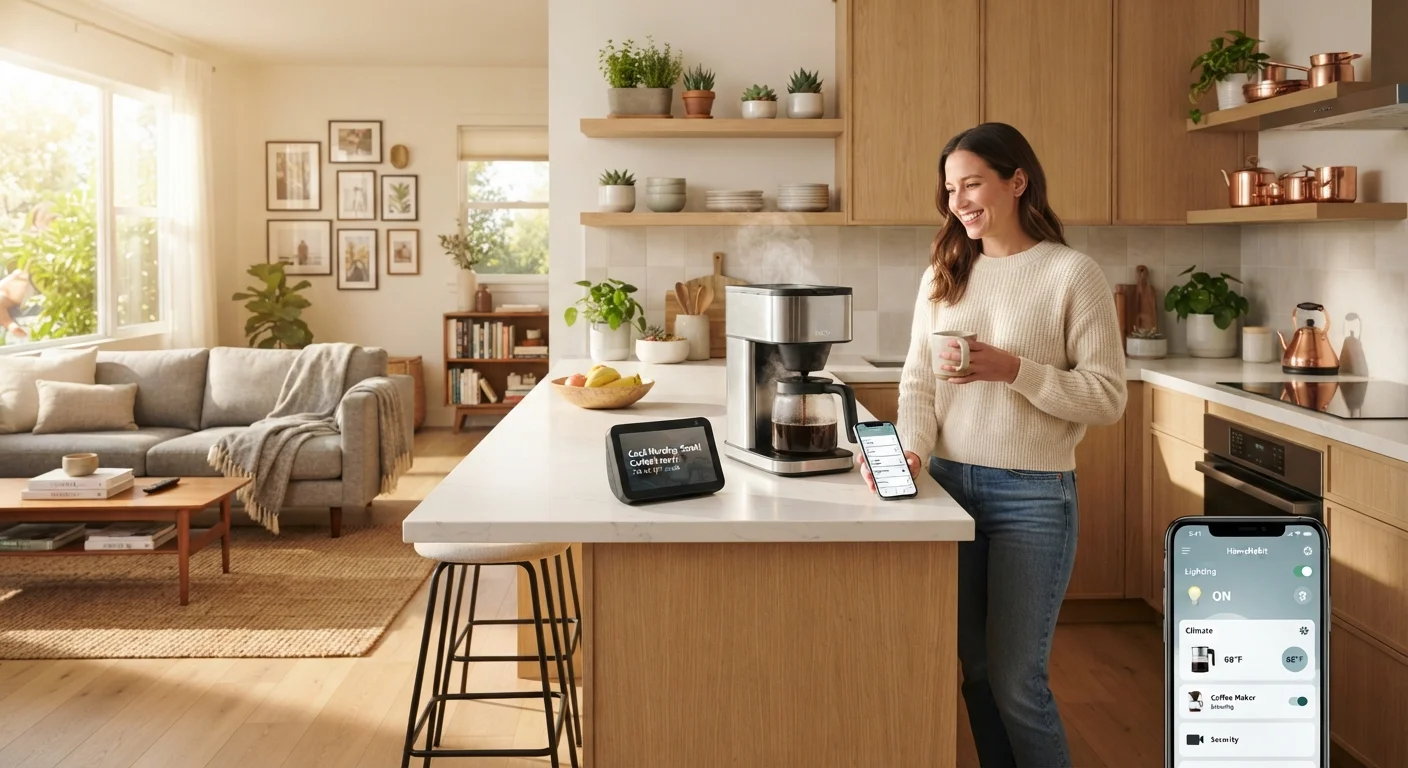
Scheduling your coffee maker and thermostat to activate before you get out of bed is one of the simplest, highest-payoff automations available. Most programmable thermostats and smart plugs support time-based scheduling without requiring a hub or complex setup. Set your thermostat to reach a comfortable temperature 20-30 minutes before your alarm, and plug your coffee maker into a smart outlet timed to match. The result is a morning that feels ready when you are - without any screen time before breakfast.
This works because the inputs don't change day to day: the time is fixed, the action is fixed, and the outcome is predictable. That consistency is what makes a task automatable.
Predictable inputs and fixed timing make morning warmth and coffee the easiest automation wins.
Lighting schedules tied to sunrise and sunset
Manually adjusting indoor and outdoor lights is a small but persistent friction point. Smart bulbs and switches can follow sunrise/sunset schedules that automatically adjust with the seasons - no manual override needed every few weeks. Outdoor security lights can turn on at dusk and off at dawn. Interior lights in common areas can dim gradually in the evening, which many people find helps them unwind naturally.
One practical note: schedules set to a fixed clock time rather than astronomical sunrise/sunset will drift noticeably across seasons, so use a platform that supports location-based scheduling if possible. For more on how evening light affects rest, see what sleep hygiene research says about light.
Sunrise and sunset scheduling prevents lighting drift across seasons without manual adjustments.
Household reminders and shared calendar alerts
Recurring household tasks - filter changes, bill due dates, subscription renewals, plant watering - are easy to forget and easy to automate. A shared digital calendar with recurring reminders distributes the mental load across everyone in the household rather than leaving it to one person's memory. Most calendar apps support recurring events with custom intervals (every 30 days, every quarter, annually), making this one of the lowest-cost automations to set up.
The digital tools that genuinely simplify household life go further on calendar and task-management categories worth considering.
Recurring calendar alerts distribute household task memory without relying on any one person.
Evening security checks and door locks
Smart locks and connected garage door openers can be scheduled to confirm locked status at a set evening time - or to lock automatically if they detect they've been left open. This eliminates the mental loop many people run before bed: Did I lock the front door? Did the garage close? A simple automation that checks and confirms (or locks) at 10 p.m. replaces that loop with quiet confidence.
Look for devices that send a confirmation notification rather than just acting silently - knowing the action completed is part of what makes the automation feel trustworthy rather than uncertain.
An automatic lock check at a set evening time ends the 'did I lock up?' mental loop for good.
Laundry and dishwasher delay cycles
Most modern washers, dryers, and dishwashers include a delay-start feature that's underused. Running these appliances during off-peak electricity hours - typically late night or early morning - can reduce energy costs in areas where utilities offer time-of-use pricing. Even where pricing is flat, running the dishwasher after midnight means it finishes before breakfast without occupying the kitchen during the evening. Set the delay once per appliance model and it becomes a passive habit.
This doesn't require a smart home hub - just the built-in timer most appliances already include. Simple mechanical habits like this complement broader organization routines; see habits that keep a home organized over time for the wider picture.
Delay-start cycles on appliances you already own require no smart home setup to deliver real savings.
Automations that tend to underdeliver
Not every routine belongs in an automation workflow. Tasks that require visual judgment - choosing what to cook, deciding if laundry is actually dirty, assessing whether a room needs tidying - resist reliable automation because the inputs vary too much. Robotic vacuums, for example, work well on open floors but struggle with pet toys, dropped items, or furniture rearrangements, often requiring manual intervention that offsets the time saved.
Over-automating can also add fragility: the more devices and triggers in a chain, the more failure points exist. A routine that breaks silently - lights that stopped turning on, a lock that didn't engage - can be worse than no automation at all. For guidance on keeping automated systems working reliably, keeping a smart home running well over time covers the maintenance habits that matter.
Tasks requiring visual judgment or variable inputs are poor candidates for home automation.
Test every automation manually first
Before relying on any scheduled automation, trigger it manually at least once to confirm the action completes as expected. A smart lock that shows 'locked' in the app but fails to engage the physical bolt is worse than no automation. A quick manual test at setup - plus a periodic check every few months - catches silent failures before they matter.
Building habits around what you automate
Automation handles the mechanics, but the habits around your automated routines determine whether they stay useful. A lighting schedule that nobody adjusts when clocks change becomes a minor annoyance. A shared reminder calendar that one household member ignores creates uneven load rather than shared ownership. The daily habits that keep a home organized are a useful complement here - automation and habit reinforce each other when both are designed thoughtfully.
For your morning and evening routines specifically, the human side of those transitions matters too. What behavioral research supports about morning habits and how to build an evening wind-down that sticks are worth reviewing alongside any technical setup. Automation removes friction; routine provides the structure that makes that removed friction meaningful.