Why the Envelope Concept Still Holds Up
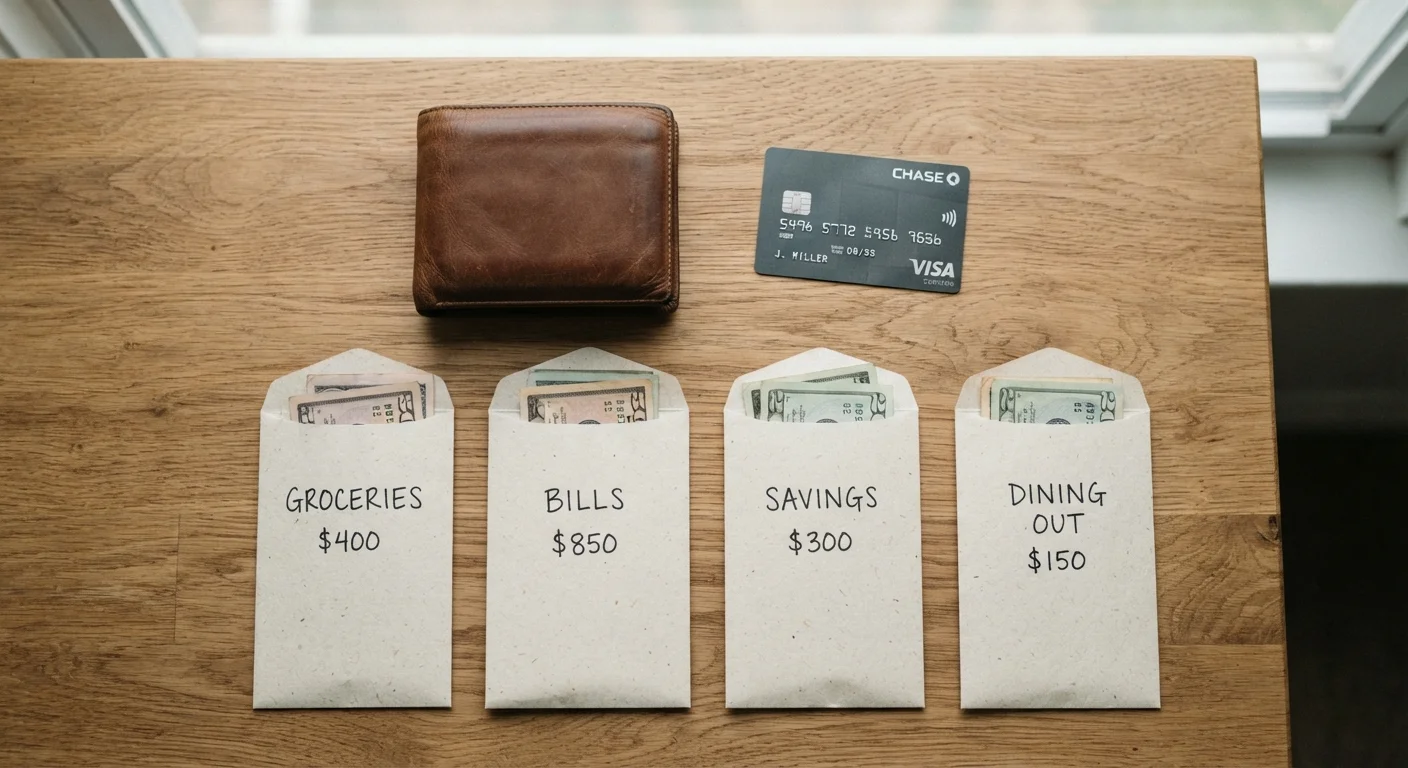
The original envelope method - stuffing physical cash into labeled envelopes for each spending category - emerged long before debit cards, let alone mobile payments. Its durability isn't nostalgic. The method works because it makes spending limits tangible and finite. When the grocery envelope is empty, you see it. There's no line of credit quietly covering the gap.
The same psychological constraint can be recreated digitally. Sub-accounts, earmarked spreadsheet columns, and app-based category limits all enforce the same boundary: once the allocation is gone, the spending stops - or a conscious decision is made to reallocate. That moment of friction is the entire point.
If you're weighing whether this approach fits your personality and habits, a balanced look at the trade-offs is a useful starting point before committing to the setup steps below.
What you will need
Setting Up Your Digital Envelope System
The tools you'll need are minimal. Most people already have everything required.
Bank sub-accounts or buckets
Create separate named savings or checking accounts at your bank to hold digital envelope funds.
Spreadsheet (e.g., Google Sheets or Excel)
Track envelope balances manually and log every transaction against its category.
Budgeting app with envelope or category features
Automates balance tracking and sends alerts when a category is running low.
Printed or digital category ledger
A simple running log to record spending against each envelope in real time.
Calculate your usable monthly income
Start with your actual take-home pay - the amount deposited after taxes, benefits deductions, and any automatic retirement contributions. If your income varies month to month, use a conservative estimate based on your three lowest-earning months over the past year. Treat this number as the ceiling for your entire envelope system.
List and categorize every spending area
Pull up two months of statements and group every expense into meaningful categories: groceries, dining out, gas, utilities, rent or mortgage, clothing, entertainment, medical co-pays, personal care, and so on. Don't collapse everything into broad buckets - separating groceries from dining out, for example, reveals where money actually goes and makes limits more enforceable. Aim for 8-15 categories. Too few hides overspending; too many becomes unwieldy.
Assign a dollar limit to each envelope
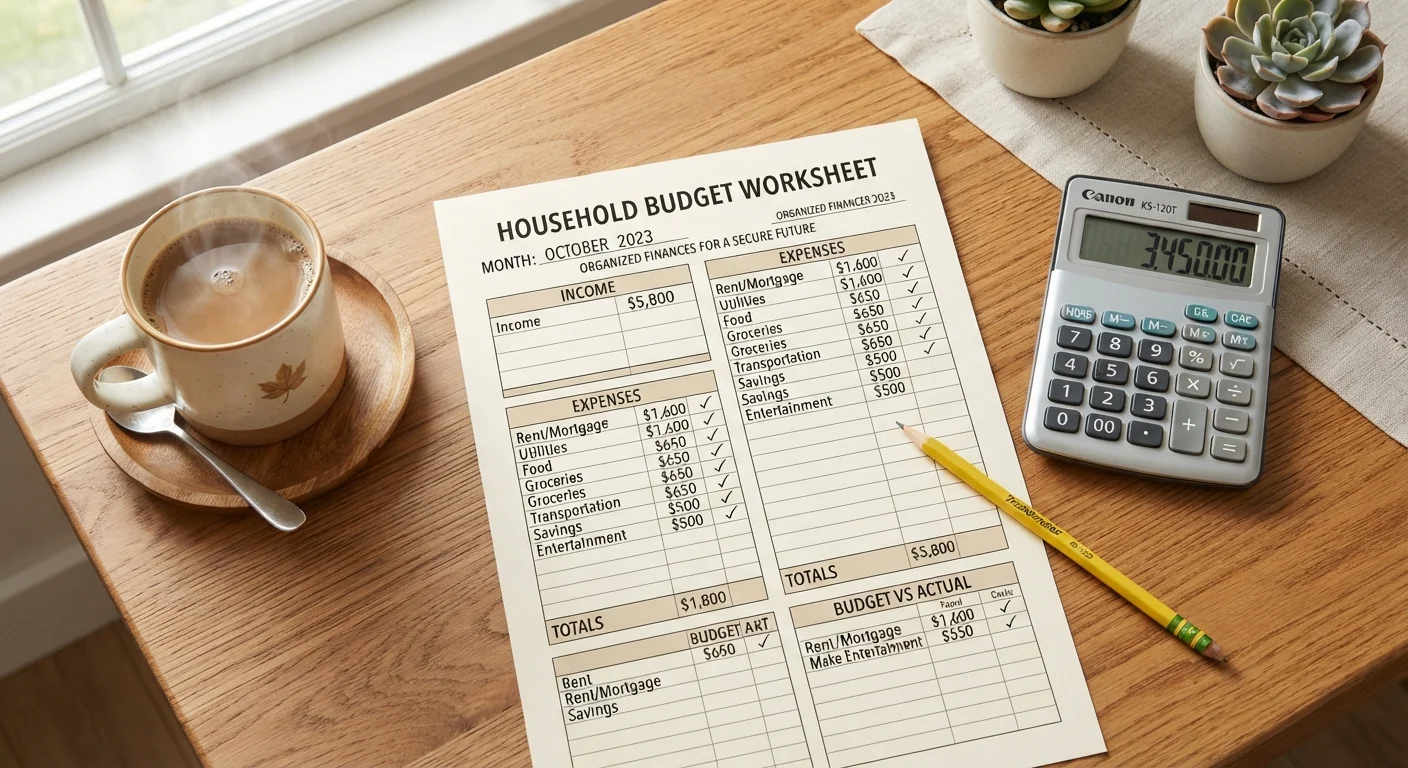
Working from your take-home total, allocate a specific dollar amount to each category. Fixed expenses (rent, insurance, loan minimums) get their exact amounts first. Then distribute the remaining income across variable categories based on your statement history and your goals. The total across all envelopes - including savings - must equal your income exactly. If the math leaves a deficit, you need to reduce allocations in variable categories before proceeding. This zero-sum discipline is the core of the method. For a broader comparison of how envelope budgeting sits alongside other approaches, see how common budget frameworks compare.
Set up your digital envelopes
If your bank allows multiple named sub-accounts, open one per major spending category and transfer the allocated amount to each at the start of the month. For everyday variable spending like groceries and gas, a single debit card linked to a variable-spending account works well - track the running balance against your envelope limit manually or via a budgeting app. Some households find that dedicated household finance tools can sync transactions and flag when a category is near its limit.
Log spending against envelopes in real time
Every purchase must be recorded to its envelope the same day - or at worst, within 24 hours. A debit card transaction doesn't automatically announce which category it belongs to, so a brief manual log is essential. Use a notes app, a shared spreadsheet, or an expense-tracking feature in your bank's app. The habit of pausing to record is precisely what creates spending awareness - the system's primary mechanism for behavior change.
Handle overages deliberately
When an envelope runs dry before month-end, you have three options: stop spending in that category until the next cycle, consciously move money from a lower-priority envelope, or accept it as a one-time exception and note why it happened. What you should never do is ignore it. The decision to move funds from one envelope to another is the productive friction the system creates - it forces a real-time trade-off conversation with yourself (or your partner).
Review and recalibrate after each month
At month-end, compare actual spending to each envelope's limit. Identify which categories consistently ran over or left large surpluses. Adjust allocations for the following month accordingly. The envelope system isn't a set-it-and-forget-it structure - it's a living budget that should converge toward accuracy over the first two to three months. For a more comprehensive view of long-term budget maintenance, the household budgeting roadmap covers adjusting for income changes and life events.
Give the System 60 Days Before Judging It
The first month of envelope budgeting is primarily data collection - most allocations will be off. By month two, you'll have enough real spending history to set limits that actually reflect your life. Abandon the method before that point and you've only seen the setup, not the system working as intended.
Common Pitfalls and How to Work Around Them
The most frequent reason the envelope method fails isn't overspending - it's category design. Envelopes that are too broad ("all food") make it impossible to distinguish a grocery run from a restaurant habit. Envelopes that are too narrow (separate categories for coffee and lunches) create administrative fatigue. Aim for categories that reflect a real spending decision you make regularly.
A second common issue is irregular expenses. Annual car registration, semi-annual insurance premiums, and holiday gifts don't fit neatly into a monthly envelope. The solution is a sinking fund envelope - a small monthly contribution to a separate account earmarked for those predictable but infrequent costs. Divide the annual total by 12 and treat that amount as a fixed monthly envelope.
For readers interested in how analog versus digital record-keeping affects spending awareness more broadly, a comparison of paper and digital tracking methods explores those trade-offs in depth.
Credit Cards Undermine the System Without Extra Steps
Paying with a credit card and planning to log it later introduces a critical gap: you may not know your true available balance until the bill arrives. If you use credit cards for rewards or fraud protection, treat each card charge as immediately reducing the relevant envelope balance - log it the moment you spend. Carrying a balance month-to-month also defeats the zero-sum allocation logic the method depends on.
This article is for general informational purposes only and does not constitute personalized financial advice. Consult a qualified financial professional for guidance tailored to your individual circumstances.