How Each Method Actually Works
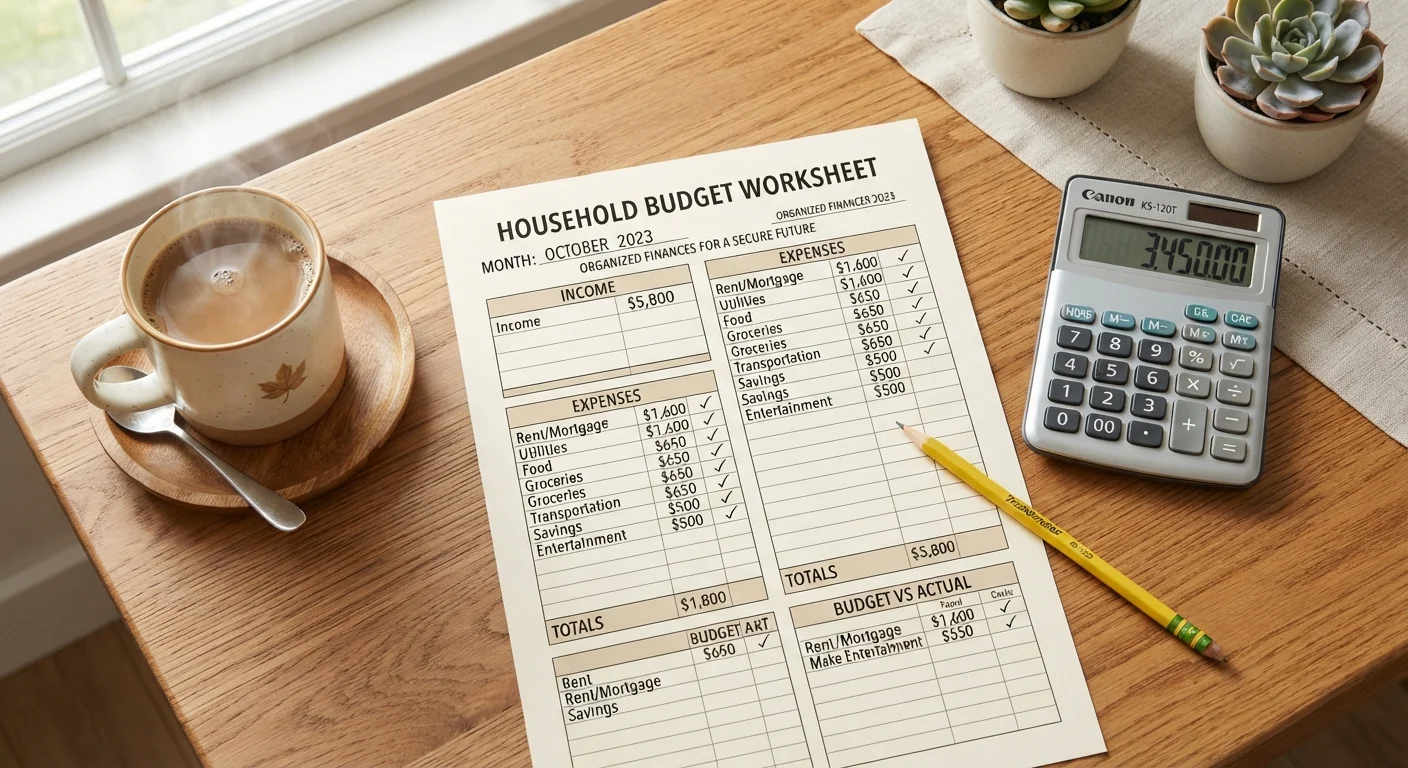
Zero-based budgeting starts from scratch every budget period. You list your total expected income, then assign every dollar to a specific category - rent, groceries, savings, loan payments, subscriptions - until the difference between income and outgo reaches zero. No dollar is left unallocated. The goal is full intentionality: you decide in advance what each dollar will do, rather than discovering after the fact where it went.
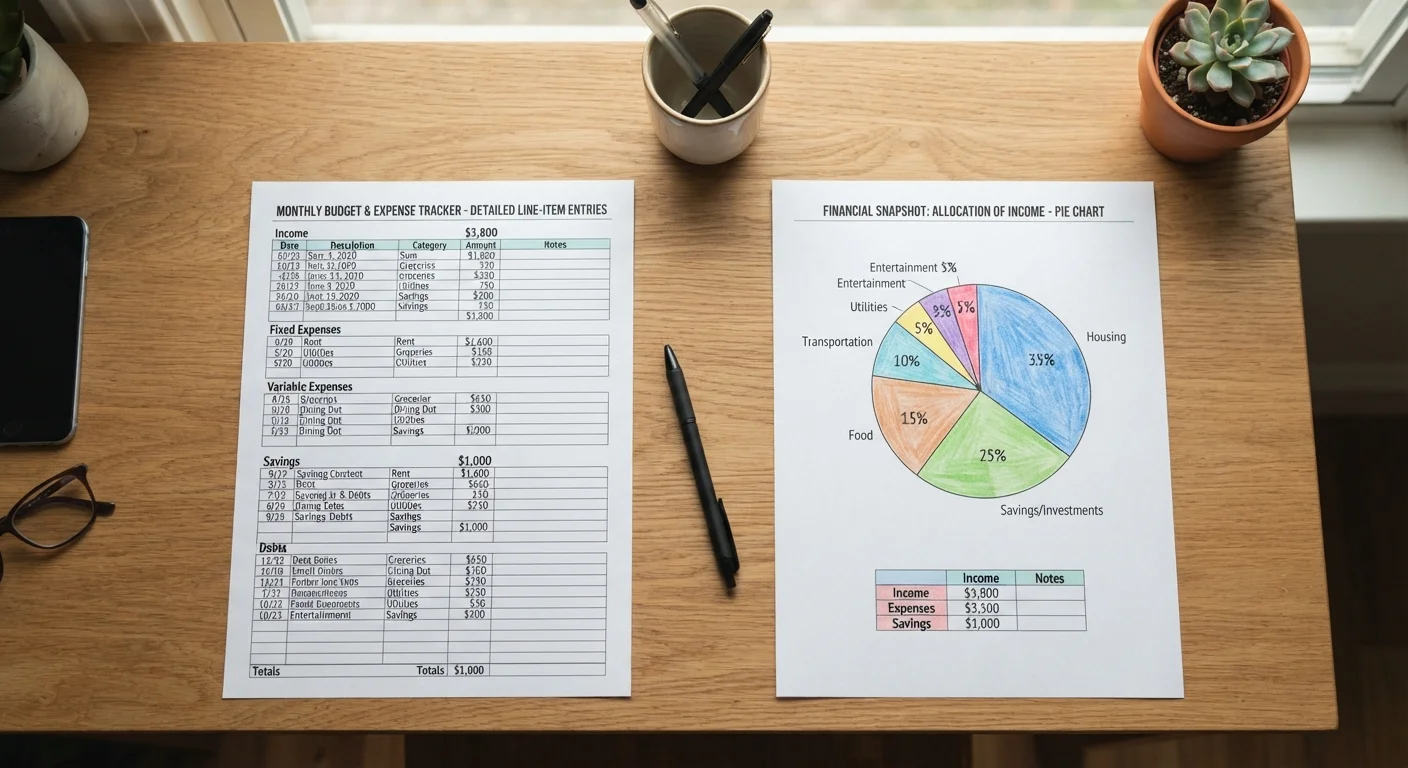
The percentage method takes a broader approach. You divide your income into a small number of buckets using fixed ratios. The widely referenced 50/30/20 framework, for instance, directs roughly 50% of after-tax income toward needs, 30% toward wants, and 20% toward savings and debt repayment. Other splits exist - 60/20/20, 70/20/10 - but the principle is the same: proportional allocation rather than line-item precision. You can explore how these frameworks compare in our overview of common budgeting frameworks.
| Criterion | Zero-Based Budgeting | The Percentage Method |
|---|---|---|
| Core principle | Every dollar assigned a specific job | Income split by fixed ratios |
| Setup time | High - rebuilt each period | Low - ratios stay constant |
| Category detail | Granular, line-by-line | Broad buckets (needs/wants/savings) |
| Adapts to irregular income | Well-suited | Requires manual adjustment |
| Ongoing maintenance | Requires consistent tracking | Minimal once established |
| Best for goal-focused saving | Strong - targets are explicit | Moderate - allocation is proportional |
| Learning curve | Steeper | Gentle |
Where Each Method Excels - and Falls Short
Zero-based budgeting forces you to confront spending decisions before money leaves your account. This deliberate structure tends to surface subscriptions you forgot about, categories where spending has crept upward, and gaps between what you think you spend and what you actually spend. The tradeoff is time: building a detailed monthly budget takes real effort, and the system works only if you track actuals against your plan throughout the month.
The percentage method's strength is durability. Because broad categories absorb normal spending variation, you don't need to rebuild your budget when grocery prices fluctuate or a utility bill spikes. The system scales automatically with income changes - a raise simply increases the dollar amounts within each bucket. The limitation is resolution: a 30% "wants" allocation tells you little about whether your dining-out habit is crowding out other priorities. Understanding fixed vs. variable expenses is essential for making either method work well.
Both Methods Require Accurate Income Data
Whether you use zero-based or percentage budgeting, the starting point is a realistic figure for your monthly take-home pay. Using gross income (before taxes and deductions) instead of net income is a common error that causes both systems to break down. If your income varies, using a conservative estimate - such as an average of your three lowest recent months - reduces the risk of over-allocating.
It is also worth acknowledging that strict budgeting of any kind involves real trade-offs. Our article on the honest trade-offs of strict budgeting covers what to expect before you commit to either approach.
Choosing the Method That Fits Your Life
The right budgeting method is the one you will actually use consistently. Consider three practical factors when deciding.
- Income predictability: Irregular or freelance income is easier to manage under zero-based budgeting, where you replan each period based on what you actually earned. A salary that hits the same amount every two weeks is more compatible with the set-and-adjust nature of the percentage method.
- Financial goals: If you are working toward a specific target - eliminating credit card debt, building an emergency fund to a defined number - line-item tracking makes it easier to see exactly how much is available to redirect. Percentage budgets work well for maintaining financial balance once the fundamentals are in place.
- Time and temperament: Honest self-assessment matters here. If detailed tracking feels motivating rather than burdensome, zero-based budgeting channels that tendency productively. If complexity historically causes you to abandon financial systems, a simpler framework is more likely to stick.
Some people use a hybrid: broad percentage targets set the overall structure, while a few high-priority categories get zero-based precision. For a comprehensive look at building a complete household budget, see our complete household budgeting roadmap.
~74%
Americans living paycheck to paycheck
A 2023 survey by LendingClub and PYMNTS found that roughly 74% of Americans reported living paycheck to paycheck, underscoring how much the choice of budgeting method matters for financial resilience.
20%
Recommended savings allocation (50/30/20 rule)
The 50/30/20 framework, popularized by Senator Elizabeth Warren and Amelia Warren Tyagi in their 2005 book, suggests directing at least 20% of after-tax income toward savings and debt repayment.
This article provides general financial information for educational purposes and does not constitute personalized financial advice. Consider consulting a qualified financial professional for guidance specific to your situation.