Why the Method You Choose Actually Matters
Most Americans who struggle with money aren't short on willpower - they're short on a clear system. A budgeting framework gives your spending a structure so decisions feel less like guesswork. The challenge is that dozens of approaches exist, and marketing makes each one sound like the only answer.
This comparison focuses on four methods that consistently show up in personal-finance guidance: the 50/30/20 rule, zero-based budgeting, the envelope method, and pay-yourself-first. For a broader overview of the landscape, see other budgeting frameworks worth knowing. If you've never built a budget before, the ground-up beginner's guide is a useful starting point before diving into method comparisons.
Below, we lay out how each approach works, what it demands from you, and where it tends to break down.
The Four Frameworks at a Glance
Before getting into the nuances, here's a structured side-by-side look at the core mechanics and trade-offs of each method.
| 50/30/20 Rule | Zero-Based | Envelope Method | Pay-Yourself-First | |
|---|---|---|---|---|
| Core idea | Split income by percentage | Assign every dollar a job | Cap spending per category | Save first, spend the rest |
| Ongoing effort | Low | High | Medium | Very low |
| Tracking required | Minimal | Detailed, monthly | Per-category tracking | Minimal |
| Works with irregular income | Somewhat | Yes, with monthly rebuild | Somewhat | Yes, if % based |
| Best for debt payoff | Moderate | Strong | Moderate | Weak |
| Best for savings growth | Moderate | Moderate | Moderate | Strong |
| Curbs overspending | Loosely | Yes | Yes, by design | Not directly |
A few clarifications on the table: "effort" refers to ongoing time commitment after setup, not initial setup alone. "Income type" notes whether the method handles irregular income gracefully - a real concern for freelancers, tipped workers, and part-time employees.
Breaking Down Each Method
50/30/20 Rule
Popularized in the book All Your Worth, this framework divides after-tax income into three buckets: 50% for needs (rent, utilities, groceries, minimum debt payments), 30% for wants (dining out, subscriptions, hobbies), and 20% for savings and extra debt payments. It's intentionally broad - no line-item tracking required.
The appeal is low friction. You check two or three numbers rather than thirty. The limitation is that in high-cost metros, housing alone can push "needs" past 50%, which either breaks the math or forces trade-offs the rule doesn't account for. For a deeper look at where it holds up and where it doesn't, see whether the 50/30/20 rule works for average households.
Zero-Based Budgeting
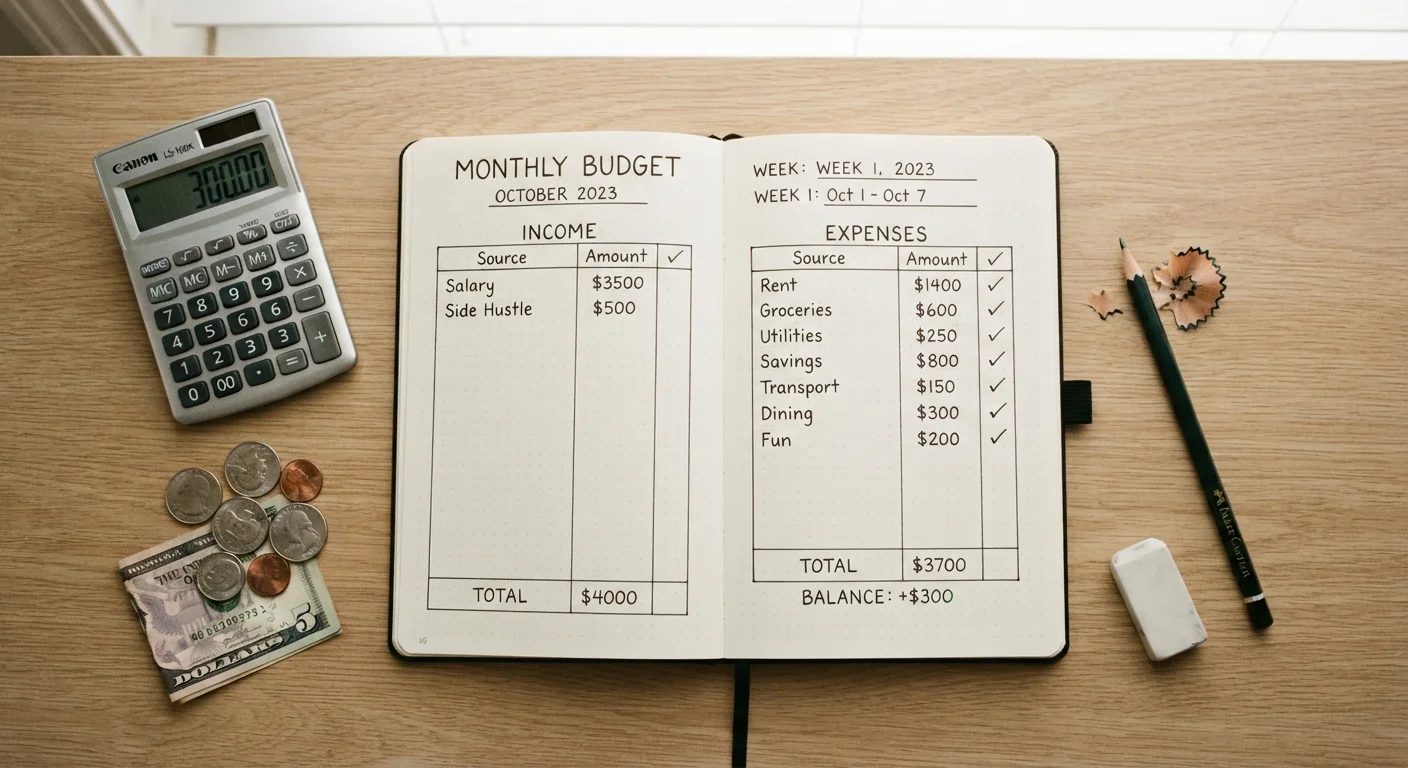
Every dollar of income gets assigned a category until the balance reaches zero - not because you've spent it all, but because every dollar has a designated purpose, including savings. You start fresh each month. This takes more time upfront but eliminates the fuzzy middle ground of "I'm not sure where that $200 went."
It works well for people who want granular control or are paying down debt aggressively. It's harder to maintain with irregular income because you're building a new plan each cycle. How zero-based compares to percentage methods goes deeper on that trade-off.
Envelope Method
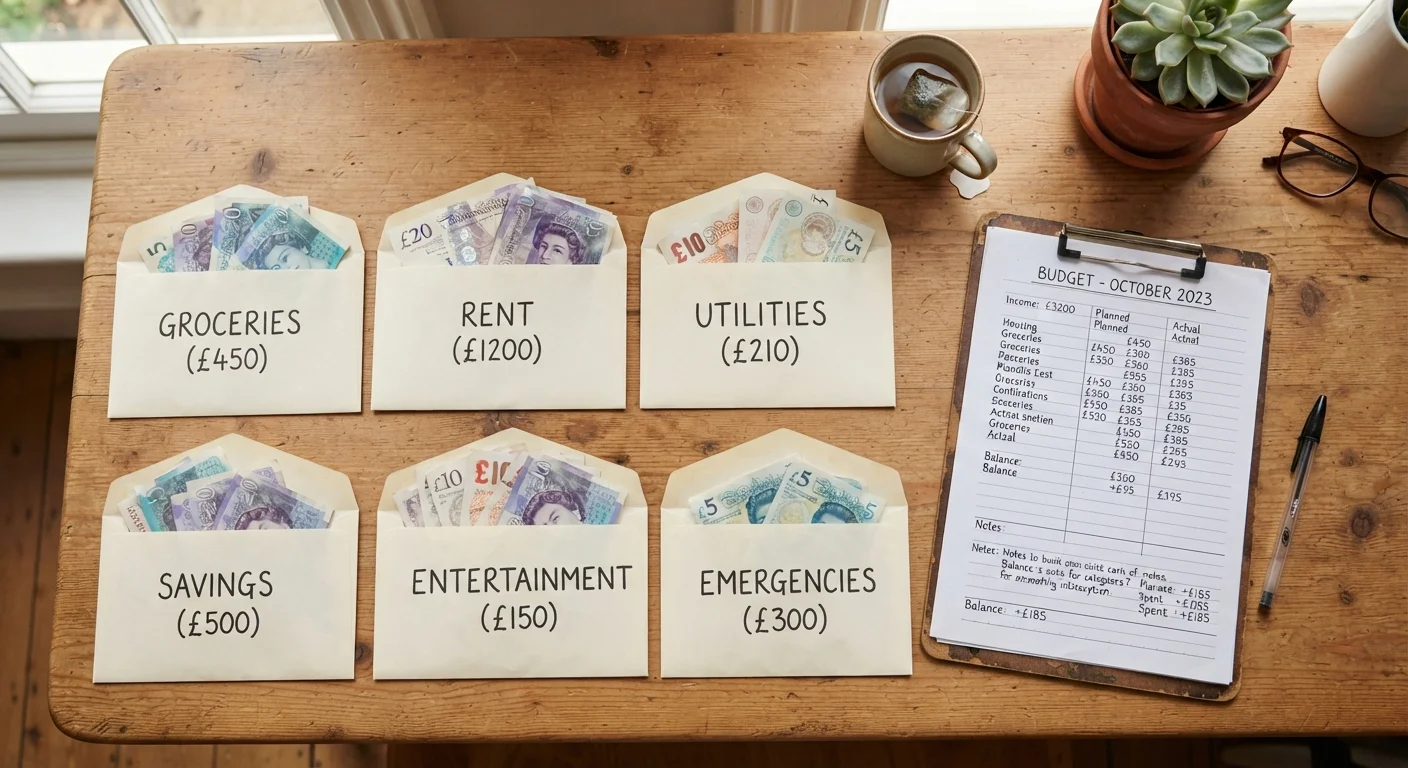
Originally a cash-based system, the envelope method allocates a fixed dollar amount to spending categories - literally placing cash into labeled envelopes. When the envelope is empty, spending in that category stops for the month. Digital apps now replicate this with virtual envelopes.
Research in behavioral economics consistently finds that spending physical cash feels more "real" than swiping a card, which is the psychological engine behind this method. It's most effective for the categories where people most often overspend: groceries, restaurants, and entertainment.
Trying the Envelope Method Digitally
You don't need physical cash to use this approach. Several free budgeting apps let you set up virtual envelopes or spending limits by category and alert you when you're close to the ceiling. This works especially well if you rely on debit cards but want the behavioral discipline of a hard stop on specific categories.
Pay-Yourself-First
This approach reverses the usual sequence: savings come out of your paycheck immediately - ideally via automatic transfer - before you pay bills or spend on anything else. What remains is yours to allocate however you like, with no strict category rules.
It's the lowest-maintenance method for building savings but provides no guardrails on discretionary spending. It works best for people whose fixed expenses are already manageable and who simply need to stop spending savings before they accumulate.
Which Framework Fits Your Situation
The honest answer is that the framework you'll actually stick with is the right one. That said, a few practical signals can point you in the right direction.
- Tight on time: 50/30/20 or pay-yourself-first require the least ongoing effort.
- Irregular income (freelance, seasonal, gig work): Zero-based budgeting lets you re-plan each month based on what you actually earned; pay-yourself-first can also work if you save a percentage rather than a fixed amount.
- Specific overspending problem: The envelope method targets habitual category overspending more directly than any other approach.
- Primary goal is debt payoff: Zero-based gives you the clearest picture of how much is available to throw at debt each month.
For a comprehensive roadmap that integrates budgeting with longer-term financial planning, the complete household budgeting roadmap covers how to layer savings goals, expense categories, and adjustments over time. You can also browse budgeting basics for related guides across this topic area.
This article is for general informational and educational purposes only and does not constitute personalized financial advice. Consider speaking with a qualified financial professional about decisions specific to your situation.