Why Routine Habits Keep Financial Stress Alive
Financial stress rarely arrives all at once. More often, it's sustained by small, repeated behaviors that feel neutral or even sensible in the moment. The habit of mentally noting 'I should deal with that later' about a bill, or the impulse to check a balance four times before noon - these aren't character flaws. They're common anxiety responses that happen to keep the cycle running.
Understanding the behavioral side of money anxiety matters because income alone doesn't reliably end it. Research in behavioral economics consistently shows that how people relate to financial information - how often they look at it, how they frame it internally, how much they talk about it - affects stress levels independently of account balances. Examining your automatic financial behaviors is often more revealing than reviewing a budget spreadsheet.
72%
Americans reporting money as a significant stress source
According to the American Psychological Association's Stress in America surveys, financial concerns have consistently ranked among the top stressors for US adults across multiple years.
1 in 3
Adults who avoid looking at bank statements due to anxiety
Financial avoidance behavior is widely documented in behavioral economics research as a common coping response to monetary stress, often worsening the underlying situation.
The habits below are common across income levels. Recognizing them is the first step toward replacing them with behaviors that actually reduce stress rather than manage its symptoms.
The Habits Worth Recognizing and Changing
Each of the following patterns shows up across demographics - in people earning modest incomes and in those earning well above average. They persist because they provide short-term relief while quietly sustaining the conditions that cause stress.
Swinging between obsessive balance-checking and complete financial avoidance.
Why it happens: Both behaviors are anxiety responses. Checking repeatedly feels like staying in control; avoiding feels like relief. Neither actually processes the underlying stress.
Keeping money goals vague, such as 'I need to save more' or 'I should spend less.'
Why it happens: Vague intentions feel safer because they can't be failed concretely. But without a measurable target, the underlying worry never has a clear resolution point.
Using unplanned purchases as emotional relief from financial stress.
Why it happens: Spending produces a brief dopamine response that temporarily suppresses anxiety. The irony is that the resulting guilt and reduced account balance tend to increase the original stress.
Treating financial stress as a private failing and avoiding all money conversations.
Why it happens: Money carries significant cultural shame in the US. Most people assume their financial anxiety is unique or embarrassing, so they stay silent rather than risk judgment.
Conflating net worth with self-worth, causing shame spirals that paralyze action.
Why it happens: Cultural messaging routinely links financial position to personal value. When finances feel unstable, self-esteem can dip - which reduces motivation to engage with the problem.
Avoidance Doesn't Make the Numbers Change
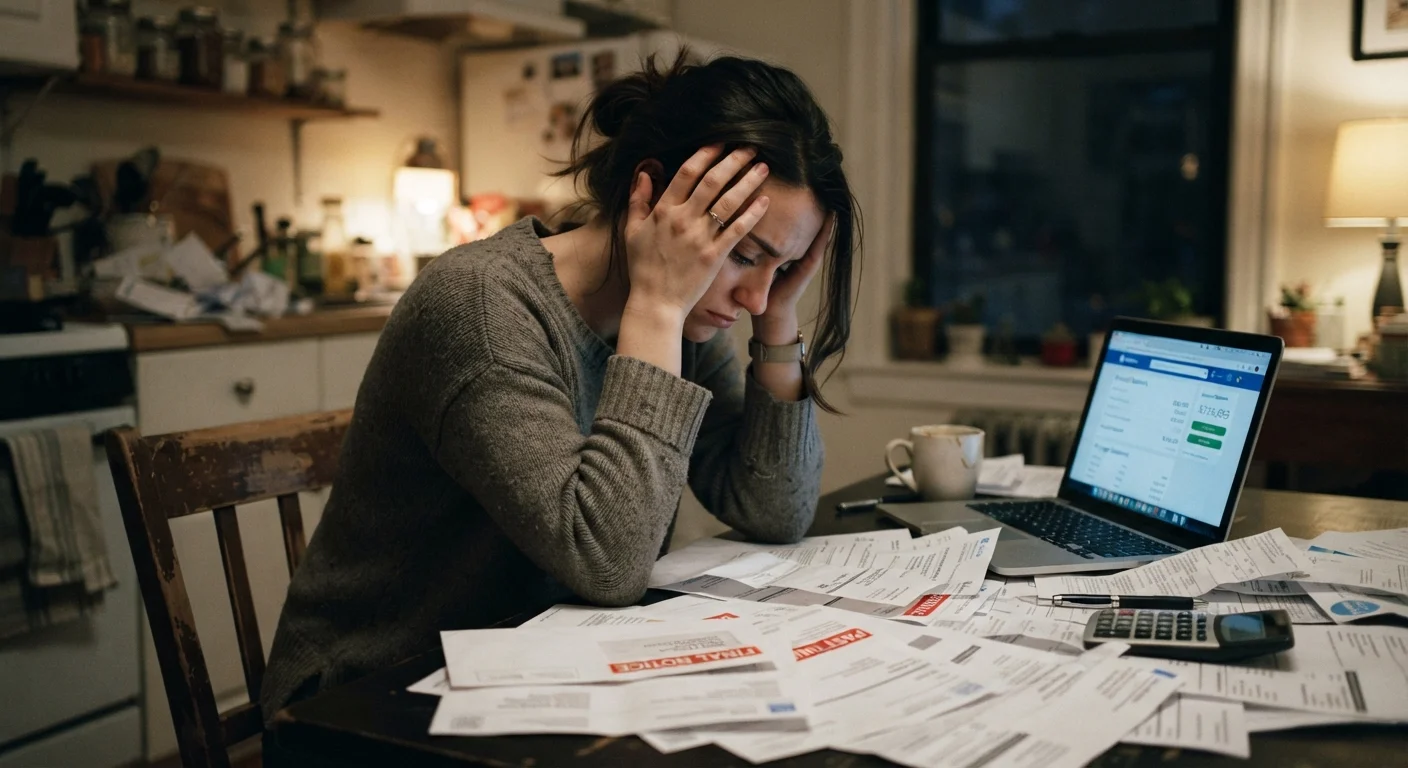
Steering clear of your bank account, credit card statements, or budget spreadsheet feels protective in the short term. In practice, it allows problems to compound - late fees accumulate, overdrafts go unnoticed, and debt grows. The discomfort of looking is almost always smaller than the cost of not looking.
Financial stress often shows up in spending patterns before it becomes a full crisis. Noticing behavioral shifts early gives you more options. If you find yourself in a persistent paycheck-to-paycheck dynamic, it's worth understanding the structural factors that keep people in that cycle rather than attributing it solely to individual habits.
Some of these patterns also intersect with broader debt-sustaining behaviors that extend repayment timelines unnecessarily. Addressing the behavioral layer doesn't replace a solid debt or savings strategy, but it removes the friction that keeps people from engaging with one.
Financial Stress Has Real Health Consequences
Chronic financial anxiety is associated with sleep disruption, elevated stress hormones, and reduced decision-making quality - all of which make financial problems harder to solve. This article provides general information, not medical or financial advice. If financial stress is significantly affecting your mental or physical health, consider speaking with a qualified healthcare provider or licensed financial counselor.
This article is for general informational purposes only and does not constitute financial, psychological, or medical advice. For guidance specific to your situation, consult a licensed financial professional or qualified healthcare provider.