
Why Money Conversations Feel So Hard
Money is not just a practical matter - it's deeply tied to identity, security, and self-worth. Research in behavioral economics consistently shows that people experience financial loss more intensely than equivalent gains, and that financial shame is one of the most powerful drivers of avoidance. When you avoid talking about money, it's often not because you don't care. It's because the conversation feels like a referendum on your choices, values, or competence.
Different people also bring very different money histories to the table. Someone who grew up in a household where money was a source of conflict may go silent when finances come up - not out of indifference, but out of a learned self-protective response. Understanding this doesn't excuse avoidance, but it makes it easier to approach the other person with curiosity rather than frustration. For a deeper look at how these patterns form, Everyday Habits That Quietly Reinforce Financial Stress covers how routine behaviors can sustain money anxiety rather than resolve it.
This Is General Guidance, Not Counseling
This article offers general communication strategies for money conversations. It is not a substitute for financial counseling, relationship therapy, or legal advice. If financial conflicts are creating significant strain in a relationship, consider speaking with a licensed financial therapist or counselor who can provide support tailored to your situation.
What You'll Need Before You Start
Showing up prepared makes the conversation measurably more productive. Gather your basic financial information, pick a setting that works, and think briefly about what outcome you're actually hoping for.
What you will need
Recent bank or credit card statements
Gives both parties a shared factual reference point rather than relying on memory or estimates.
A simple shared document or notepad
Lets both people write down agreed-upon goals or action items during the conversation so nothing is forgotten.
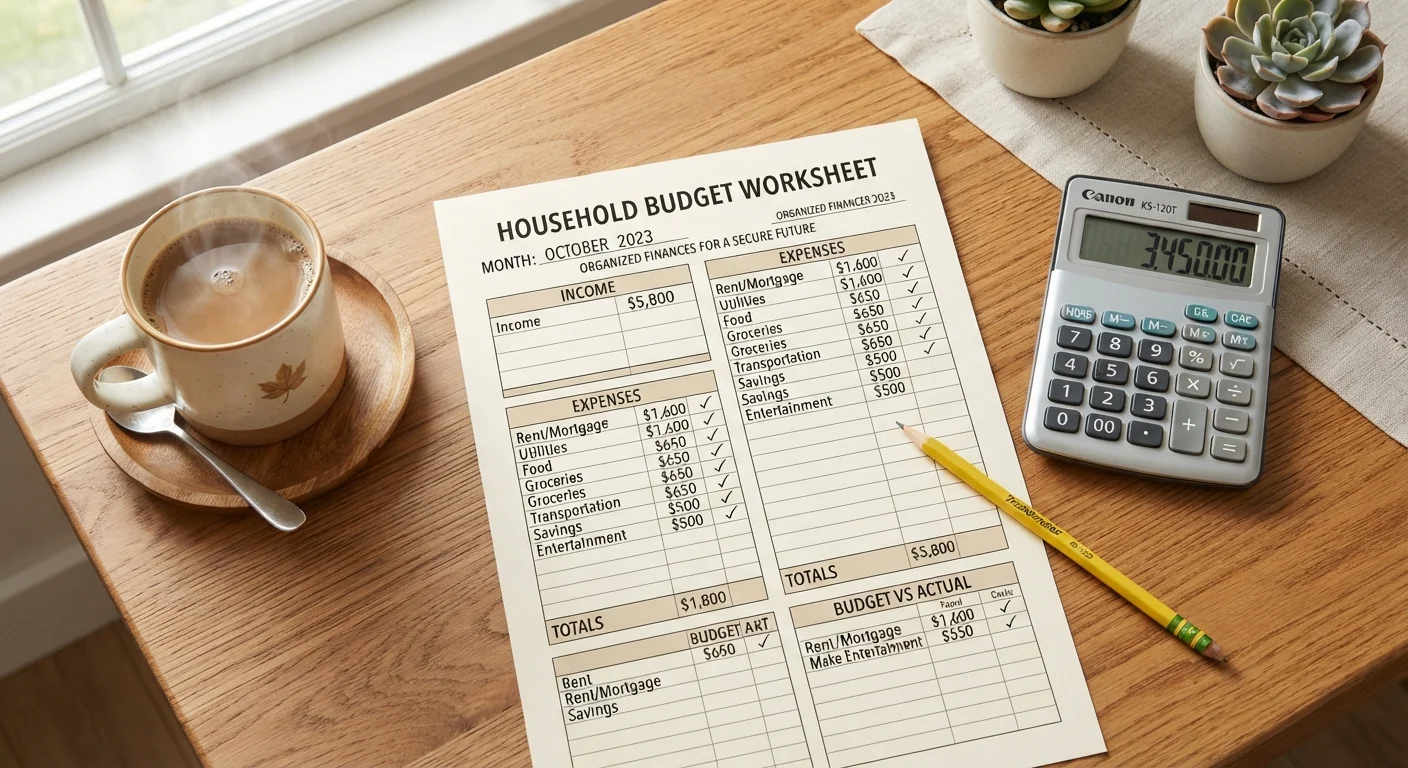
A household budget summary
Provides a clear overview of income and spending that both parties can review together without surprises.
How to Have the Conversation
These steps apply broadly - whether you're talking to a partner about shared finances, a family member about splitting expenses, or a friend about an awkward money imbalance. Adjust the specifics for context, but the underlying approach is consistent.
Get clear on your own financial position first
Before you can talk honestly with someone else about money, you need a reasonably clear picture of your own. Review your income, regular expenses, savings, and any outstanding debts. You don't need to have everything figured out - you just need to show up knowing the basics. Going in blind tends to produce vague conversations that don't lead anywhere useful.
If you've never done this kind of honest self-audit, Building a Healthier Relationship With Money From the Ground Up is a solid starting point.
Choose the right moment and setting
Timing is not a minor detail. A conversation started in the car on the way to an event, or after a stressful day, is unlikely to go well. Choose a time when both people are rested, not hungry, and not under immediate time pressure. A quiet location at home - away from children or distractions - usually works better than a public place for sensitive topics.
For family conversations involving multiple people, consider scheduling a specific time rather than springing it on them. A brief heads-up - 'I'd like to talk about how we're splitting some costs this year - can we set aside 30 minutes this weekend?' - reduces the element of surprise that often triggers defensiveness.
Open with shared stakes, not grievances
How you open the conversation largely determines how it will go. Starting with blame or past failures - 'You always overspend' - immediately puts the other person on the defensive. Instead, anchor the conversation in a shared concern or goal: 'I want us to feel less stressed about money' or 'I'd like to make sure we're on the same page before the holidays.'
This isn't about softening hard truths. It's about establishing that you're on the same side of the table - which makes it easier to actually solve something together.
Share your perspective using first-person framing
Statements that begin with 'you' tend to sound like accusations, even when they're not meant that way. Reframe them around your own experience: 'I feel anxious when I don't know what we've spent' lands differently than 'You never tell me what you spend.' This approach doesn't mean avoiding difficult truths - it means delivering them in a way the other person can actually hear.
Be honest about your own financial anxieties and habits too. Vulnerability tends to open the other person up rather than shut them down. If you carry financial stress that affects your behavior, name it plainly rather than waiting for them to guess.
Agree on specific, realistic next steps
The goal of a money conversation isn't to resolve every financial question in one sitting - it's to agree on something concrete. That might be reviewing a shared budget together next week, deciding who handles which bills, or agreeing to revisit a difficult topic after both of you have thought it through.
Write down whatever you agree on. A shared note or a simple document prevents the conversation from evaporating after the fact. If you're managing money together as a couple, Managing Money as a Couple covers what tends to work - and what commonly causes friction - in more detail.
Use Numbers, Not Labels
Instead of describing a partner or family member as 'bad with money,' try naming the specific behavior: 'I noticed we've gone over the grocery budget three months in a row - can we look at that together?' Behavioral specificity reduces shame and keeps the conversation focused on problem-solving.
Building a Pattern of Ongoing Communication
A single honest conversation is a start, not a finish. Financial circumstances change - income shifts, unexpected expenses arise, and priorities evolve. People who report the least financial conflict in their relationships tend to have regular, low-stakes check-ins rather than rare, high-stakes summits. Monthly or quarterly conversations about money normalize the topic and catch small misalignments before they become resentments.
If you want to go further in understanding your own relationship with money, Auditing Your Money Mindset offers a reflective set of questions worth working through - ideally before the next conversation. And if managing shared finances is part of the picture, Saving & Debt offers practical guidance on building savings and managing debt as a household.
This article is for informational purposes only and does not constitute financial, legal, or relationship advice. For guidance tailored to your specific circumstances, consider speaking with a qualified financial counselor or licensed therapist.