
The Either/Or Myth in Personal Finance
Conventional wisdom often frames saving and debt repayment as competing priorities: pay off debt first, then save. The logic seems intuitive - why earn 4% on savings when you're paying 20% in credit card interest? But this all-or-nothing mindset can leave people financially exposed and, ironically, more vulnerable to taking on new debt.
The reality is that most financial situations don't fit a single formula. Someone carrying student loans at 5% interest while trying to build a starter emergency fund is in a fundamentally different position than someone with $15,000 in high-interest credit card debt. Understanding how interest rates affect both saving and debt is the foundation for making this call clearly.
A blended approach - directing money toward both goals simultaneously - is a legitimate strategy, not a compromise. The key is knowing when and how to divide your resources.
Pros of Saving While Paying Down Debt
There are genuine advantages to maintaining some savings momentum even while carrying debt. Here's why the dual approach works for many households.
Builds a financial safety net against new debt
A small emergency fund prevents unplanned expenses from landing on a credit card. Without any savings buffer, a single setback can add more debt than weeks of repayment have reduced.
Develops lasting savings habits alongside debt payoff
Stopping savings entirely during debt repayment can make restarting feel difficult once debt is gone. Maintaining a small contribution keeps the habit active and reduces the mental reset required later.
Captures employer retirement matches immediately
If an employer matches retirement contributions, forgoing that match to pay down debt means leaving guaranteed money behind - often a better effective return than eliminating moderate-interest debt.
Reduces financial anxiety with visible progress on both fronts
Watching both a savings balance grow and a debt balance fall - even slowly - can be more motivating than a single-track approach that produces no savings cushion for years.
Building an emergency fund, even a modest one covering one to two months of essential expenses, is particularly important. Without it, an unexpected car repair or medical bill often ends up on a credit card - creating new high-interest debt that cancels out recent repayment progress. See our guide to building a savings habit from zero for practical first steps.
Cons of Splitting Your Resources
The dual approach has real drawbacks, and being honest about them helps you calibrate your strategy rather than stumble into it blindly.
Interest costs outpace savings returns on high-rate debt
Credit card APRs commonly exceed 20%, while most savings accounts earn far less. Splitting funds means paying more in interest than savings generates, resulting in a net financial loss.
Slower total debt elimination extends repayment timeline
Every dollar directed to savings is a dollar not reducing the principal balance. This extends the life of the debt and the total interest paid over time.
Requires discipline to avoid lifestyle creep
Splitting contributions demands consistent budgeting. Without a clear plan, money earmarked for either goal can disappear into discretionary spending before it's allocated.
Low-yield savings may feel discouraging relative to debt cost
Seeing a modest savings balance grow slowly while a large debt balance persists can undermine motivation, particularly in the early stages when both numbers move incrementally.
High-interest debt is the clearest case where savings should take a back seat - at least beyond a minimal buffer. If you're paying 22% APR on a credit card balance, making only minimum payments is extremely costly over time. Every dollar redirected to that balance effectively earns a 22% guaranteed return, which no savings account can match.
~$7,000
Average US household credit card balance
Federal Reserve data consistently shows American households carry thousands in revolving credit card debt, underscoring why interest rate math matters when allocating limited income.
22%+
Average credit card APR in recent years
The Consumer Financial Protection Bureau has noted that average credit card interest rates have risen significantly, making high-rate debt one of the most costly financial obligations for households.
Finding the Right Balance for Your Situation
There is no universal split - but a few practical frameworks can help you find a proportion that fits.
- Minimum emergency fund first: Before aggressive debt repayment, most financial educators suggest building at least $1,000 to $2,000 as a starter emergency fund to absorb shocks without resorting to new borrowing.
- Match employer retirement contributions: If your employer matches 401(k) contributions, capturing that match before putting extra cash toward debt is generally worth it - it's an immediate, guaranteed return on dollars that would otherwise be left on the table.
- Prioritize by interest rate: Once you have a minimal cushion, direct extra money toward your highest-rate debt. Review the debt avalanche vs. snowball methods to find the payoff structure that fits your psychology and math.
- Automate small amounts: Even $25 a month going into savings while you pay down debt maintains the habit and keeps your account from sitting dormant.
When to Lean Heavily Toward Debt Repayment
If your debt carries an interest rate above roughly 7-8%, most financial educators suggest prioritizing repayment beyond the minimum emergency cushion. The math is straightforward: high-rate debt grows faster than most savings instruments can compensate. Once high-rate balances are cleared, redirecting those payments to savings accelerates wealth-building significantly. Consider reviewing approaches that work for high-interest debt before committing to a split.
For those with unpredictable income, the balance is harder to maintain. Managing savings on a variable income requires flexible systems rather than fixed dollar targets.
Making It Work Without Feeling Stretched Thin
The psychological weight of carrying debt while saving is real. Watching debt balances shrink slowly can be discouraging, especially when savings balances seem equally sluggish. A few habits help.
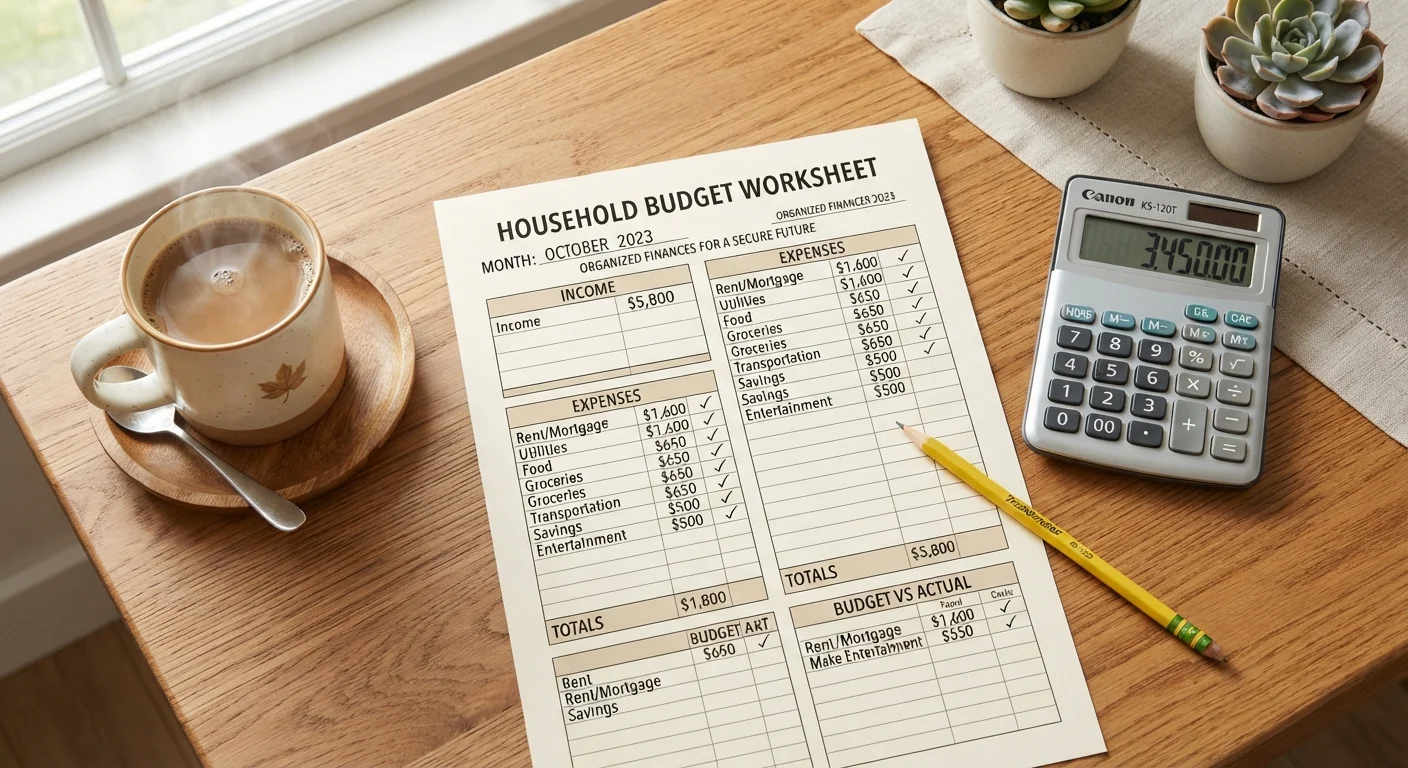
Track both metrics together - total debt reduction plus total savings growth - as a combined net worth improvement. This reframes progress and makes the dual effort feel less like running in place. Tools like a simple spreadsheet or a basic household budget can make both numbers visible and motivating.
Consider using sinking funds for predictable upcoming costs like car registration or annual insurance premiums. This prevents those expenses from becoming debt triggers and keeps your repayment plan on track.
Finally, revisit your split regularly. As income grows or a debt is eliminated, reallocate those freed-up dollars intentionally - either boosting savings, accelerating remaining debt repayment, or both. The goal is a dynamic strategy, not a set-it-and-forget-it formula.
This article is for general informational purposes only and does not constitute personalized financial advice. Consult a qualified financial professional for guidance specific to your circumstances.