How Minimum Payments Are Structured
When a credit card statement arrives, the minimum payment can feel reassuringly small - sometimes just $25 or $35 on a balance of over $1,000. Card issuers typically calculate it as the greater of a fixed floor amount or a small percentage of the outstanding balance, often between 1% and 3%. On a $3,000 balance at 2%, that's $60 - a figure that feels manageable but masks a serious mathematical problem.
The issue is what that $60 actually accomplishes. If your card carries a 20% annual percentage rate (APR), you're accruing roughly $50 in interest that month alone. Your $60 payment therefore reduces the principal - the actual debt - by only about $10. The remaining $2,990 then begins generating next month's interest charge, and the cycle restarts.
This structure is not accidental. Minimum payment formulas are set by card issuers, and while they meet regulatory requirements, they are calibrated to keep accounts open and generating interest revenue for extended periods. Understanding this dynamic is the foundation of smarter debt management. For more on financial patterns that prolong debt, see common habits that extend repayment timelines.
The Real Cost: Compound Interest Over Time
Credit card interest compounds - meaning interest charges are added to your balance and then themselves begin generating interest. Most issuers calculate interest daily using the annual rate divided by 365. Every day you carry a balance, the clock is running.
20%+
Average credit card APR in the US
The Federal Reserve has reported average credit card interest rates above 20% for general-purpose cards in recent years.
14+ years
Estimated payoff time on minimums only
A $3,000 balance at 20% APR paid at 2% minimum per month can take well over a decade to fully repay, based on standard amortization calculations.
$1,900+
Interest saved by paying $100/month vs. minimums
Illustrative calculation on a $3,000 balance at 20% APR, comparing minimum-only payments to a fixed $100 monthly payment.
Consider a concrete illustration: a $3,000 balance at 20% APR with a minimum payment set at 2% of the balance. Early payments barely dent the principal. As the balance slowly declines, so does the minimum payment amount, meaning you'd pay less each month - but at the cost of extending the repayment period. Under this scenario, it can take more than 14 years to clear the balance and cost over $3,000 in interest alone - effectively doubling the original debt.
The arithmetic shifts dramatically with a fixed, higher payment. Paying a consistent $100 per month on the same $3,000 balance at 20% APR reduces payoff time to roughly 3.5 years and total interest to around $1,100. That's a difference of more than $1,900 in interest saved. This is the core reason financial educators consistently emphasize paying more than the minimum whenever possible.
“The minimum payment is the most expensive way to use a credit card. It's designed to be affordable in the short term while maximizing the interest you pay over time.”
— Consumer Financial Protection Bureau, US federal agency focused on consumer financial education and protection
Why It's Easy to Underestimate the Problem
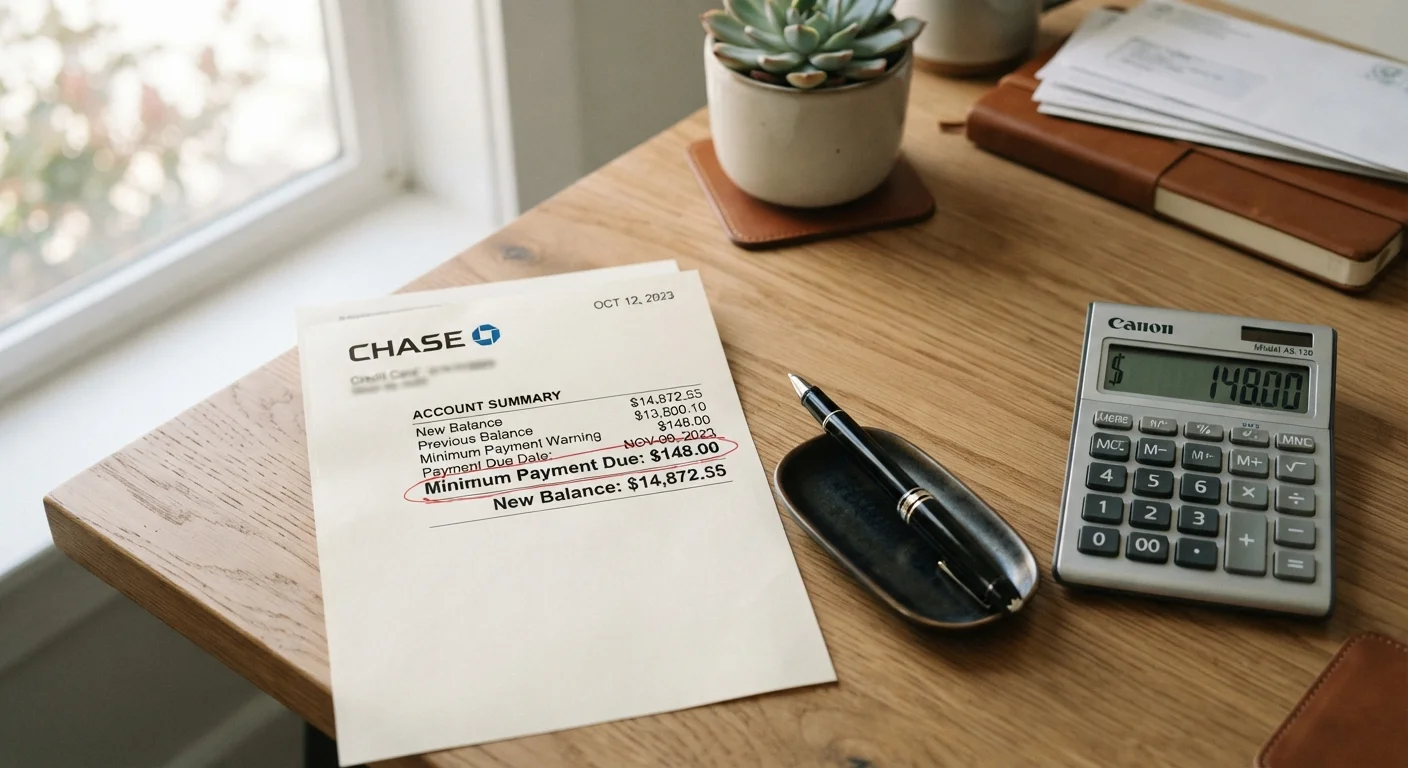
Most people intuitively understand that interest costs money, but the scale of the long-term cost is harder to feel. Credit card statements in the United States are required to include a minimum payment warning - a disclosure showing how long repayment would take and the total interest paid if only minimums are made. Research consistently finds that many cardholders don't read or act on this information.
Several psychological factors contribute. Small monthly minimums feel affordable, so the urgency to pay more diminishes. Purchases made months ago feel emotionally distant, making their ongoing cost less visible. And when a balance is large, paying it off can feel so far away that making a larger payment today seems pointless - a cognitive bias sometimes called "debt numbness."
Use Your Statement's Payoff Disclosure
By law, US credit card statements must include a minimum payment warning that shows your estimated payoff date and total interest if you pay only the minimum. Review this figure each month - seeing the actual numbers can make the cost of minimum payments concrete and motivate higher payments.
These same tendencies can spill over into broader spending behavior. Everyday shopping habits - like impulse purchases charged to a card and then carried as a revolving balance - compound the problem by continuously adding to the principal before it has a chance to decline.
Balancing Debt Repayment With Other Financial Goals
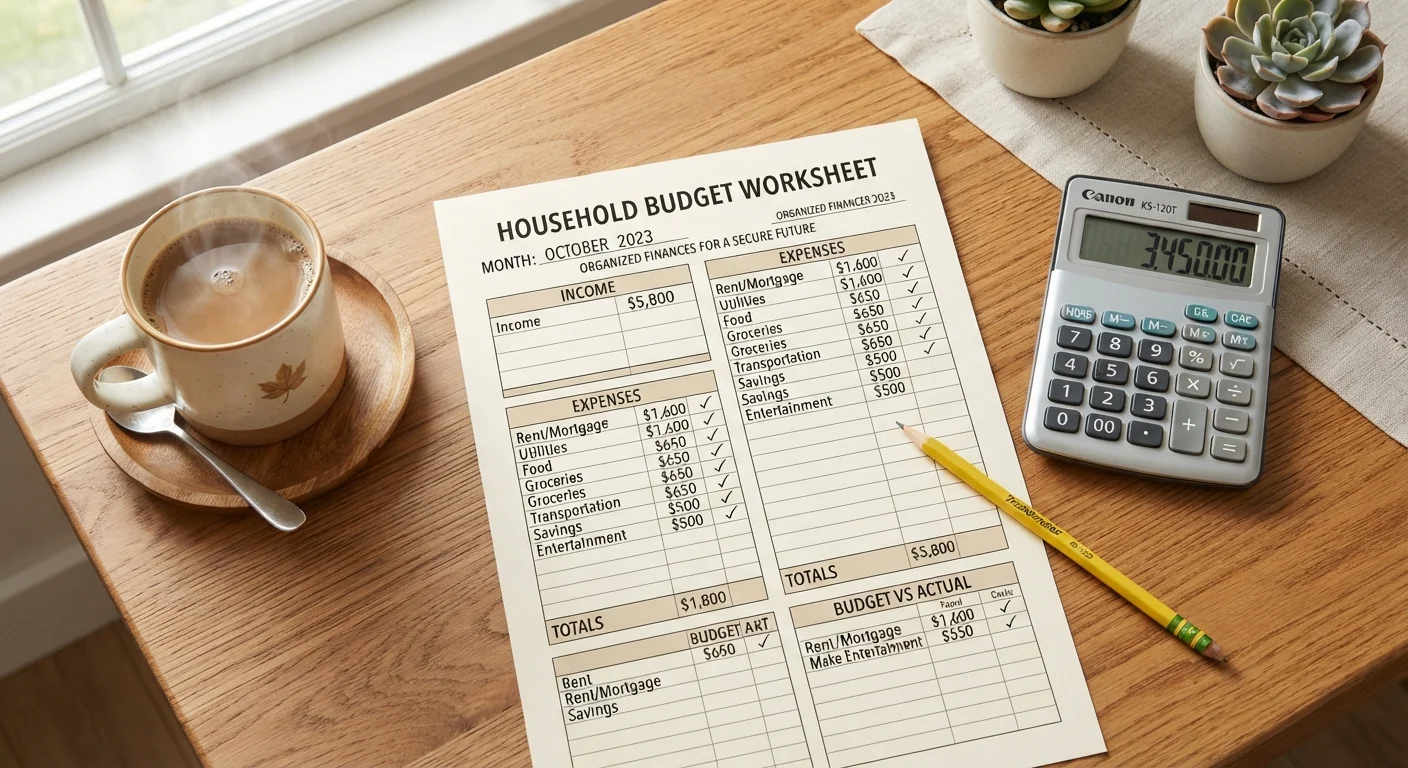
One reason people default to minimum payments is that money is already stretched thin. Rent, groceries, utilities, and other essentials compete with debt repayment for the same paycheck. Choosing between building a savings buffer and paying down credit card debt is a real and stressful dilemma for many households.
The practical answer is rarely all-or-nothing. Building savings and reducing debt simultaneously is possible with deliberate budgeting - even small incremental payments above the minimum add up over time. A modest emergency fund, for example, can prevent the next unexpected expense from landing on a credit card and adding to the balance.
Structured repayment strategies - such as targeting the highest-interest balance first or consolidating debt - can also accelerate progress. Proven approaches for paying down high-interest debt offer a starting point for readers ready to build a plan. For those working within a tight monthly budget, everyday budgeting strategies can help identify room to increase payments without disrupting essential expenses.
This article is for general informational and educational purposes only and does not constitute personalized financial advice. Consult a qualified financial professional for guidance tailored to your individual circumstances.