Why Airport Codes Exist and Who Sets Them
Every commercial airport in the world uses a three-letter code assigned by the IATA. These codes appear on boarding passes, baggage tags, and flight search tools. In the US, a separate system - ICAO codes - uses four letters and is primarily for aviation professionals and air traffic control. When you're booking a flight or checking a bag, IATA codes are what matter.
The FAA originally assigned two-letter identifiers to American airports in the 1930s. When IATA expanded its system globally, a third letter was added to avoid conflicts - which is why some older codes feel disconnected from the city name. Understanding this history explains a lot of the apparent randomness.
| Total US Airports with IATA Codes | Approximately 900 (IATA global airport directory) |
| Busiest US Airport by Passenger Volume | ATL (Hartsfield-Jackson Atlanta) (FAA, consistent ranking over multiple years) |
| Code Length (IATA) | 3 letters |
| Multi-Airport Cities | New York, Chicago, Washington D.C., Los Angeles |
Codes That Don't Match City Names - and Why
Several of the busiest US airports have codes that confuse first-time travelers. Here's the logic behind the most common ones:
- ORD (Chicago O'Hare): The site was originally called Orchard Field before being renamed to honor WWII pilot Edward "Butch" O'Hare. The OR + D shorthand stuck.
- MSY (New Orleans Louis Armstrong): Stands for Moisant Stock Yards, the land the airport was built on in the early 20th century.
- DFW (Dallas/Fort Worth): This one is straightforward - it combines the initials of both cities it serves, though travelers often just associate it with Dallas.
- LAX (Los Angeles): Originally LA, the X was added as a placeholder when two-letter codes ran out. It has no standalone meaning.
- MCO (Orlando): Named after McCoy Air Force Base, which preceded the civilian airport on the same site.
- BWI (Baltimore/Washington International): Serves both cities but is located in Maryland, closer to Baltimore - something worth knowing when booking a Washington-area trip.
If you're spending extended time between connections, see our guide to making the most of a layover for practical advice on leaving the terminal safely and efficiently.
IATA Code
A three-letter identifier assigned by the International Air Transport Association to every commercial airport worldwide. These codes appear on tickets, boarding passes, and baggage tags.
ICAO Code
A four-letter code used by aviation professionals and air traffic control, assigned by the International Civil Aviation Organization. Different from IATA codes and not typically visible to passengers.
Hub Airport
A major airport that serves as a central connection point for an airline's route network, channeling passengers from smaller markets onto longer routes.
Connecting Flight
A flight itinerary that requires a stop at an intermediate airport before reaching the final destination, often routed through a hub.
Key US Hub Airports by Region
Major hub airports handle the most connecting traffic and serve as regional anchors. Knowing which hub covers your region helps when your preferred direct flight isn't available.
900+
US airports with IATA codes
The FAA and IATA maintain codes for commercial and general aviation airports across all 50 states.
Top 10
US hubs handle the majority of connecting traffic
Airports like ATL, ORD, DFW, and LAX consistently rank among the world's highest-traffic connection points.
| Region | Airport | Code |
|---|---|---|
| Northeast | John F. Kennedy International | JFK |
| Northeast | Logan International (Boston) | BOS |
| Mid-Atlantic | Dulles International | IAD |
| Southeast | Hartsfield-Jackson Atlanta | ATL |
| Midwest | O'Hare International | ORD |
| South Central | Dallas/Fort Worth | DFW |
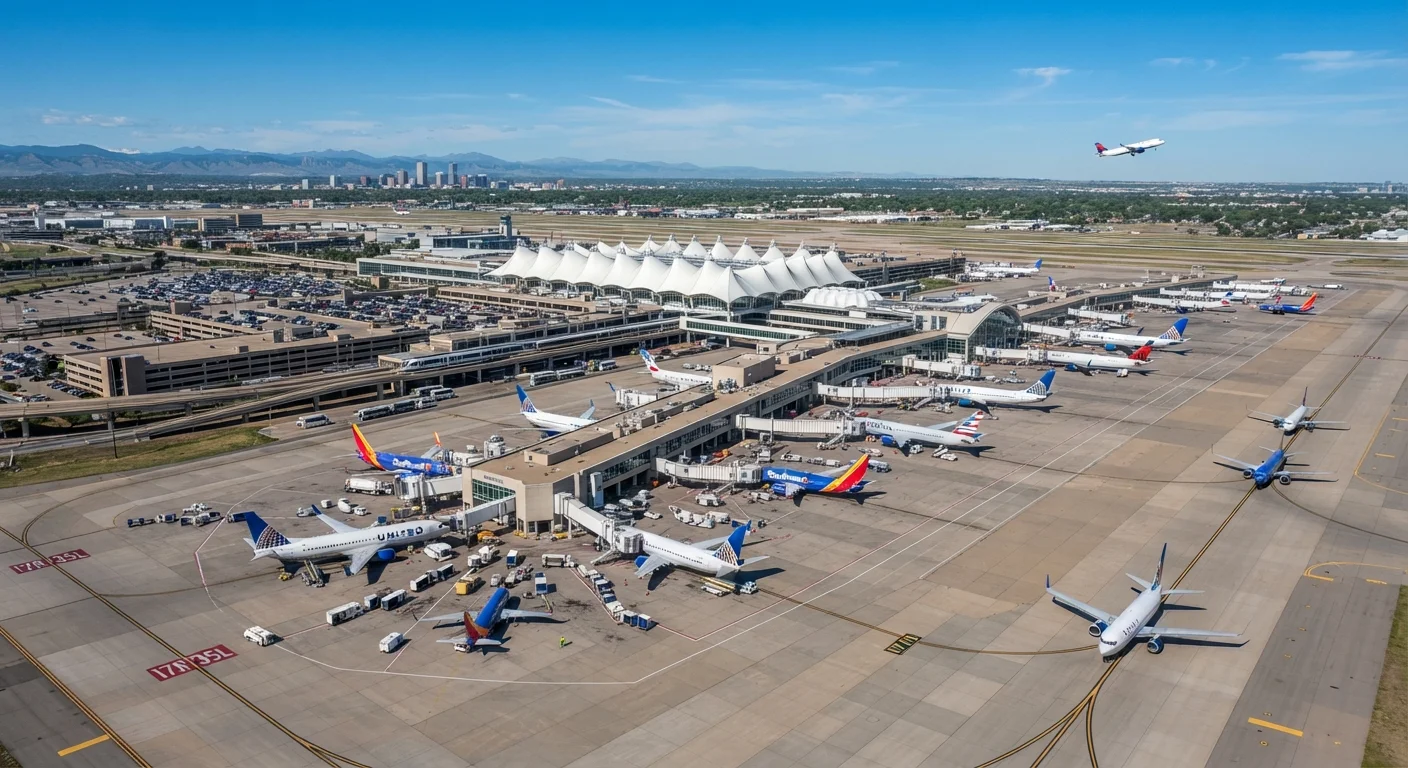
| Mountain West | Denver International | DEN |
| Pacific Coast | Los Angeles International | LAX |
| Pacific Coast | Seattle-Tacoma International | SEA |
Cities served by multiple airports - New York (JFK, LGA, EWR), Washington D.C. (DCA, IAD, BWI), and Chicago (ORD, MDW) - require extra attention when booking. Always confirm which airport your flight uses, since they can sit 30-60 miles apart.
Double-Check the Airport When Booking
Flight search tools sometimes default to whichever airport has the lowest fare, which may not be the one nearest to your actual destination. In multi-airport metro areas like New York or Washington D.C., the difference between airports can mean an extra hour of ground travel each way. Always verify the code on your itinerary before completing a purchase.