
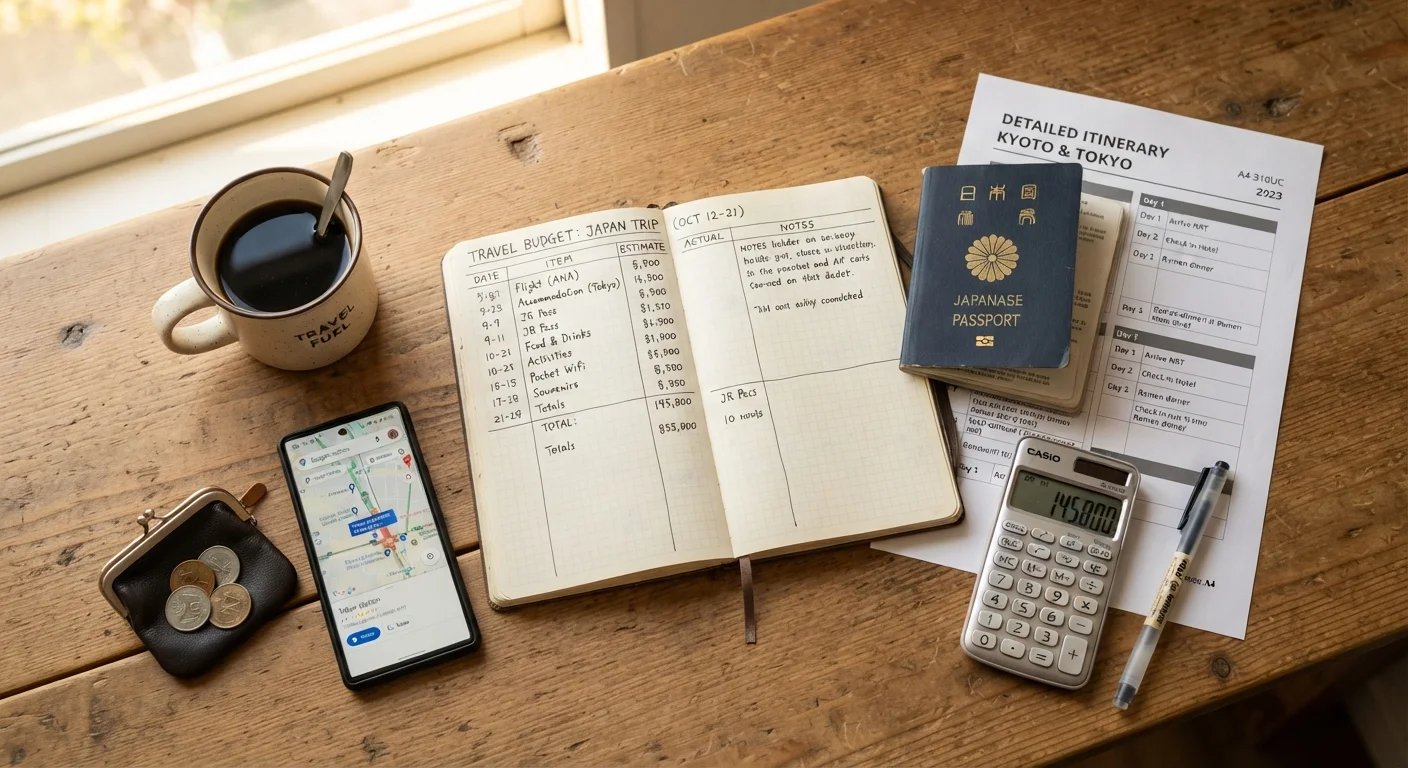
Why Most Travel Budgets Fall Short
The gap between what a trip costs on paper and what it costs in practice almost always traces back to the same mistakes: using advertised prices instead of all-in prices, ignoring incidentals, and leaving no room for the unexpected. Most travelers budget for flights and hotels and then stop - which means food, transport, activities, tips, and emergencies all land as surprises.
A realistic budget doesn't mean planning for every dollar to perfection. It means building a clear, category-by-category estimate using real numbers, then adding a cushion. The result is a figure you can save toward with confidence rather than a guess you hope works out. If you've ever walked away from a trip wondering where the money went, these steps will help close that gap.
This approach fits naturally into broader financial planning - particularly if you're working through common budgeting myths that make people avoid planning altogether.
What you will need
What You'll Need Before You Start
You don't need specialized tools or financial expertise to build a solid trip budget - just a structured approach and a willingness to look up real numbers rather than estimate from memory. Gather your inputs, set up a simple tracking format, and work through each cost category in order.
Spreadsheet (digital or paper)
Record and total each budget category so you can see the full picture at a glance.
Flight search tool
Research realistic airfare ranges for your travel window, including all fees.
Accommodation research tool
Check real nightly rates and total costs including taxes for your destination and dates.
Destination cost guides or traveler forums
Verify realistic daily food, transport, and activity costs from recent on-the-ground reports.
Define your trip parameters
Before any numbers make sense, establish the basics: destination, travel dates, trip length, and number of travelers. These variables determine every cost that follows. A 5-night trip for two to a major city will look completely different from a 10-night trip for one to a rural area. Write these down as fixed inputs.
Research and record your transportation costs
Look up current airfare for your travel window and record the all-in price - including taxes, baggage fees, and seat selection. Do the same for ground transportation: airport transfers, rental cars, public transit passes, or rideshares. If driving, calculate fuel costs based on your vehicle's actual mileage and the current price per gallon for your route. Don't forget parking fees at your home airport or destination.
For more on finding realistic airfare, see why standard flight searches miss better fares.
Estimate lodging costs at the all-in rate
Search for accommodation for your exact dates and record the total price shown at checkout, not the per-night advertised rate. Multiply nightly rates by the number of nights and add any mandatory fees. If you're exploring alternatives to hotels, other accommodation types are worth comparing on total cost, not just nightly price.
Calculate a realistic daily food budget
Estimate what you'll spend on food and drink each day, broken into meals. Look up actual menu prices at typical restaurants in your destination - not just fine dining or fast food, but the middle tier you'll realistically use. Multiply your per-person daily food estimate by the number of travelers and days. Add a line for groceries if you'll have access to a kitchen.
[tip_callout]List and price your planned activities
Write out every activity, attraction, or experience you're likely to pursue. Look up current admission prices, tour costs, equipment rental fees, or event ticket prices and record each one. Include transportation to and from each activity. This is the category most travelers underestimate - a few paid attractions per day add up fast across a week-long trip.
Pair this with a realistic schedule - building an itinerary that holds helps you avoid overpacking your days and your budget simultaneously.
Add incidentals, tips, and a contingency fund
Incidentals - souvenirs, pharmacy items, laundry, extra snacks, unexpected transit - are easy to omit and almost always show up. Add a daily incidental allowance based on your spending habits, then add gratuities where tipping is customary. Finally, add your contingency buffer: 10-15% of your running total. This is the number that keeps an unexpected cost from derailing the whole trip.
[important_callout]Total every category and compare to your savings capacity
Add all categories to reach a total projected trip cost. Divide that by the number of months until departure to find your monthly savings target. If the figure exceeds what's feasible, revisit categories - lodging flexibility and activity choices tend to offer the most room to adjust. For a broader look at how travel budgeting fits into household finances, see building a household budget from the ground up.
Keeping Your Budget Honest After You Book
A budget built before departure is only useful if you revisit it as you make actual bookings. Each time you confirm a flight, lock in accommodation, or buy tickets, update your budget with the confirmed total. This keeps your contingency fund accurate and surfaces any category that's running over before you leave.
During the trip itself, a quick daily tally - even a rough mental note or a note in your phone - helps you stay on track without turning every purchase into a stressful calculation. For broader strategies on trimming costs across the whole trip, the budget traveler's playbook covers airfare strategy through on-the-ground spending in one place.
Building a realistic trip budget is also a transferable skill. The same category-by-category discipline that prevents travel surprises works equally well for home projects - see what home improvement projects actually cost beyond the estimate for a parallel approach.
Advertised Prices Rarely Tell the Full Story
Flight prices shown in search results often exclude baggage fees, seat selection, and airport taxes added at checkout. Hotel rates may not include resort fees or parking charges billed at checkout. Always click through to the final confirmation screen to capture the true all-in cost before recording any figure in your budget. See what fees to look for before confirming to know exactly what to scrutinize.