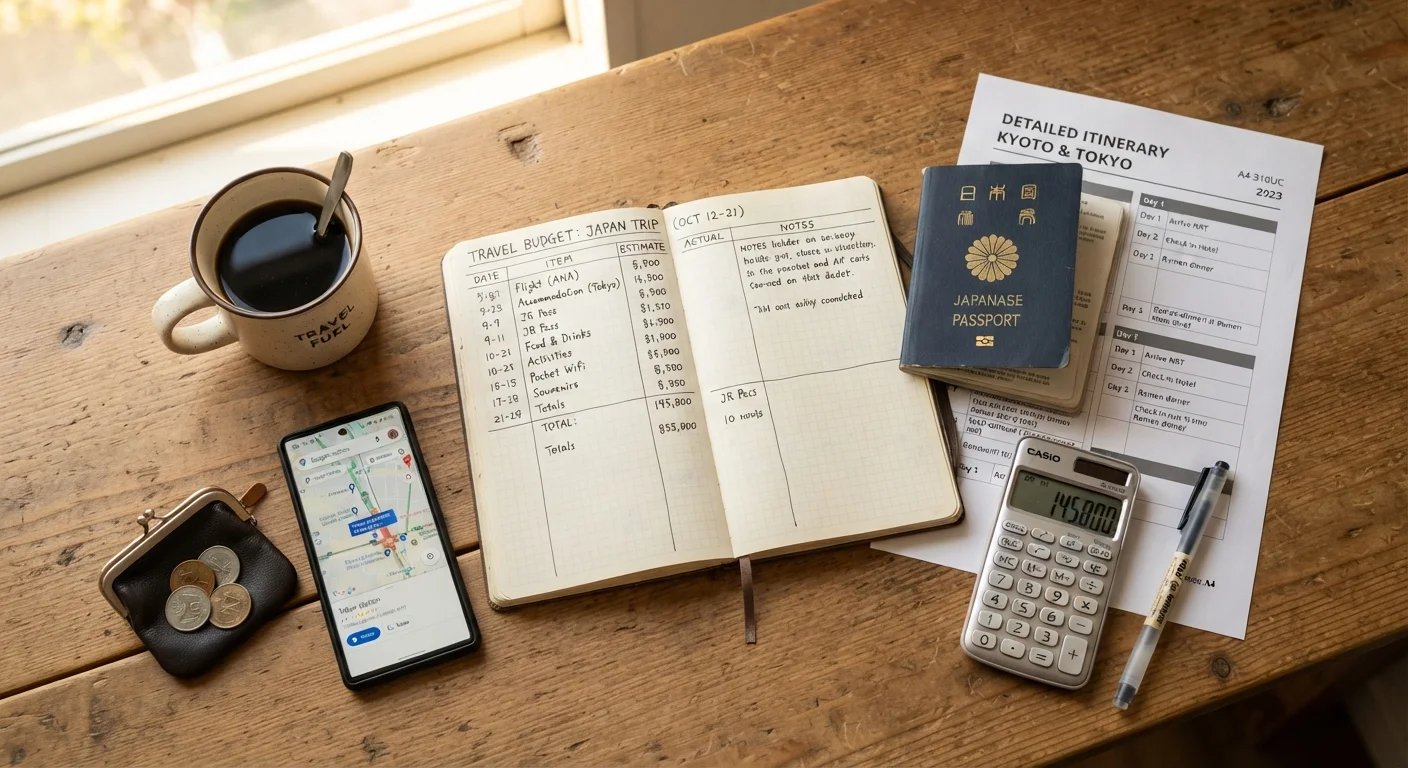

Start With a Realistic Trip Budget
Before you search for flights or browse hotel listings, put a number on paper. Travelers who build a budget before booking consistently make better decisions at every step. If you've never built a personal budget before, the principles in our beginner's budget guide apply directly here.
A solid trip budget covers five categories: transportation (flights, trains, car rental), lodging, food and drink, activities, and a contingency reserve of roughly 10-15% of your estimated total. Most travelers undercount food and activities - those two categories often run 30-40% of a trip's actual cost. For a deeper walkthrough of how to estimate each line item accurately, see our guide to building a trip budget that reflects reality.
38%
Of trip costs attributed to food and activities
Travel industry budget breakdowns consistently show food and activities together account for roughly a third or more of total trip spending for leisure travelers.
10-15%
Recommended contingency reserve
Financial planners and experienced travel advisors commonly suggest reserving 10-15% of a trip's estimated cost for unexpected expenses.
20-30%
Added to hotel base rates by fees and taxes
Resort fees, destination charges, and local taxes routinely add 20-30% above the advertised nightly rate at many U.S. and international properties.
Airfare: When to Book and How to Think About It
Airfare is typically the largest single expense for domestic and international trips, and it's also the most volatile. Prices shift based on demand, time of year, day of week, and how far out you're searching. General patterns suggest booking domestic flights roughly 3-6 weeks in advance and international flights 2-5 months out for typical routes - but this varies significantly by destination and season.
The most reliable cost lever is flexibility. Travelers who can depart mid-week, choose less-trafficked airports, or shift travel by a week or two consistently find lower fares than those locked into specific dates. Comparing nearby departure airports is worth doing if you're within reasonable driving distance of multiple options.
Search for flights using the destination's local airport code, not just the major hub - smaller regional airports sometimes serve the same metro area at materially lower fares.
Travelers anchored on one airport frequently miss meaningful price differences available at a nearby alternative, especially in large metro areas with multiple airports.
Clear your browser cookies or use a private browsing window when searching fares repeatedly - some booking tools adjust displayed prices based on repeat visit behavior.
While evidence on this practice is mixed, using private browsing costs nothing and ensures you're seeing prices uninfluenced by prior search history.
One underappreciated factor: baggage and seat selection fees. A seemingly low base fare can climb significantly once those are added. Always compare the fully loaded cost of tickets, not just the headline price. For a broader look at how airlines and travel vendors use pricing tactics, our article on finding genuine discounts explains the mechanics clearly.
Lodging Strategies That Actually Cut Costs
Nightly rate is only one part of what you'll pay to sleep somewhere. Resort fees, parking charges, and taxes can add 20-30% to the base price at many hotels - especially in resort areas and major cities. Always check the total price at checkout, not the per-night rate shown in search results.
Location matters more than most travelers realize. A less expensive room 20 minutes from the city center may cost more in total once you factor in daily transit fees. Conversely, a centrally located property can eliminate transportation costs entirely if most of what you want to see is walkable.
Ask About All Fees Before Booking
When comparing lodging options, always look for the total nightly cost including taxes, resort fees, and any mandatory service charges. Some properties list these only at the final checkout screen. A 20-minute comparison of fully loaded costs - not just base rates - often changes which option actually comes out ahead.
Hostels, guesthouses, vacation rentals, and extended-stay properties each have trade-offs beyond price. Hostels suit solo travelers comfortable with shared spaces; vacation rentals make more financial sense for groups of three or more; guesthouses often offer the most local character at modest prices. Evaluate the full picture for your specific trip size and style.
Managing Daily On-the-Ground Spending
Food is where many travel budgets quietly unravel. Eating every meal at sit-down restaurants in tourist-heavy areas can easily cost twice what you'd spend in the same destination's residential neighborhoods. Markets, grocery stores, and local lunch counters are practical alternatives that also get you closer to how residents actually eat.
Set a daily spending target before you depart and track against it. This doesn't require a spreadsheet - a simple note on your phone updated at the end of each day is enough. Travelers who track spending in real time tend to finish trips closer to budget than those who estimate in retrospect.
Currency and payment deserve attention. Dynamic currency conversion - when a foreign merchant offers to charge you in U.S. dollars rather than local currency - typically delivers an unfavorable exchange rate. Decline it and pay in local currency. Withdrawing cash from bank ATMs affiliated with your home bank generally carries lower fees than currency exchange kiosks.
For destination-specific spending context, our guide to Mexico City is a good example of how location shapes what you'll realistically spend day to day.
Common Money Drains to Avoid
Several recurring costs catch even experienced travelers off guard. Airport food and drinks, in-room mini-bars, hotel Wi-Fi (at properties that still charge for it), and travel-size toiletries purchased at airports all carry significant markups. These aren't budget-breakers individually, but they compound.
Airport and Tourist-Zone Pricing
Food, drinks, and goods sold inside airports and in high-traffic tourist districts often cost two to three times what you'd pay a few blocks away. Budgeting a fixed 'convenience premium' for travel days helps - but defaulting to airport dining for every meal can quietly consume a significant portion of a daily budget in a single sitting.
Travel insurance is a cost worth examining honestly. It's not automatically necessary for every trip, but for international travel, non-refundable bookings, or trips to destinations with limited medical infrastructure, the calculus often favors having it. Understand what any policy actually covers - medical evacuation, cancellation for specific reasons, and baggage loss are not uniform across plans.
Our dedicated article on travel spending traps covers the most common categories in detail, including how resort fees, dynamic pricing, and convenience charges operate.
Putting It All Together
Budget travel isn't about deprivation - it's about intentional allocation. Spending more on a once-in-a-trip experience while cutting back on airport meals or branded hotels is a reasonable trade-off, not a compromise. The goal is arriving home without financial regret.
The habits that consistently produce better outcomes: build your budget before you book, compare total costs not headline prices, set a daily spend target, and track it simply. These aren't complicated, but they require doing them before you're caught up in the excitement of planning.
For a complete planning framework that covers everything from destination research through departure-day prep, our end-to-end trip planning guide is the logical companion to this one. And if you want to refine the habits that underpin smarter travel generally, see our piece on trip planning habits that lead to better travel.