Why Paint Sheen Matters More Than Most People Realize
Walk into any paint aisle and you'll face five or six finish options before you've even thought about color. That choice isn't cosmetic - it determines how well your walls hold up to moisture, how easy they are to clean, and how much light they reflect back into the room. Picking the wrong sheen for a high-traffic or high-humidity space means you'll be repainting sooner than expected.
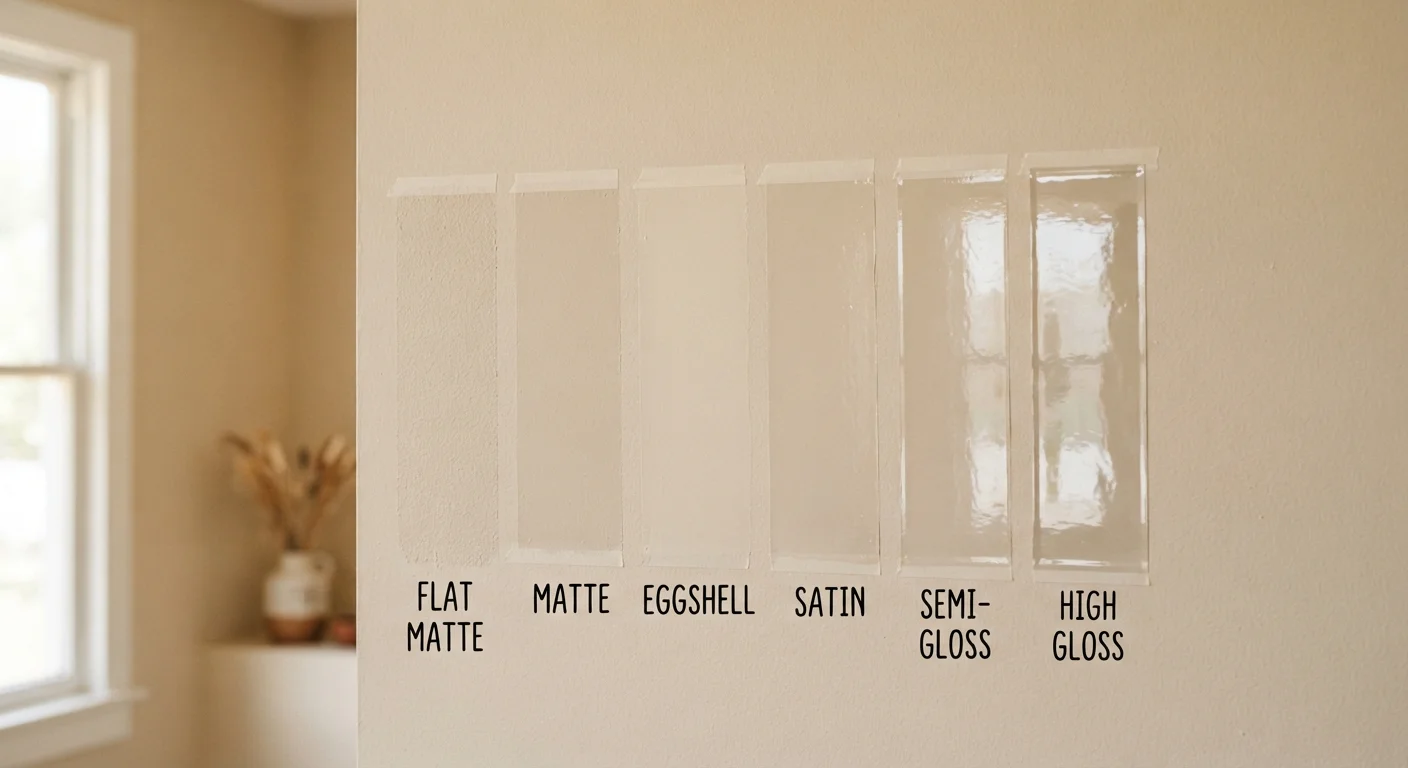
Paint finishes are defined by their sheen level, which refers to how much light the dried surface reflects. Higher sheen means more light reflection, a harder surface film, and greater washability. Lower sheen means a softer, more matte appearance that absorbs light but hides surface imperfections well.
| Number of standard finish types | 5 (flat, eggshell, satin, semi-gloss, gloss) |
| Best finish for ceilings | Flat (matte) |
| Best finish for bathrooms | Semi-gloss |
| Most versatile all-room finish | Satin |
| Best finish for trim and baseboards | Semi-gloss or gloss |
| Washability increases with | Higher sheen level |
The Five Core Finish Types, Defined
Understanding each finish helps you match the right product to each room's demands.
Flat (Matte)
The lowest-sheen finish, with virtually no light reflection. Flat paint hides surface imperfections well but is the least washable option. Best used on ceilings and low-traffic walls.
Eggshell
Named for its slight, subtle sheen - similar to the surface of an egg. More washable than flat, it holds up to occasional light cleaning and works well in living rooms and bedrooms.
Satin
A mid-range finish with a smooth, velvety sheen. Satin is noticeably more durable and washable than eggshell, making it a versatile choice for kitchens, hallways, and children's rooms.
Semi-Gloss
A higher-sheen finish that creates a moderately reflective, hard surface film. Highly resistant to moisture and repeated cleaning, making it ideal for bathrooms, kitchens, and trim.
Gloss (High-Gloss)
The most reflective finish available. Gloss creates an extremely durable, almost plastic-like surface that repels moisture and cleans easily. Typically reserved for trim, cabinets, and doors.
Sheen Level
A measure of how much light a dried paint surface reflects. Higher sheen levels correspond to greater durability and washability, while lower sheens tend to hide surface flaws more effectively.
As a general rule, the more foot traffic or moisture a room sees, the higher your sheen should be. Conversely, low-traffic, low-humidity spaces like formal dining rooms or adult bedrooms benefit from lower sheens that create a calmer, more refined look.
Room-by-Room Sheen Guide
Use this as your decision framework before you buy a single can.
- Living rooms and bedrooms: Eggshell or satin. These spaces see moderate foot traffic but not much moisture. Eggshell's slight sheen is forgiving of light scuffs and easy to wipe down. Satin adds a touch more durability if you have children or pets.
- Kitchens: Satin or semi-gloss. Cooking produces steam, grease, and splatter. Semi-gloss holds up best near the stove and sink; satin works well across broader wall areas where moisture is less intense.
- Bathrooms: Semi-gloss. The combination of humidity, condensation, and frequent cleaning demands a surface that resists moisture and can be wiped repeatedly without breaking down. Small bathrooms with poor ventilation especially need the durability.
- Hallways and kids' rooms: Satin or semi-gloss. High-touch surfaces get marked constantly. A scrub-friendly finish prevents those marks from becoming permanent.
- Ceilings: Flat. Ceilings rarely need cleaning and are covered with texture and imperfections that a matte finish hides effectively. Flat ceiling paint is formulated specifically to minimize light reflection so the ceiling recedes visually.
- Trim, baseboards, and doors: Semi-gloss or gloss. These surfaces get bumped, touched, and wiped constantly. A hard, high-sheen finish resists damage and stays cleaner longer.
Primer Still Matters Regardless of Finish
A higher-sheen paint does not compensate for skipping primer. In moisture-prone rooms like bathrooms and kitchens, a moisture-blocking or mold-resistant primer underneath your topcoat provides an additional layer of protection. Always follow the primer manufacturer's guidance for dry time before applying your finish coat.
Just as you'd think carefully about how each room is used before choosing smart home devices by room, the same room-by-room thinking applies to paint finishes - what works in a bedroom won't hold up in a bathroom.
Common Mistakes to Avoid
Even experienced DIYers repeat these errors.
- Using flat paint in bathrooms or kitchens. Flat paint absorbs moisture and cannot be scrubbed. Mold and staining are likely outcomes.
- Over-glossing large wall areas. High-gloss paint on expansive walls amplifies every drywall imperfection - dings, patches, and uneven texture become very visible under direct light. Reserve gloss for trim.
- Mixing finishes on the same surface. If you're touching up an existing wall, the new finish must match the old one exactly, or the patch will be obvious under raking light.
- Ignoring primer compatibility. Some primers are formulated to pair with specific finish ranges. Check that your primer and topcoat are compatible before applying.
If you're thinking about other home improvements at the same time, our guide to insulation types inside your walls is a useful parallel reference for making informed decisions before spending money.
40%+
Of repaint jobs caused by wrong finish choice
Industry painting contractors frequently cite finish mismatch - particularly flat paint in wet areas - as one of the leading reasons homeowners repaint within two years.
3-5×
More washable: semi-gloss vs. flat
Paint manufacturers' own scrub-resistance testing consistently shows high-sheen finishes withstanding significantly more cleaning cycles before surface degradation than flat paints.