
Why Insulation Type Matters More Than You Think
Most homeowners can't see what's inside their walls - and that invisibility leads to a lot of guesswork when something feels off, like persistent drafts, rooms that won't stay warm, or energy bills that keep climbing. Understanding the most common insulation types gives you a real foundation for any upgrade conversation with a contractor.
Insulation works by slowing heat transfer. In winter, it keeps heat inside. In summer, it keeps heat out. Its effectiveness is measured in R-value - the higher the number, the better the resistance. But R-value isn't the whole story: installation quality, air sealing, and moisture control all affect real-world performance.
For a broader look at how insulation fits into your home's energy envelope, see our complete weatherproofing guide for end-to-end strategies.
The Main Insulation Types and Their Trade-Offs
Fiberglass Batt
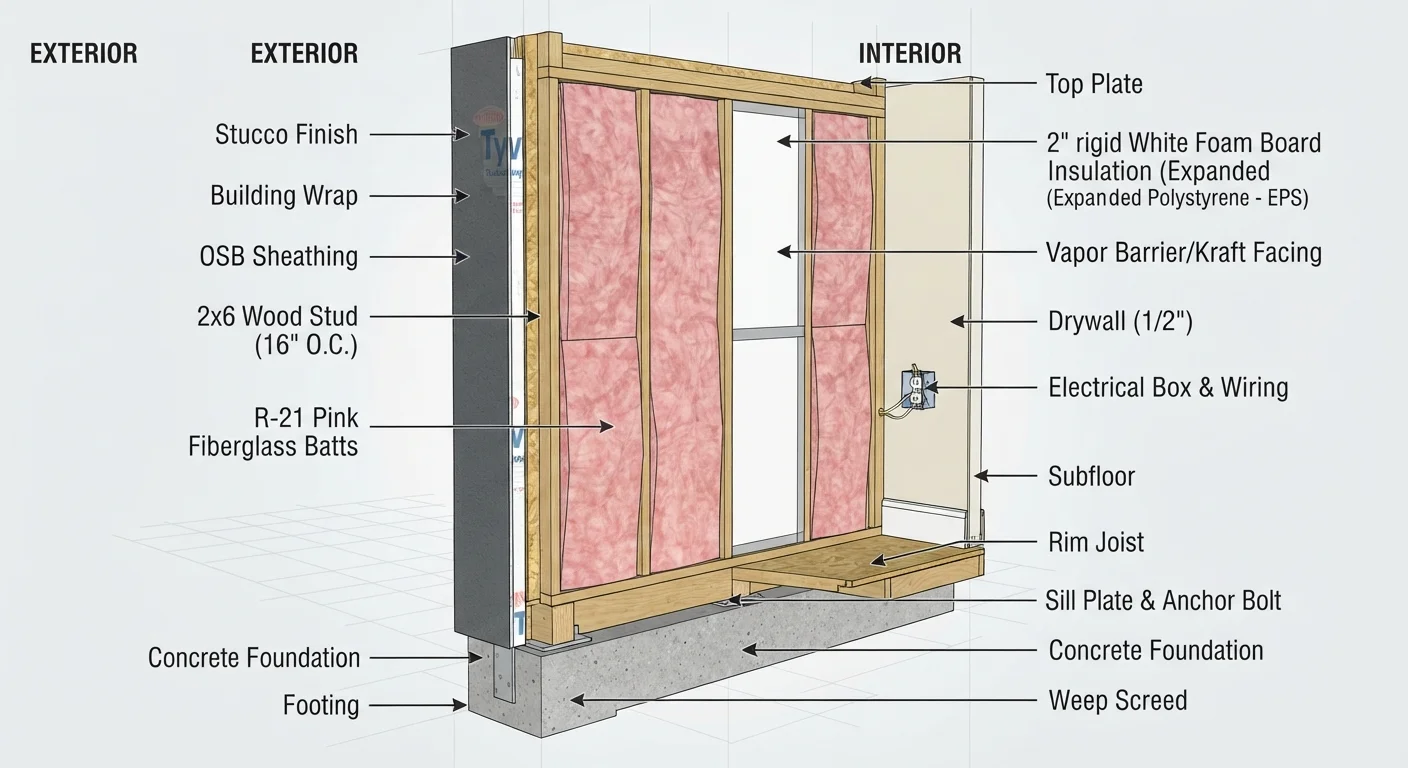
The pink or yellow rolls you've likely seen at hardware stores. Fiberglass batts are pre-cut to fit between standard wall studs and are the most widely used insulation in American homes. They're relatively affordable and easy to install in open framing - but they must fit snugly to perform as rated. Gaps, compressions, or miscuts significantly reduce effectiveness. They also don't act as an air barrier on their own.
Loose-Fill (Blown-In) Insulation
Loose-fill comes in two main materials: fiberglass and cellulose. Cellulose is made largely from recycled paper treated with fire retardant. Both are blown into attic floors or enclosed cavities using a machine, making them well-suited for retrofitting existing walls without demolition. Cellulose tends to settle over time, which can reduce its effective R-value slightly.
Spray Foam
Available in open-cell and closed-cell varieties. Closed-cell spray foam offers the highest R-value per inch of any common insulation and also functions as an air and vapor barrier - a significant advantage in tightly built homes or humid climates. Open-cell spray foam is lighter, less expensive, and provides good sound dampening, but has a lower R-value and isn't vapor-resistant. Spray foam requires professional installation and carries a higher upfront cost.
Rigid Foam Board
Sold in flat panels, rigid foam board (available in polyisocyanurate, extruded polystyrene, or expanded polystyrene) is commonly used on exterior walls, basement walls, and under slabs. It resists moisture well and can help reduce thermal bridging when installed continuously over studs. It's typically not used inside standard wall cavities without modification to the framing depth.
Choosing the Right Fit for Your Situation
No single insulation type is universally best. The right choice depends on where you're insulating, your climate zone, your wall construction, and your budget. Here are the key factors to consider:
- Open framing (new construction or gut renovation): Fiberglass or mineral wool batts, or spray foam for maximum air sealing.
- Existing closed walls: Blown-in cellulose or fiberglass is typically the least disruptive option.
- Basements and crawl spaces: Rigid foam board handles moisture better than fiberglass in these environments.
- Attics: Blown-in loose fill is often the most practical and cost-effective choice.
Climate zone also matters - the U.S. DOE publishes recommended R-values by region, ranging from warmer southern climates to colder northern ones. A contractor or energy auditor can identify your zone and recommend appropriate targets. Just as choosing the right finish affects how your walls look - see our paint finish guide for a parallel reference - choosing the right insulation affects how your home actually performs.
This article is for general informational purposes only. Insulation projects involving electrical wiring, structural elements, or hazardous materials should be assessed and completed by a licensed professional. Always verify local permit requirements before beginning work.