Why the Pile Keeps Coming Back
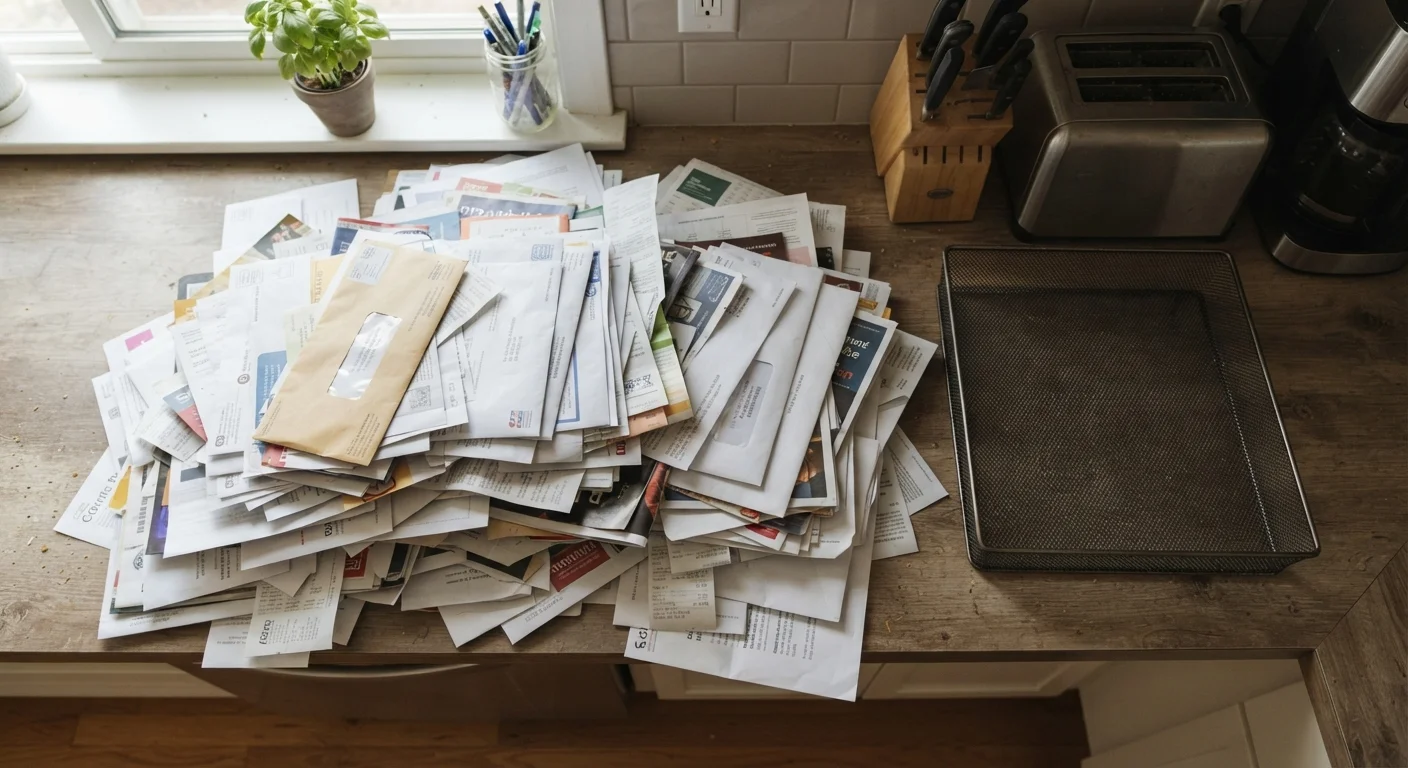
Most people attack paper clutter the same way every time: they sort the pile, throw out the obvious junk, and stack the rest somewhere neater. Two weeks later, the pile is back. This cycle is frustrating precisely because the effort feels wasted - but the effort was never aimed at the right target.
Paper accumulates because incoming documents arrive without a predetermined destination. When there is nowhere specific for a water bill or a school permission slip to go, it lands on the nearest flat surface. That surface becomes a holding zone, and the holding zone becomes permanent storage. The clutter is not caused by having too much paper; it is caused by a missing decision process for each piece.
This is the same dynamic that turns kitchen drawers into chaos - as explored in Why Your Kitchen Drawers Keep Becoming a Junk Magnet. Objects accumulate wherever there is no defined home for them. Paper is simply the most relentless offender because it arrives daily.
Paper Clutter Is Not a Personality Flaw
Households of all types - busy families, single professionals, retirees - deal with paper accumulation. It reflects a system gap, not a character one. Building structure where none existed is a practical fix, not a personality overhaul. Start small: even one designated landing spot for incoming mail makes a measurable difference.
The Three Decisions Every Piece of Paper Needs
A functioning paper system does not require elaborate binders or color-coded labels. It requires one thing: that every incoming piece of paper receives a decision the moment it enters your home. That decision falls into one of three categories.
- Act: This document requires you to do something - pay it, sign it, respond to it. It lives in a visible, active spot until the action is complete.
- File: This document has no immediate action but may be needed later - a lease, a medical record, a tax document. It goes directly into a filing system, not a pile.
- Discard: Junk mail, duplicate notices, expired coupons, and anything with no lasting value gets recycled or shredded immediately.
The reason most households struggle is that a fourth unofficial category exists: I'll figure this out later. That category is the pile. Eliminating the pile means eliminating that deferral habit, which requires building enough structure that each decision feels easy rather than effortful.
Set Up a Weekly 10-Minute Paper Session
Choose a consistent time each week - Sunday evening, for example - to process anything that has landed in your action folder and file anything that has been resolved. Keeping sessions short and regular prevents the backlog from rebuilding. Pair it with an existing habit, like after dinner, so it becomes automatic rather than something you have to remember.
Building the System Before Clearing the Backlog
It is tempting to start by clearing the existing pile, but building the system first is more effective. If you create your three zones - an action folder, a filing system, and a shred or recycling bin - before you touch the backlog, you have somewhere to put everything as you sort. Without that infrastructure, sorted paper just migrates to a new pile.
Your filing system can be as simple as a small accordion folder with labeled sections: Financial, Medical, Home, Auto, and Other. What matters is that it exists, lives in a consistent place, and is easy enough to use in under a minute. A system that requires effort will be bypassed.
For households where multiple people generate or handle paper, agreed-upon rules matter as much as physical organization. Organizing a home when everyone has different habits takes deliberate coordination - the same applies to shared paper flow. One person's system imposed on the whole household rarely holds.
Once the system is in place, clearing the backlog becomes sorting, not decision-making from scratch. Work through old piles in short sessions, applying the same three decisions to everything.
80%
Of filed papers are reportedly never referenced again
Widely cited by professional organizers as a benchmark for how much of what people file could simply be discarded.
1 in 3
Americans report losing a bill in a paper pile
Surveys on household financial habits consistently find paper disorganization contributes to missed payments and late fees.
Reducing Paper at the Source
The most durable solution to paper clutter is receiving less paper in the first place. Switching recurring statements - bank, utility, insurance, credit - to electronic delivery removes a consistent stream of inbound documents before they ever reach your counter. Most providers offer this at no cost through their online portals.
Opting out of unsolicited mail, including prescreened credit offers, can also reduce volume meaningfully. The Consumer Financial Protection Bureau and the Federal Trade Commission provide guidance on opt-out resources that are worth reviewing.
Digital tools can support this transition, and the Digital Tools & Apps hub covers options that help manage documents and notifications electronically. The goal is not to eliminate all paper - some always arrives - but to shrink the inbound flow so your system is not overwhelmed.
Once you have a functioning system in place, maintaining it comes down to small, consistent habits rather than periodic overhauls. Habits that keep a home organized over time make the difference between a system that holds and one that quietly collapses over months. Paper management, handled this way, stops feeling like a project and becomes routine.