The Real Reason Drawers Fill Up With Junk
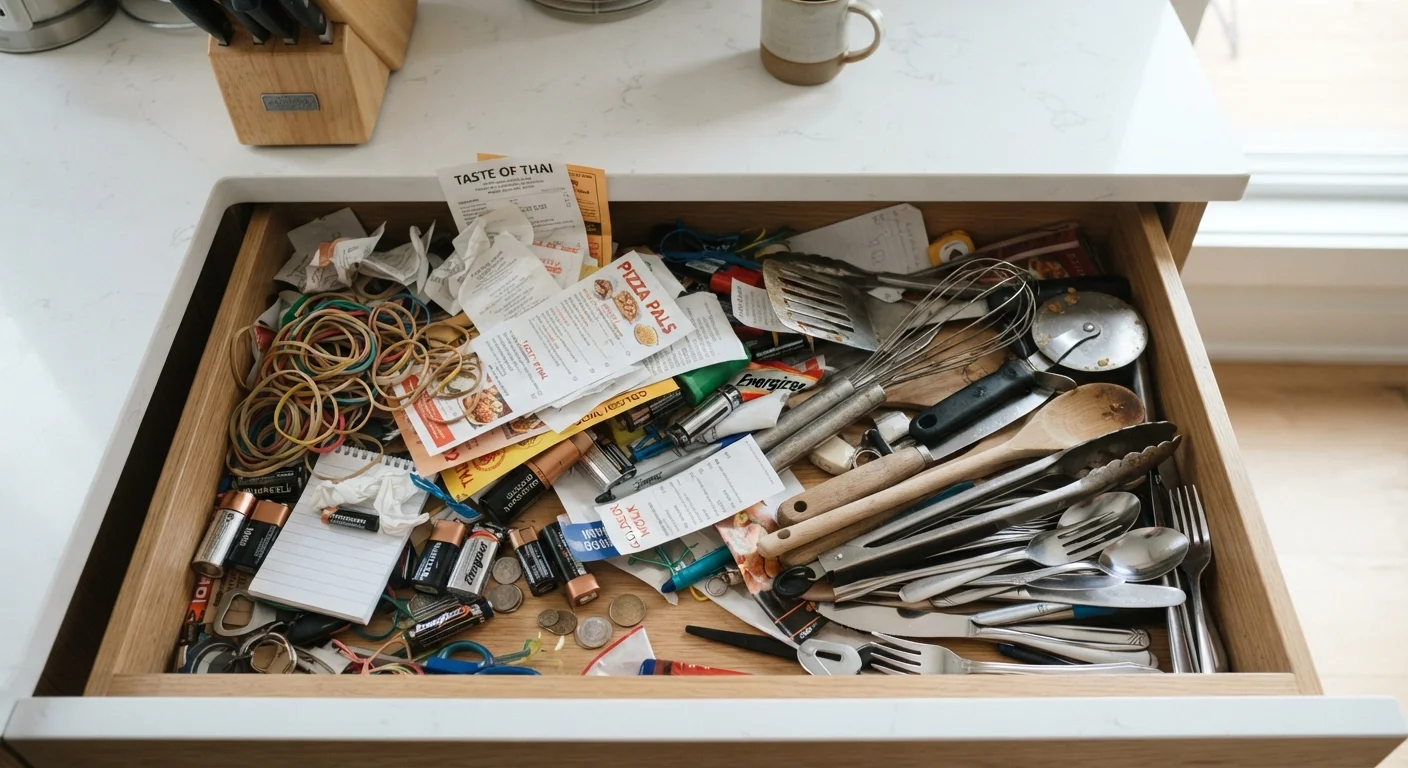
Kitchen drawers don't become chaotic because you're disorganized-they become chaotic because they're too convenient. A drawer is an easy place to make a decision disappear. Rather than figuring out where something truly belongs, you slide it into the nearest available space and close the drawer. The problem compounds quietly, item by item.
The root cause is almost never a lack of storage. It's a lack of intention. When a drawer doesn't have a clearly defined purpose, it becomes a catch-all by default. And once the first random item lands there, others follow-because the drawer's identity has already been erased.
Understanding this pattern is the first step. The mistakes below are the specific behaviors that keep that cycle going-and what you can do differently starting today.
Leaving a drawer without a defined purpose so it becomes a default dumping ground.
Why it happens: When a drawer is empty or underused, it feels like "free space" rather than space with a job to do.
Using a drawer as a temporary holding zone for items you haven't decided what to do with.
Why it happens: We tend to defer decisions when we're busy, and a closed drawer hides the problem instantly.
Buying drawer organizers before knowing what will live in the drawer.
Why it happens: Organizers feel like a solution, and shopping for them is more appealing than the unglamorous work of sorting and deciding.
Keeping items in the kitchen drawer that don't belong in the kitchen at all.
Why it happens: Kitchen drawers are centrally located and frequently opened, making them a convenient drop zone for the whole household.
Relying on memory rather than a visible system to maintain order.
Why it happens: After organizing a drawer, it feels obvious what goes where-but that mental map fades quickly, especially for other household members.
Building a System That Actually Holds
Fixing drawer chaos isn't about buying the right organizer. As explored in Storage Containers Won't Save a Disorganized Home, the system has to come before the product. Start by emptying every drawer completely-yes, all of them at once if possible. Sort what comes out into three groups: things that belong in the kitchen, things that belong elsewhere, and things that can be discarded or donated.
Once you know what you're working with, assign each drawer a single category. Utensils. Baking tools. Cleaning supplies. The category doesn't need to be rigid, but it does need to exist. Labeling a drawer-even temporarily with a piece of tape-makes the category real and communicates it to everyone in the household.
Don't Skip the Full Drawer Audit
Organizing around existing clutter-instead of removing it first-is one of the most common reasons systems fail within weeks. Take everything out before deciding what structure you need. Items you forgot you had, expired products, and duplicates are only visible when the drawer is empty.
If you share your home with others, drawer organization is only as strong as the weakest habit in the house. Shared Spaces, Different Standards offers practical strategies for getting household members on the same page without conflict.
Finally, the goal isn't perfection-it's a system that requires minimal effort to maintain. Small daily habits are what separate a drawer that stays functional from one that's back to chaos in two weeks. A two-minute reset at the end of each day is enough to prevent most buildup from taking hold.