Why a Tiny Fund Beats No Fund
The gap between zero savings and even a few hundred dollars is enormous-not in dollars, but in options. Without any cushion, a single unexpected expense forces a choice between credit card debt, borrowing from family, or simply going without. A small fund doesn't eliminate financial stress, but it converts a crisis into a manageable setback.
Research from institutions like the Urban Institute has consistently found that liquid savings-even modest amounts-are associated with lower rates of hardship among low- and moderate-income households. The figure often cited is that households with as little as $250 to $749 in savings are less likely to experience material hardship after an income shock than those with nothing.
This isn't about reaching an arbitrary savings benchmark. It's about building the smallest meaningful buffer you can, then growing it incrementally. If you're new to saving in general, our guide to building a savings habit from zero covers the foundational concepts alongside these steps.
This Is General Financial Information
This article provides general educational guidance about personal saving strategies. It is not personalized financial advice. For decisions specific to your circumstances-especially if you carry significant debt or face income instability-consider consulting a licensed financial counselor or adviser.
What You'll Need Before You Start
You don't need a lot to get started, but having a few things in place makes the process much smoother.
What you will need
Separate savings account
Keeps your emergency fund physically separated from spending money, reducing the temptation to dip into it.
Automatic transfer feature
Schedules a recurring transfer from checking to savings on payday without manual action.
Simple spending tracker (app or paper)
Helps identify small recurring expenses that could be redirected toward savings.
How to Build Your Emergency Fund Step by Step
Follow these steps in order. Each one builds on the last, and none of them require a large income or a drastic lifestyle change.
Set a realistic first target
Forget the common advice to save three to six months of expenses right away. When money is tight, that number can feel so far off it stops you from starting at all. Instead, aim for a first milestone of $300 to $500. That amount covers a car repair co-pay, a medical bill, or a utility shortfall without forcing you onto a credit card.
Write the number down somewhere visible. A concrete goal is easier to work toward than a vague intention to "save more."
Find your starting amount
Look at last month's bank or card statements and find one spending category-takeout, subscriptions, convenience store runs-where you spent more than you realized. You don't need to cut it entirely. Trimming even $15 to $25 a month gives you a real starting deposit.
If your spending is already stripped down, look at one-time windfalls: a tax refund, overtime pay, a cash birthday gift. Route even a portion of those directly to your emergency fund before it blends into regular spending. For a broader look at how to categorize and evaluate your expenses, see our complete household budgeting roadmap.
Open a dedicated account
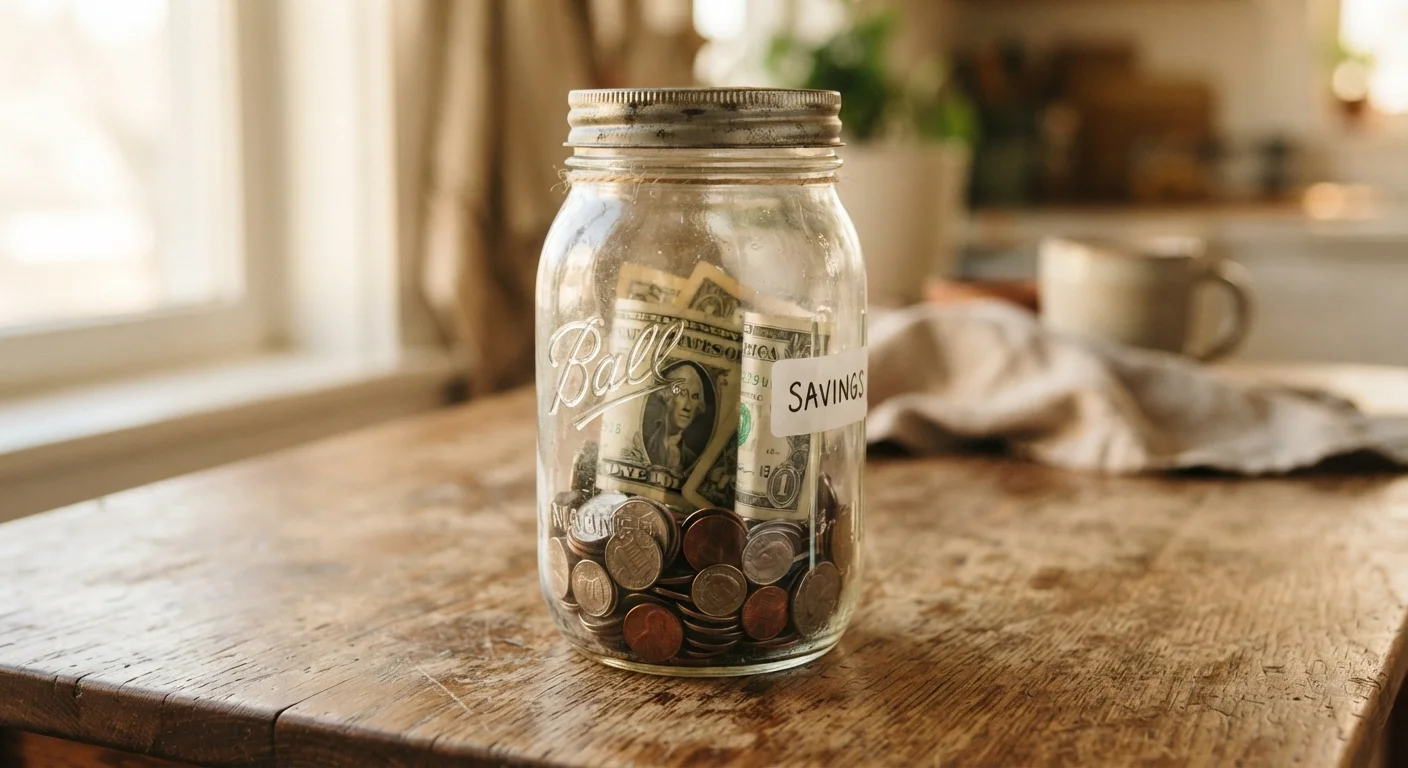
Put your emergency fund somewhere separate from your checking account. This isn't about earning high interest-it's about friction. When the money is one tap away in your checking account, it disappears. A separate account, even at the same bank, adds a small mental and practical barrier.
Many banks and credit unions allow you to open a basic savings account with no minimum balance. Look for one with no monthly maintenance fee so small balances aren't eroded by charges.
Automate the transfer
Set up a recurring automatic transfer from checking to your emergency savings account, timed to land on payday. The amount can be small-$10, $20, whatever you identified in Step 2. Automation removes the decision from the equation each pay period, which is what makes it stick.
Log into your bank's website or app and look for "automatic transfers" or "recurring transfers" in the transfers menu. Set the frequency to match your pay schedule (weekly, biweekly, or monthly).
[tip_callout]Protect the fund from non-emergencies
Decide in advance what counts as a true emergency: an unexpected medical expense, a car repair needed to get to work, a sudden gap in income. A sale event, a concert ticket, or a routine annual expense like car registration does not qualify-those are predictable costs that belong in their own savings category. Our guide on sinking funds explains how to handle those separately.
If you do use the fund, make rebuilding it your next financial priority before adding any other savings goals.
Reassess and adjust as income changes
A raise, a side gig payout, or a lower utility bill creates a window to increase your automatic transfer. Even bumping it up by $5 or $10 accelerates progress without a noticeable lifestyle change. If your income fluctuates month to month, aim to save a higher percentage in stronger months and a lower fixed amount in leaner ones. The guide on saving with variable income has practical frameworks for this situation.
Common Obstacles and How to Handle Them
The most common reason people don't start an emergency fund isn't laziness-it's that the math feels impossible. Here are three situations that trip people up and realistic ways through them.
"I have nothing left at the end of the month."
If tracking reveals genuinely no slack in your budget, the windfalls strategy from Step 2 becomes your main tool. Tax refunds, gifts, overtime-route a portion before it hits your checking account. Even a single $50 deposit gets you started.
"I started, but I keep spending it."
This usually means the account isn't separate enough. Move it to a different bank from your checking account so that a transfer takes a day or two rather than seconds. The friction helps.
"My income changes every month."
Set a floor: the smallest transfer amount you can sustain in your lowest-income month. Increase it when stronger paychecks come in. For a detailed approach, see our article on budgeting on an irregular income.
Don't Skip High-Interest Debt Entirely
If you carry high-interest credit card debt, aggressively building savings while ignoring that debt can cost you more over time. A common balanced approach is to build a very small starter fund-often cited as around $500-and then focus on the debt. Talk to a financial counselor if you're unsure how to prioritize.
This article is for general informational and educational purposes only and does not constitute personalized financial advice. Consult a qualified financial professional for guidance tailored to your situation.