
The Real Reason Your Budget Dies Early
You sit down, add up your income, list your bills, and the numbers look manageable. Then, two weeks later, the budget is already blown. This pattern is far more common than most people realize, and it rarely comes down to one big mistake. It's usually a cluster of small, predictable errors that stack up fast.
If you're building your first plan from scratch, the ground-up beginner's guide walks through every setup step. But even a well-structured first budget can crack in the opening days. Understanding why that happens is what this article is about.
The budgeting basics hub covers broader strategies, but the mistakes below are specifically the ones that strike in the first two weeks - before most people even realize the plan is already off track.
Budgeting from gross income instead of take-home pay.
Why it happens: Salary figures are easy to remember and feel concrete, so people use them without subtracting taxes, health insurance premiums, or retirement contributions that never actually hit the checking account.
Forgetting irregular but predictable expenses.
Why it happens: A budget built in January may not account for a car registration due in March, an annual streaming subscription, or a semi-annual insurance premium. These feel like surprises, but they aren't - they just weren't planned for.
Underestimating grocery and household spending.
Why it happens: People tend to remember their careful shopping trips and forget the mid-week top-ups, the household supplies tucked into the grocery run, and the convenience purchases made on tired evenings.
Setting spending limits so tight there's no room for ordinary life.
Why it happens: A first budget often reflects how someone thinks they should spend rather than how they actually live. When the number is unrealistic, any normal day breaks it - and the psychological fallout often leads to quitting entirely.
Not tracking spending as the weeks go by.
Why it happens: Making the budget feels like the hard part, so people assume the plan will enforce itself. Without any ongoing check-in, small overages pile up invisibly until the account balance delivers the news.
What to Do When the First Two Weeks Go Wrong
A stumble in week one doesn't mean the budget is dead - it means you have new data. The worst response is to abandon the plan entirely. Instead, treat the overage as information: which category leaked, and why?
Don't Restart From Zero After a Slip
Abandoning a budget the moment it goes off track is one of the most common - and costly - responses. A single overage does not erase the value of the plan. Review what happened, adjust the affected category if needed, and keep going. Perfection in week one is not the goal; information is.
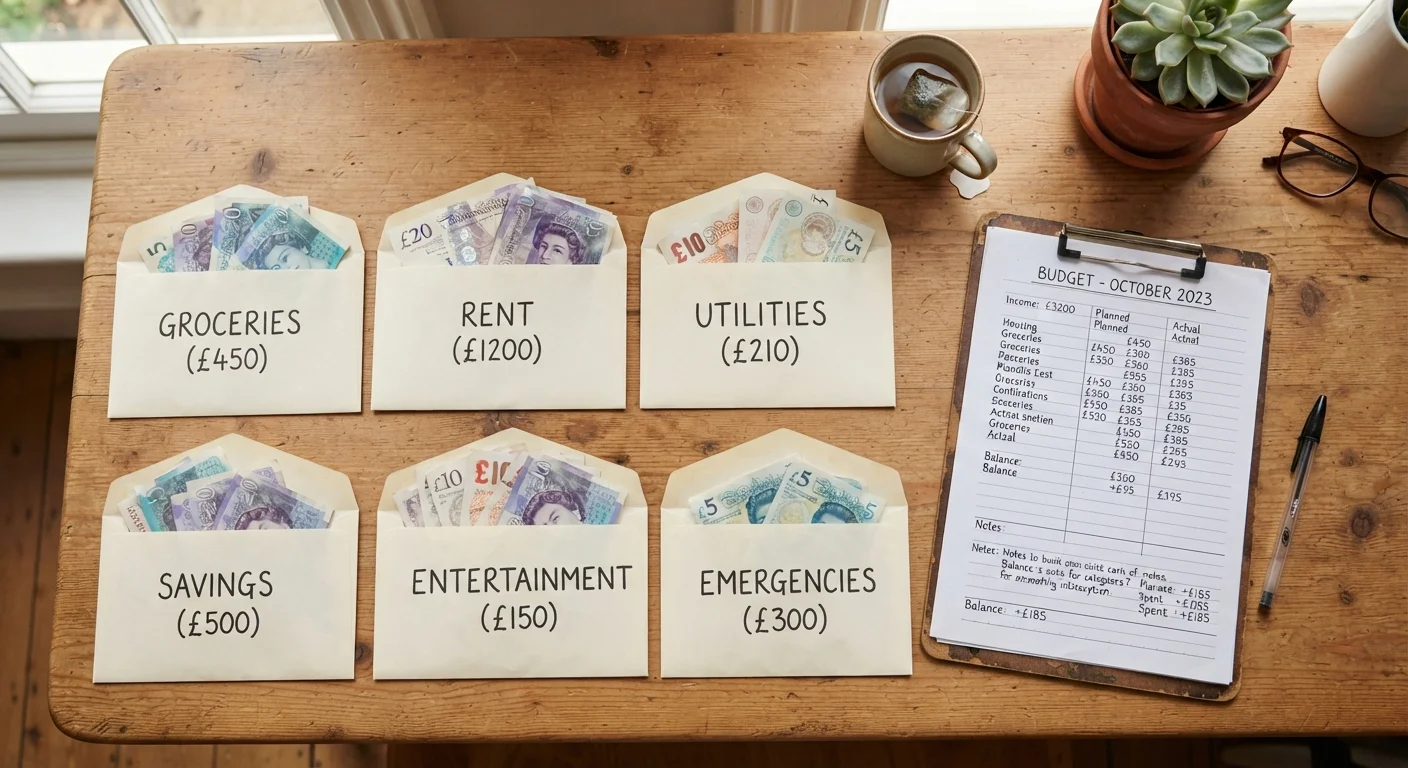
One structural fix that makes a measurable difference is building even a small buffer. A starter emergency fund - even a few hundred dollars set aside - means a flat tire or an unexpected copay doesn't have to wreck the whole month. Our article on what an emergency fund actually is explains how much to aim for and how to start small when money is tight.
Once the first month steadies, the challenges shift. Budgets that survive the opening weeks often run into a different set of problems later. See why most household budgets fail in month two to stay ahead of those patterns too. For category-by-category spending ideas, spending by category offers targeted guidance across common household expenses.
A Buffer Prevents a Single Expense from Cascading
Without any financial cushion, one unexpected cost - a car repair, a medical copay, a broken appliance - can cause a chain reaction that overspends every category for the rest of the month. Even a small, dedicated reserve set aside before budgeting begins can interrupt that cascade and keep the overall plan intact.
This article is for general informational and educational purposes only and does not constitute personalized financial or legal advice. For guidance specific to your situation, consult a qualified financial professional.