Why Coverage Types Matter More Than the Price Tag
Most drivers focus on the monthly premium when shopping for car insurance, but the coverage types you choose determine what actually gets paid after an accident, theft, or weather event. Picking the wrong combination can leave you exposed to bills that dwarf any premium savings. As part of the full cost of owning a car, insurance is one of the few expenses that also functions as a financial safety net-if you've chosen your coverage wisely.
This reference guide decodes the core coverage types found on a standard U.S. auto policy so you can read your declarations page with confidence.
| Liability coverage requirement | Required in 49 U.S. states (all except New Hampshire) (State DMV regulations) |
| Uninsured drivers on U.S. roads | Approximately 1 in 8 drivers (Insurance Research Council) |
| No-fault states requiring PIP | 12 states plus Washington D.C. (NAIC data) |
| Comprehensive coverage applicability | Covers theft, fire, flood, hail, and animal strikes (Standard U.S. policy definitions) |
| Collision coverage trigger | Vehicle impact with another object, regardless of fault (Standard U.S. policy definitions) |
The Core Coverage Types, Explained
Auto insurance policies are not a single product-they're a bundle of distinct protections, each addressing a different risk.
Liability Coverage
Required in nearly every U.S. state, liability coverage pays for injury and property damage you cause to others in an at-fault accident. It does not pay for your own injuries or vehicle damage. Policies typically express limits as three numbers (e.g., 25/50/25): bodily injury per person, bodily injury per accident, and property damage per accident, all in thousands of dollars. State minimums are often low enough that a serious accident can exceed them, leaving you personally responsible for the remainder.
Collision Coverage
Collision pays to repair or replace your vehicle when it's damaged by impact-whether with another car, a guardrail, or a pothole. It applies regardless of fault. You'll choose a deductible (the amount you pay before the insurer covers the rest). Higher deductibles mean lower premiums but more out-of-pocket cost per claim.
Comprehensive Coverage
Despite its name, comprehensive doesn't cover everything. It covers non-collision losses: theft, fire, flooding, hail, falling objects, and animal strikes. Like collision, it carries a deductible. Lenders typically require both collision and comprehensive if you're financing or leasing a vehicle.
Uninsured and Underinsured Motorist Coverage (UM/UIM)
About one in eight drivers on U.S. roads carries no insurance, according to the Insurance Research Council. UM coverage pays your medical bills and, in many states, vehicle repairs when an uninsured driver hits you. UIM steps in when the at-fault driver's liability limits aren't high enough to cover your losses. Some states mandate this coverage; others make it optional.
Medical Payments (MedPay) and Personal Injury Protection (PIP)
MedPay covers medical expenses for you and your passengers after an accident, regardless of fault. PIP goes further in no-fault states: it also covers lost wages and, in some cases, household services you can't perform while injured. No-fault states require PIP and limit your right to sue except for serious injuries.
Deductible
The amount you pay out of pocket before your insurance coverage begins paying on a claim. For example, a $500 deductible means you cover the first $500 of a covered repair.
Declarations Page
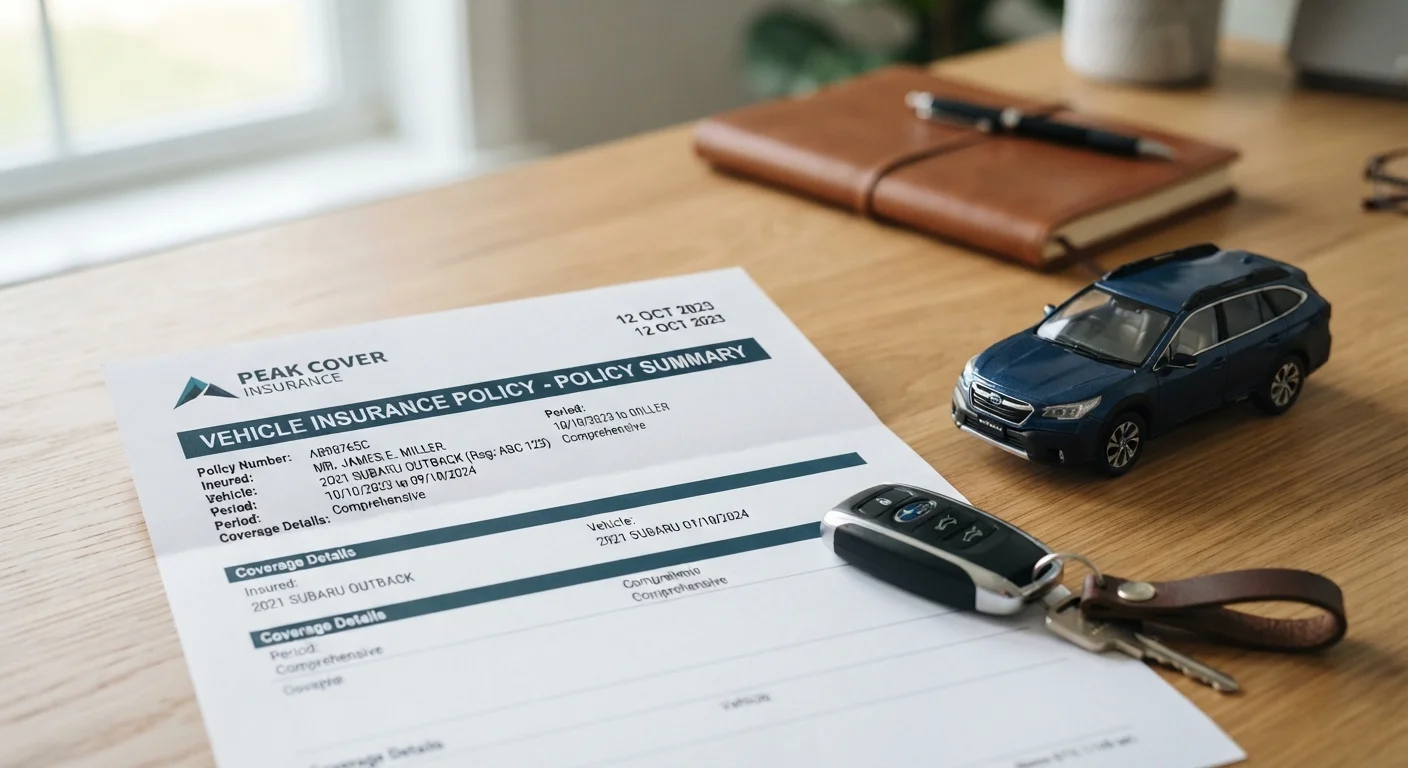
The summary page of your insurance policy listing your coverage types, limits, deductibles, and premium. It's the quickest way to see exactly what you have.
Actual Cash Value (ACV)
The market value of your vehicle at the time of a loss, accounting for depreciation. This is what most standard policies pay out for a totaled car-not the original purchase price.
Liability Limits
The maximum dollar amounts your insurer will pay per person, per accident, and for property damage under your liability coverage. Damages exceeding these limits become your personal financial responsibility.
No-Fault State
A state where each driver's own insurance pays their medical costs after an accident, regardless of who caused it. Drivers in no-fault states are generally required to carry Personal Injury Protection (PIP).
Gap Insurance
An optional coverage that pays the difference between your vehicle's actual cash value and the remaining balance on your auto loan or lease if the car is declared a total loss.
Common Gaps and Misunderstandings
Even drivers with seemingly complete policies often discover coverage gaps after a claim. The myths surrounding auto insurance frequently cost people money in both directions-over-paying for unneeded add-ons or under-protecting against real risks.
Minimum Coverage Rarely Means Adequate Coverage
State-mandated minimums set a legal floor, not a recommended level of protection. A modest fender-bender in an urban area can easily generate costs that exceed minimum liability limits. Many insurance professionals suggest considering limits that reflect your net worth and risk exposure-though the right level depends on individual circumstances. A licensed insurance agent can help you evaluate appropriate limits for your situation.
A few practical points worth knowing:
- Rental reimbursement is a separate add-on that covers a rental car while yours is being repaired. It's not included in standard collision or comprehensive.
- Gap insurance covers the difference between what your insurer pays (actual cash value) and what you still owe on a loan or lease if your car is totaled. It's most relevant in the first few years of financing.
- Rideshare coverage is needed if you drive for a transportation network company. Personal auto policies typically exclude commercial use periods; a rideshare endorsement or separate policy fills that gap.
1 in 8
Drivers on U.S. roads with no insurance
According to the Insurance Research Council, this figure underscores why uninsured motorist coverage is a meaningful protection even where it's not legally required.
12 + D.C.
U.S. no-fault states requiring PIP
Drivers in these jurisdictions must carry Personal Injury Protection, which pays medical costs regardless of which driver caused the accident.
Coverage needs also shift over time. A paid-off older vehicle with low market value may not justify the cost of collision and comprehensive premiums, while a new financed car almost certainly does. Revisiting your policy annually-or after any major life or vehicle change-is a sound habit.
This article provides general information about auto insurance concepts and is not a substitute for personalized advice from a licensed insurance professional. Coverage availability, requirements, and terminology vary by state. Consult your insurer or a licensed agent for guidance specific to your situation.