The Core Difference: Ownership vs. Access
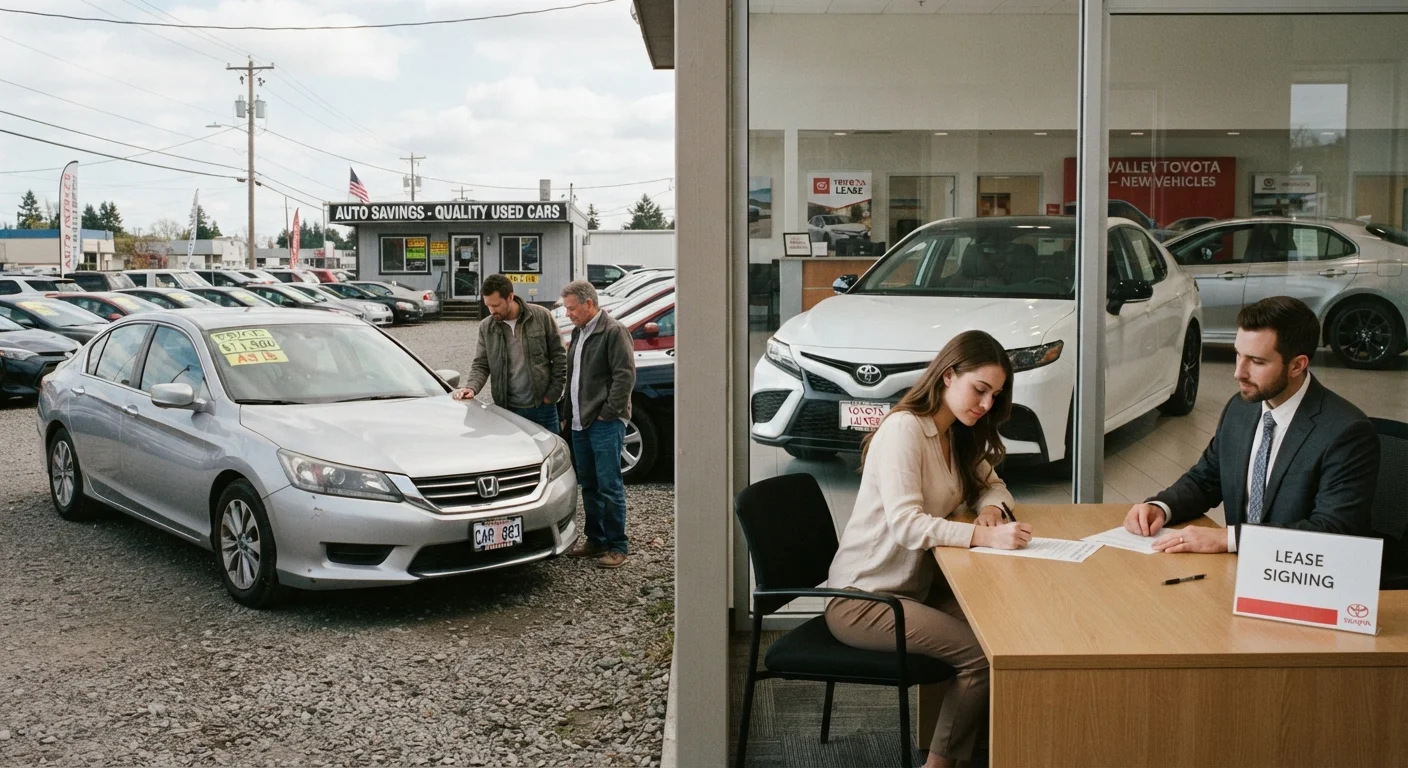
When you buy a used vehicle - whether through a private seller or dealership - you're purchasing an asset. Once the loan is repaid, you own it free and clear. That ownership carries value you can later trade in or sell. See our guide to private sales vs. trade-ins to understand what that exit might look like financially.
Leasing, by contrast, is structured access. You pay for the right to use a new vehicle for a defined term - typically 24 to 39 months - then return it. No asset changes hands at the end unless you exercise a purchase option. That distinction shapes every financial comparison between the two paths.
For drivers juggling household transportation decisions, the one-car vs. two-car trade-off adds another layer - whether you lease or buy matters differently depending on how many vehicles a household is managing.
| Criterion | Buying Used | Leasing New |
|---|---|---|
| Ownership | Yes - after loan payoff | No - vehicle returned at term end |
| Monthly payment | Varies; often higher than lease | Generally lower than financing |
| Mileage limits | None | Typically 10,000-15,000 miles/year |
| Equity built | Yes, as loan is paid down | No equity accrued |
| Warranty coverage | Limited or none (varies by age) | Full manufacturer warranty |
| Customization | Unrestricted | Not permitted under most leases |
| End-of-term options | Keep, sell, or trade in | Return, buy out, or re-lease |
| Upfront depreciation risk | Avoided - prior owner absorbed it | Borne by lessor, not lessee |
Cost Structure: What You Actually Pay
Used vehicle pricing reflects prior depreciation - new cars typically lose a significant portion of their value within the first few years, so buyers entering the used market avoid absorbing that initial drop. However, used auto loans generally carry higher interest rates than new-car financing, and maintenance costs rise with vehicle age and mileage.
Lease payments are calculated based on the vehicle's projected depreciation over the lease term, plus a money factor (the lease equivalent of an interest rate) and any fees. Because you're only paying for the depreciation portion, monthly payments are typically lower than financing the same vehicle outright. That said, you're building no equity, and lease-end costs - disposition fees, excess mileage charges, or wear-and-tear assessments - can erode the perceived savings.
~49%
Share of new-vehicle transactions that were leases
Experian's State of the Automotive Finance Market report has tracked lease share fluctuating significantly with interest rates and incentive availability.
~$0.15-$0.25
Typical per-mile overage charge on a lease
Exact rates vary by manufacturer and contract; reviewing the lease agreement before signing is essential to avoid surprise end-of-term fees.
20-30%
Typical new-car depreciation in first two years
Industry valuation sources such as Kelley Blue Book and Black Book consistently show steep early depreciation, which is a key reason used vehicles attract buyers.
It's worth noting that insurance requirements differ, too. Lessors typically require higher liability and comprehensive coverage limits than a lender on a used-vehicle loan, which can affect your monthly insurance premium.
Flexibility, Restrictions, and Hidden Friction
Leases come with contractual constraints that buyers don't face. Annual mileage limits are the most consequential - exceeding them can result in per-mile charges at lease return, often ranging from $0.10 to $0.25 per mile depending on the contract. Drivers who commute long distances or take frequent road trips should calculate projected annual mileage carefully before signing.
Lease contracts also place restrictions on vehicle modifications and define acceptable wear-and-tear standards. Returning a vehicle with unapproved alterations, significant body damage, or worn tires can result in charges. Buying used carries no such obligations - you can drive as many miles as you like and modify the vehicle within legal limits.
On the used side, the primary friction involves the vehicle's condition and history. A pre-purchase inspection by an independent mechanic is generally advisable. Understanding what a CPO designation does and doesn't guarantee is also worth investigating - the CPO vs. used comparison breaks that down clearly.
Early Termination Costs on Leases
Ending a lease before its contracted term is significantly more costly than selling a vehicle you own. Early termination fees can equal several months' worth of remaining payments. If there's any chance your situation - job, family size, housing - may change during the lease period, that risk deserves careful consideration before signing.
Long-Term Value and the Right Question to Ask
Neither path is universally superior - the better choice depends on how you actually use a vehicle and what you want from it financially. Leasing tends to suit drivers who change vehicles frequently, keep annual mileage moderate, and value consistent warranty coverage. Buying used tends to suit those who plan to hold a vehicle long-term, drive heavily, or want to eliminate monthly payments eventually.
A useful framing: ask how long you intend to keep the vehicle. If the answer is two to three years, leasing a new model may produce a comparable or lower total outlay than buying used and reselling. If the answer is five or more years, ownership economics typically favor the used purchase - especially once the loan is retired.
For a broader view of the financial decisions that follow whichever path you choose, the complete car ownership roadmap covers financing, registration, maintenance, and eventual resale in detail. And if you're at the beginning of the research phase, the full lifecycle of a car transaction walks through every stage from search to signing.