The Core Trade-Off: Money vs. Convenience
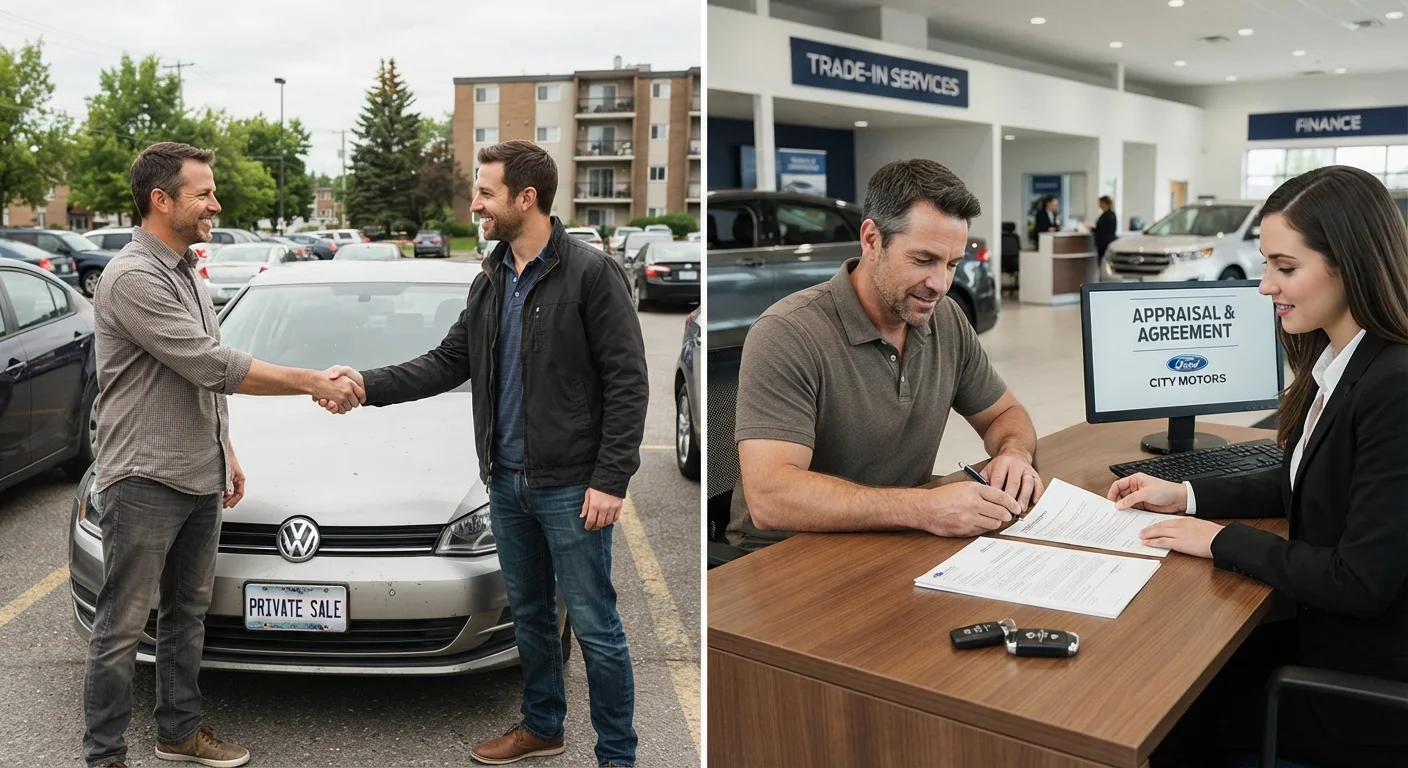
When it's time to move on from a vehicle, most American sellers face the same fork in the road: list it privately and handle the sale yourself, or hand the keys to a dealer as part of a trade-in. Neither path is universally better - each extracts a different cost from you, whether in dollars, time, or stress.
The fundamental difference comes down to who captures the resale margin. When a dealership accepts your trade-in, they're acquiring inventory they'll resell at a profit. That margin - often thousands of dollars - comes out of your offer. Sell privately, and you keep that margin, but you also absorb all the work the dealer would otherwise do: marketing, negotiating, handling paperwork, and vetting buyers.
Understanding what you're actually giving up in each scenario is the first step toward making a clear-eyed decision. For a broader look at how this fits into the vehicle ownership lifecycle, see our complete roadmap from purchase to trade-in.
| Criterion | Private Party Sale | Dealership Trade-In |
|---|---|---|
| Typical sale price | Closer to retail market value | Wholesale or below-retail offer |
| Time to complete | 2-6 weeks on average | Same day, usually |
| Paperwork burden | Seller manages title, bill of sale | Dealer handles all paperwork |
| Loan payoff handling | Complex; requires coordination | Dealer pays lien directly |
| Sales tax benefit | None | Tax only on net purchase price (most states) |
| Buyer vetting | Seller's responsibility | Not applicable |
| Listing and prep costs | Fees, detailing, photography | Minimal to none |
| Negotiation required | Yes, with private buyers | Yes, with dealer appraiser |
What a Private Sale Actually Costs You
Selling privately doesn't mean selling for free. Before pocketing a higher price, sellers typically absorb several real costs and commitments.
- Time investment: From listing to closing, private sales commonly take two to six weeks, sometimes longer for high-mileage or specialty vehicles.
- Listing fees: Major online marketplaces charge sellers anywhere from a flat fee to a percentage of the sale price. Factor this into your net proceeds.
- Preparation costs: Buyers expect clean, presentable vehicles. Detailing, minor repairs, and photography add up - even if you do much of it yourself.
- Safety and logistics: Arranging test drives with strangers, managing inquiries, and filtering low-quality offers requires time and judgment.
- Title and payment handling: You're responsible for a clean title transfer, a proper bill of sale, and ensuring payment clears before handing over keys.
First-time private sellers frequently underestimate these hidden costs - and some make errors that expose them to legal liability long after the sale.
$1,000-$3,000+
Typical private sale premium over trade-in
Industry valuation guides such as Kelley Blue Book and Edmunds consistently show private-party values exceeding dealer trade-in estimates by this range for average used vehicles.
2-6 weeks
Average private sale timeline
Market conditions, vehicle desirability, and asking price all affect how long a private listing stays active before closing.
Up to $700+
Potential sales tax savings on a $10K trade-in
In states that apply trade-in tax credits, this savings partially offsets the lower offer - the exact amount depends on your state's sales tax rate.
What a Trade-In Actually Costs You
A trade-in is fast and convenient, but convenience has a price. Dealers operate on margin, and they build it into the offer they present you.
Trade-in offers are generally calculated from wholesale or auction market values - not the retail prices you'd see on a private listing or a dealer's own used-car lot. The gap between what a dealer pays you and what they'll sell your car for can range from a few hundred dollars on a slow-moving vehicle to several thousand on a desirable model.
That said, the financial picture isn't entirely one-sided. In most US states, when you trade in a vehicle and apply the value toward a new purchase, you only pay sales tax on the difference between the new vehicle price and your trade-in value. On a $10,000 trade-in with a 7% sales tax rate, that's $700 in avoided taxes - a real offset worth calculating before you assume the private sale is always worth the effort.
Dealer offers also vary significantly. Trade-in values can differ substantially from one dealer to the next for the same vehicle - making it worth collecting multiple appraisals before accepting any single offer.
Instant Cash Offers: A Useful Middle Ground
Several online platforms now offer instant cash quotes for used vehicles, providing a fast, no-obligation baseline somewhere between a dealer trade-in and a private sale price. These offers typically expire within a set window and are subject to in-person inspection. While they rarely match a well-executed private sale, they eliminate much of the uncertainty and effort. Using one as a floor before negotiating a trade-in offer can be a practical strategy.
Loans, Titles, and Timing Complications
If you still owe money on the vehicle, your path narrows in practical terms. Trading in with an outstanding loan is straightforward: the dealer pays off the lien directly and either rolls any remaining balance into your new financing or credits the difference. Private buyers, by contrast, often aren't set up to handle third-party payoffs - and many will simply walk away when they learn there's a lien involved.
Selling privately with a loan isn't impossible, but it requires coordination: typically, you and the buyer go to your lender together, the buyer pays off the loan directly, the lender releases the title, and you receive any remaining proceeds. Some sellers arrange bridge financing to pay off the loan first, then sell the car with a clean title. All of this takes time and trust that many private transactions can't easily accommodate.
Timeline pressure also matters. If you're already under contract on a new vehicle - or a lease return is approaching - the certainty of a trade-in may be worth more than a higher private-sale price you haven't secured yet. For guidance on where to list if you do go the private route, see our comparison of online marketplaces vs. local classified ads.
Whichever direction you lean, getting a benchmark offer - from an instant cash-offer service, a competing dealer, or market comps - before committing gives you negotiating leverage and a realistic baseline. Neither path should be entered without knowing your vehicle's approximate market value. Our practical valuation walkthrough covers exactly how to arrive at a defensible asking price.
This article is for general informational purposes only and does not constitute financial or legal advice. Consult a qualified professional for guidance specific to your situation.