
Why Getting the Price Right Matters More Than You Think
Pricing a used car is a balancing act: too high and the listing sits untouched; too low and you leave real money behind. Neither outcome is neutral. An overpriced car can linger long enough that buyers start wondering what's wrong with it - creating a stigma that makes eventual negotiation harder. An underpriced car moves fast but may cost you more than the time you saved.
The goal isn't a single magic number - it's a defensible range grounded in real data. That range becomes your negotiating foundation. When a buyer pushes back on price, you'll be able to explain your methodology rather than guess or cave. This walkthrough gives you that methodology step by step.
For broader context on where pricing fits into the full selling process, the full lifecycle of a car transaction is a useful reference before you list.
What you will need
Tools You'll Need Before You Start
Having the right resources at hand makes the valuation process faster and more accurate. You don't need all of these, but the more data points you can gather, the stronger your pricing logic becomes.
Kelley Blue Book (KBB)
Provides condition-adjusted private party, dealer retail, and trade-in value estimates widely recognized by buyers and lenders.
NADA Guides
Offers an alternative valuation methodology commonly used by dealers and credit unions, useful as a cross-check.
Edmunds True Market Value
Reflects actual recent transaction prices in your local area, often capturing real-world conditions more precisely.
Vehicle History Report (e.g., Carfax or AutoCheck)
Reveals accident history, title issues, and service records that directly affect how buyers will value the car.
Local classifieds (Craigslist, Facebook Marketplace, AutoTrader)
Shows what comparable vehicles are actually listed for in your geographic market right now.
The Valuation Walkthrough
Follow these steps in order. Each one builds on the last - skipping condition assessment before running valuations, for instance, produces estimates that don't reflect your actual car.
Gather your vehicle's exact specifications
Pull together the specifics that valuation tools need: year, make, model, trim level, drivetrain, engine size, and current mileage. Trim level matters more than most sellers realize - the difference between a base and a fully loaded variant of the same model year can represent thousands of dollars. Check your window sticker, owner's manual, or the VIN decoder on the NHTSA website to confirm the trim if you're unsure.
Assess your vehicle's condition honestly
Every major valuation tool asks you to grade your car's condition - typically across categories like Excellent, Good, Fair, and Poor. Overestimating condition is the most common seller mistake; buyers and their mechanics will catch discrepancies immediately. Walk around the car in good light: note paint chips, dents, cracked glass, worn interior surfaces, tire tread depth, and any warning lights. If you've had recent mechanical work done (new brakes, fresh tires, timing belt replacement), document it - these can support a higher asking price.
Run valuations across at least three sources
Enter your specs and condition grade into KBB, NADA Guides, and Edmunds - then compare the private party values each tool returns. Expect some spread; these tools use different data sets and update on different schedules. The overlap zone between their estimates is your defensible market range. Note the distinction between private party value (what a buyer pays you directly) and dealer retail value (what a dealer charges on their lot after reconditioning). For a private sale, private party value is the relevant benchmark. If you're considering a trade-in, see our companion piece on what each selling path actually costs you.
Check real local listings for comparable vehicles
Online valuation tools reflect broad regional or national data. Your local market can diverge significantly. Search Facebook Marketplace, Craigslist, and AutoTrader for vehicles that are the same year, make, model, and trim within a 50-100 mile radius. Note what sellers are asking - not necessarily what buyers are paying. If local supply of your vehicle is high, expect downward pressure on price. If comparable listings are scarce, you may have room to price toward the top of your range. Market timing also plays a role; seasonal demand patterns can shift how fast vehicles move and at what price.
Set your asking price with negotiation room built in
Most private buyers expect to negotiate. A common approach is to set the asking price roughly 5-10% above your true floor - the minimum you'll accept. This gives you room to make a concession that feels meaningful to the buyer while landing at a number you're satisfied with. Avoid padding too aggressively; an asking price that's visibly out of range relative to comparable listings discourages inquiries entirely. Price your car to attract interest, not to scare it away. For guidance on handling the conversation once offers arrive, see how to negotiate a car price effectively.
Revisit and adjust if the listing stalls
If you receive no serious inquiries within two weeks, treat that as market feedback. Either the price is above what local buyers will pay, or the listing itself (photos, description, missing details) is the barrier. Distinguish between the two: if you're getting views but no contact, price may be the issue. If the listing has low traffic, revisit the quality of your ad. A price reduction of 3-5% can meaningfully revive interest. Avoid frequent small reductions - they signal desperation. One deliberate adjustment is more credible than five incremental ones.
Check Dealer Listings for a Ceiling Reference
Searching certified pre-owned or dealer inventory for your car's year, make, and trim shows what buyers pay at retail - after a dealer has reconditioned and marked up the vehicle. Your private party price will typically fall below that ceiling, but it helps you understand the upper boundary of what informed buyers will consider reasonable.
Common Pricing Mistakes to Avoid
Even methodical sellers fall into a few predictable traps. Understanding them before you list helps you avoid costly missteps.
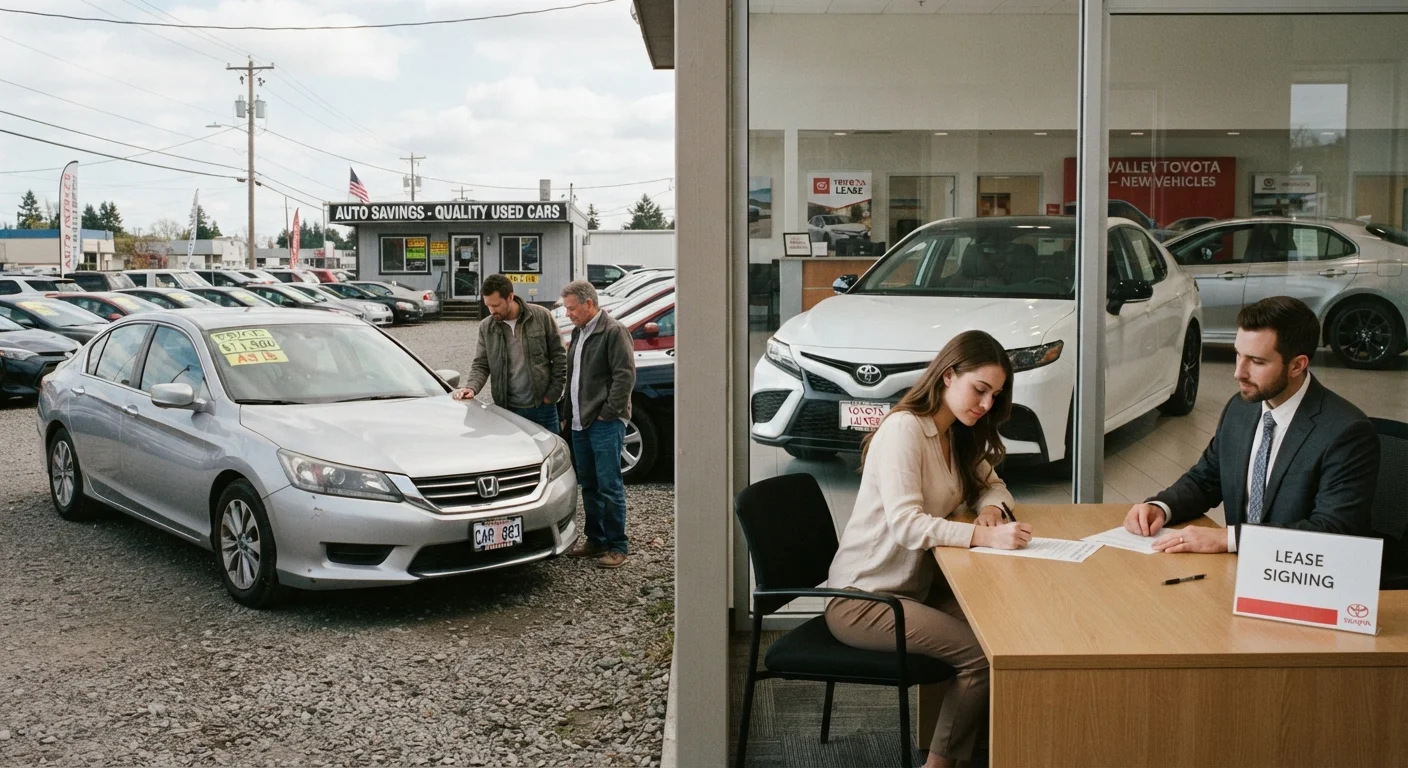
- Using trade-in value as a private party baseline. Trade-in values are typically the lowest benchmark - they reflect what a dealer will pay to resell the car at a profit. Private buyers expect to pay more than a dealer would, so your private party asking price should be anchored to private party estimates, not trade-in figures. If you're unsure which path makes sense for your situation, see our analysis of private party vs. trade-in trade-offs.
- Ignoring recent reconditioning. If you've invested in meaningful repairs or maintenance close to the sale, those costs are worth factoring into your price - with documentation to back them up.
- Letting the listing go stale. Stale listings attract lowball offers. Stay active: respond promptly, update photos if needed, and adjust price based on market feedback.
First-time private sellers often make avoidable errors beyond pricing - from incomplete paperwork to accepting payment without verification. Review that guide before you close a deal.
Don't Anchor to What You Paid
What you originally paid for the vehicle, what you spent on repairs, or what you still owe on a loan are not factors that buyers care about - and none of them determine market value. Pricing based on your costs rather than current market data is one of the fastest ways to price yourself out of the market. If you owe more than the car is worth, that's a separate financial problem to resolve independently of your asking price.