What Each Option Actually Costs
The sticker price of a second car is only the opening bid. The full ownership picture includes insurance premiums, fuel, routine maintenance, registration fees, and depreciation - the gradual loss in a vehicle's market value over time. For a realistic comparison, households need to tally all of these, not just the monthly payment.
According to the American Automobile Association (AAA), the average annual cost of owning and operating a new vehicle has historically exceeded $10,000 when depreciation is included. A used vehicle is typically less, but insurance and maintenance can offset part of that difference. See the full breakdown of car ownership costs for a detailed look at each cost category.
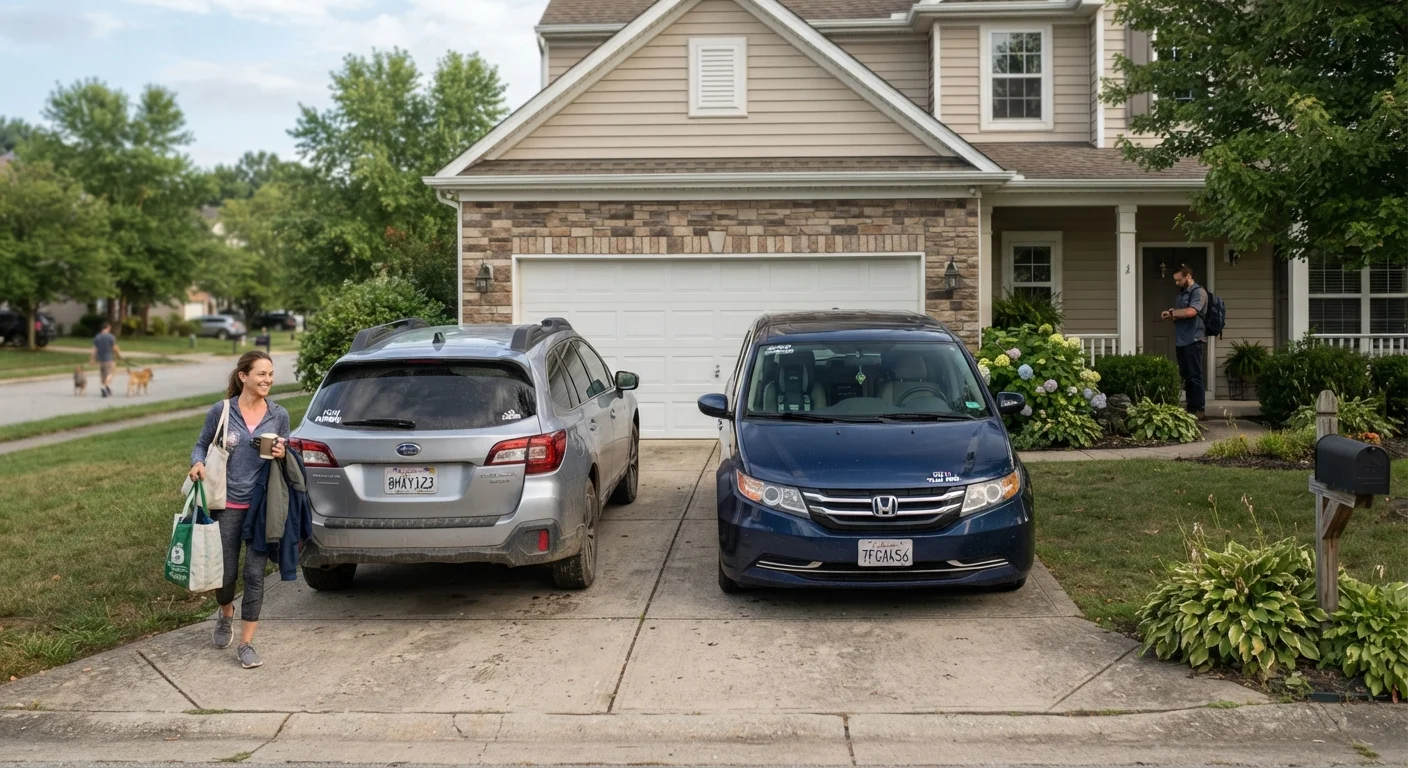
Adding a second car doesn't just double one expense - it stacks every individual line item: a second insurance policy, a second registration renewal, a second set of tires, and a second vehicle losing value in your driveway. For many households, that's a five-figure annual commitment worth examining carefully before committing.
| One-Car Household | Two-Car Household | |
|---|---|---|
| Annual ownership cost (est.) | $8,000-$12,000 total | $16,000-$24,000+ total |
| Insurance premiums | Single policy | Two separate policies |
| Scheduling flexibility | Requires coordination | Independent travel for each adult |
| Maintenance complexity | One vehicle to track | Doubled upkeep demands |
| Depreciation exposure | One asset losing value | Two assets losing value |
| Suited to | Aligned schedules, transit access, WFH | Independent commuters, no transit access |
The Logistical Case for Two Cars
The practical argument for two vehicles is strongest when both adults in a household have independent, non-overlapping commutes with no reliable transit alternative. If one partner works a standard nine-to-five while the other works irregular or overnight shifts, sharing a single vehicle creates real scheduling conflicts that rideshares may not reliably solve - particularly in suburban or rural areas where service is inconsistent or surge pricing is common.
Families with school-age children also frequently find that after-school pickups, extracurriculars, and medical appointments create overlapping transportation demands that a single vehicle struggles to absorb. In these cases, a second car functions less as a luxury and more as operational infrastructure.
Track Before You Commit
Before buying a second vehicle, log every household trip for two to four weeks - noting times, destinations, and whether having one car created a genuine conflict. Most households find that actual scheduling conflicts are rarer than anticipated, and that the data makes the decision considerably clearer than gut instinct alone.
That said, the logistical need isn't always as fixed as it feels. Remote work arrangements, flexible scheduling, and employer commuter benefits have shifted the calculus for a meaningful number of households. Reviewing your actual week-by-week transportation demands - rather than worst-case scenarios - often reveals more flexibility than assumed.
When One Car Is Enough
One-car living works best when schedules align, transit is accessible, or at least one household member can work from home most of the week. In walkable urban neighborhoods or areas with reliable public transit, a second car may sit unused for days at a time - generating costs without delivering proportional utility.
Households that have downsized to one vehicle often describe a behavioral shift: trips get consolidated, errands are batched more efficiently, and the household becomes more deliberate about how it spends transportation time. These habits can compound into meaningful savings over a multi-year period.
$10,000+
Average annual cost per vehicle
AAA's annual 'Your Driving Costs' study has consistently placed the average all-in cost of vehicle ownership above $10,000 per year when depreciation is included.
57%
US households owning two or more vehicles
According to US Census Bureau American Community Survey data, the majority of American households own at least two vehicles, though this rate varies significantly by region and urban density.
For occasions when a second car would genuinely be useful - a long weekend trip while one partner stays home, or an unusual scheduling conflict - short-term rental or rideshare costs are almost always less than the annual fixed costs of maintaining a second vehicle. Understanding total transportation costs helps households run this comparison with real numbers rather than estimates.
Making the Decision for Your Household
Before committing either way, households benefit from tracking actual transportation needs for two to four weeks - logging every trip, time, and whether it created a conflict. This data often surfaces patterns that assumptions obscure. Many households discover they have far fewer genuine scheduling conflicts than they initially believed.
Financial readiness also matters. If purchasing a second vehicle would require stretching into a loan that strains the monthly budget, it's worth exploring whether buying used or leasing suits your situation before deciding on ownership at all. Similarly, if a second car is aging and frequently in the shop, understanding when repair costs outweigh replacement is a relevant checkpoint.
Transportation decisions exist within a broader household budget context. The same discipline that applies to housing cost trade-offs applies here: the right answer depends on your specific circumstances, not a universal rule. Two cars genuinely improve quality of life for some households; for others, the same money invested or saved delivers more value elsewhere.
This article is for general informational purposes only and does not constitute financial or legal advice. Consult a qualified financial professional for guidance specific to your situation.