Why the Monthly Payment Is Only Part of the Story
When most people budget for a car, they focus on one number: the monthly payment. But that figure typically covers only the loan principal and interest - it leaves out several ongoing costs that, added together, can easily rival or exceed the loan payment itself.
Understanding the full cost of owning a vehicle means accounting for six major categories: depreciation, insurance, fuel, maintenance and repairs, registration and taxes, and parking or tolls. Each one is largely predictable, which means they can be planned for - if you know to look for them.
| Average Annual Vehicle Cost (U.S.) | Approximately $10,000-$12,000 per year (AAA Your Driving Costs study) |
| Depreciation Share of Ownership Cost | Roughly 40-50% of total ownership cost (AAA Your Driving Costs study) |
| Average Annual Auto Insurance Premium | Around $1,700-$2,100 per year (National Association of Insurance Commissioners, recent data) |
| Typical Annual Maintenance & Repair | $500-$1,200 for routine upkeep (Consumer Expenditure Survey, U.S. Bureau of Labor Statistics) |
| Fuel Cost Range (Annual) | $1,500-$3,000 depending on vehicle and driving habits (U.S. Department of Energy estimates) |
| Parking & Tolls (Urban Drivers) | Can exceed $2,000 per year in major metro areas (INRIX Parking Pain Report) |
For a deeper look at how financing terms shape your baseline cost, see our guide on how auto loan terms affect the total you pay.
The Six Cost Categories Explained
Depreciation
A vehicle loses value the moment it leaves the lot. For most new cars, that loss is steepest in the first three to five years. Depreciation is a real financial cost even if it doesn't show up as a bill - it reduces the asset's value and affects what you recover when you sell or trade in. Used vehicles depreciate more slowly, which is one reason they can lower total ownership costs for some buyers.
Insurance
Auto insurance is legally required in nearly every U.S. state, and premiums vary based on your location, driving record, vehicle value, age, and coverage level. Your lender may also require comprehensive and collision coverage if you're financing, which raises the floor on what you must carry.
These Figures Are General Estimates
Actual costs vary significantly based on your vehicle type, location, driving habits, and credit profile. Urban drivers typically pay more for parking and insurance, while rural drivers may spend more on fuel. Use these figures as a planning baseline, not a guarantee of what you will spend.
Fuel
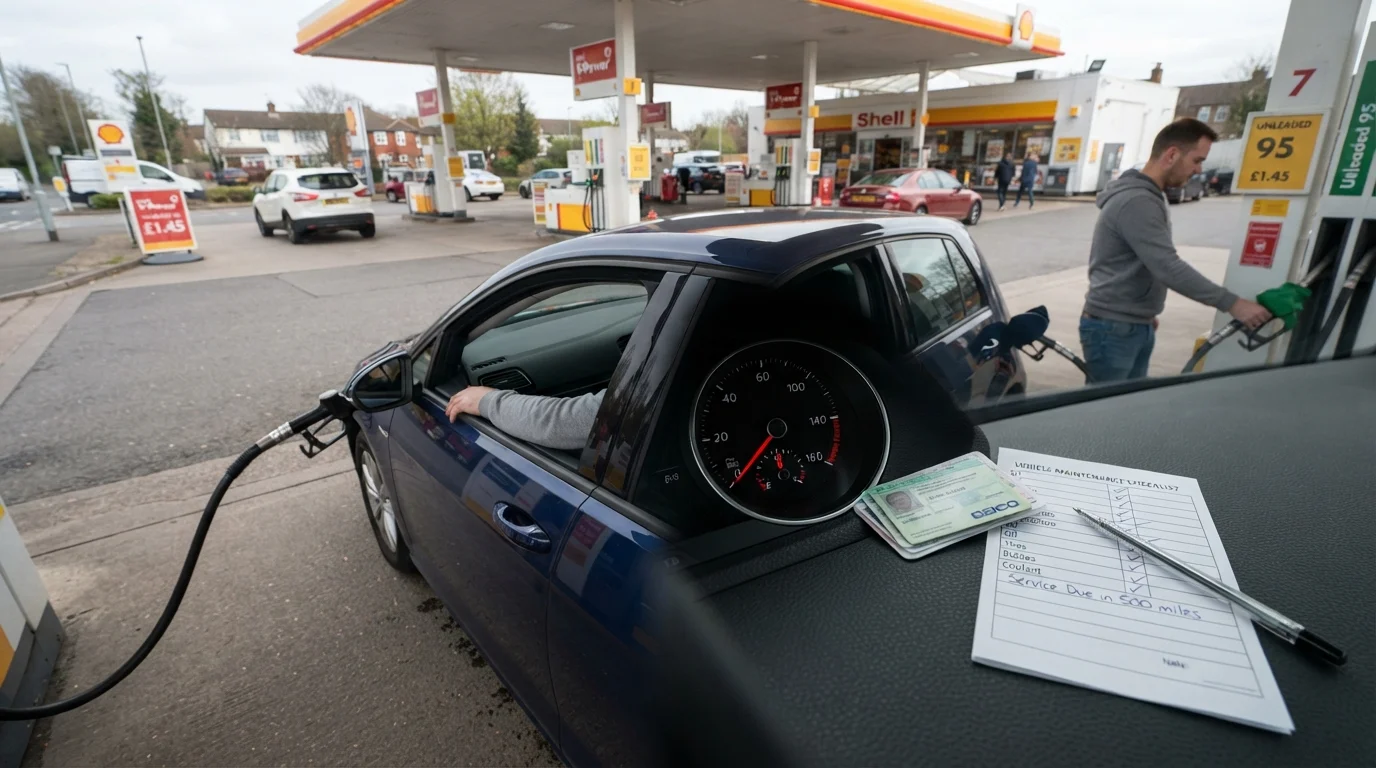
Your annual fuel spend depends on how many miles you drive, your vehicle's fuel economy rating, and local gas prices - all of which fluctuate. Hybrids and electric vehicles shift this cost profile significantly, though they carry their own considerations around battery replacement and charging infrastructure.
Maintenance and Repairs
Routine upkeep - oil changes, tire rotations, brake pads, filters - is predictable. Major repairs are not. Older vehicles and those out of warranty carry more financial exposure here. Keeping a dedicated repair fund rather than treating maintenance as an unexpected expense is a practical way to absorb these costs without disrupting your budget.
Registration, Taxes, and Fees
States charge annual or biennial registration fees, and some base them on vehicle value or weight. Sales tax at purchase can add thousands upfront. These costs are easy to overlook when comparing purchase prices.
Parking and Tolls
For urban and suburban drivers, daily parking fees, monthly garage passes, and toll road charges can accumulate into a meaningful annual expense. These costs are largely invisible in standard vehicle budget calculators.
~$10,728
Average annual cost to own and operate a new sedan
According to AAA's annual Your Driving Costs report, this figure includes depreciation, insurance, fuel, maintenance, and financing.
47%
Share of total ownership cost attributed to depreciation
AAA research consistently finds that vehicle depreciation is the single largest ownership expense for most drivers.
$0.18/mile
Estimated average fuel cost per mile
Based on U.S. Department of Energy fuel cost estimates for a typical passenger car at average U.S. gas prices.
Putting It Together: How to Budget for the True Cost
A practical approach is to estimate your annual costs in each of the six categories above, then divide by 12 to get a realistic monthly figure. When that number is added to your loan or lease payment, you have a truer picture of what the vehicle will cost each month.
For most households, that total lands considerably higher than the payment alone. The Car Ownership Roadmap walks through how these costs evolve at each stage of ownership, from registration day through eventual resale.
It's also worth noting that transportation costs don't exist in isolation - they compete with housing, food, healthcare, and savings goals for the same dollars. The same clear-eyed approach that helps you understand the hidden costs of home improvement or eating out vs. cooking at home applies here: look at the full number, not just the line item that's easiest to see.
Depreciation
The loss in a vehicle's market value over time. New cars typically lose a significant portion of their value in the first few years of ownership, making it one of the largest hidden costs of car ownership.
Total Cost of Ownership (TCO)
The full expense of owning a vehicle, including purchase price, financing, insurance, fuel, maintenance, registration, and depreciation. TCO gives a more complete picture than the monthly payment alone.
Gap Insurance
Optional auto insurance coverage that pays the difference between what you owe on a car loan and what the car is worth if it is totaled or stolen. Useful when a loan balance exceeds current market value.
Preventive Maintenance
Scheduled upkeep tasks - such as oil changes, tire rotations, and fluid checks - performed on a regular basis to prevent larger, costlier repairs down the road.
Registration Fees
Annual or biennial fees paid to a state or local government to legally operate a vehicle on public roads. Amounts vary widely by state and sometimes by vehicle value or weight.
Opportunity Cost
The value of what you give up when you choose to spend money one way instead of another. In vehicle ownership, money tied up in a car payment or repairs cannot be used for savings or other goals.
If you're weighing a vehicle purchase or thinking about whether your current vehicle still makes financial sense, the Buying & Selling Cars hub and Car Ownership Basics hub cover the decisions on both sides of that question.
This article is for general informational purposes only and does not constitute personalized financial advice. Consult a qualified financial professional for guidance tailored to your situation.