What You Actually Pay When You Eat Out
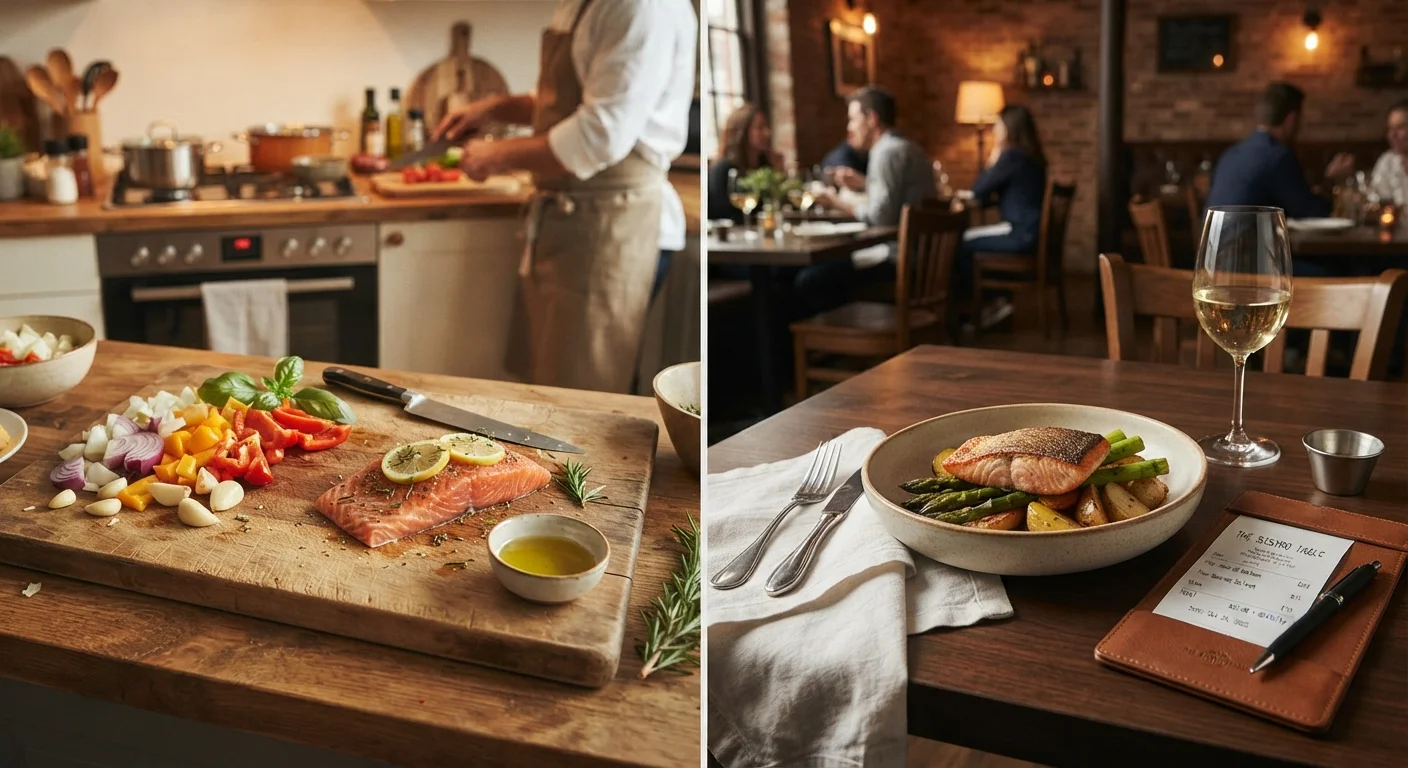
The number on the menu is rarely what you pay. A $14 entrée at a casual sit-down restaurant can easily become a $22-$25 charge once you factor in tax, a standard 18-20% tip, and a soft drink. Add a delivery fee and service charge from an app-based order, and that same meal can top $30 before any extras.
According to the U.S. Bureau of Labor Statistics, American households spent an average of over $3,000 per year on food away from home in recent Consumer Expenditure Survey data - and that figure has risen steadily. For a family of four eating out twice a week at a mid-range restaurant, annual spending can easily exceed $6,000-$8,000.
The hidden costs accumulate in predictable ways: convenience fees on delivery platforms, minimum order requirements that push you to order more than you need, and the social pressure around tipping that has expanded to counter-service and fast-casual settings. None of these appear on a menu.
| Criterion | Eating Out | Cooking at Home |
|---|---|---|
| Average cost per meal (one person) | $15-$30+ | $2-$8 |
| Hidden add-ons | Tax, tip, fees (30-50% extra) | Utilities, waste (minor per meal) |
| Time required | Low (ordering to table) | 45-90 min including cleanup |
| Control over ingredients | Limited | Full control |
| Portion sizing | Fixed by restaurant | Flexible |
| Food waste risk | Low (pay per meal) | Moderate (unused groceries) |
| Annual spend (2x/week dining out) | $3,000-$8,000+ | $1,200-$2,500 (groceries) |
The True Cost of Cooking at Home
Home cooking is cheaper - but it's not free, and treating it as nearly-zero-cost leads to underestimating what it actually takes. Groceries are the obvious line item, but there are others worth tracking.
Food waste is one of the largest overlooked costs. The USDA has estimated that American households waste roughly 30-40% of the food supply, much of it at the consumer level. Buying ingredients for a recipe and using only half before the rest spoils is a real budget drain. Planning meals around overlapping ingredients helps, but it takes consistent effort.
Time is a genuine cost even if it doesn't show up in a bank statement. Shopping, prepping, cooking, and cleaning adds 45-90 minutes to a typical weeknight meal. For households where time is scarce, this has real value - though it doesn't mean eating out is the automatically smarter choice.
Utilities, cookware, and pantry staples are minor on a per-meal basis but real in aggregate. A reasonable home-cooked dinner for two typically costs $4-$8 in ingredients depending on the dish - a fraction of equivalent restaurant spending. Just as transportation costs extend well beyond the car payment, food costs at home extend beyond the grocery receipt.
$3,000+
Average annual U.S. household spend on food away from home
According to the U.S. Bureau of Labor Statistics Consumer Expenditure Survey.
3-5x
Higher cost per serving when eating out vs. cooking at home
A commonly cited estimate across consumer finance research comparing equivalent meals.
30-40%
Share of food supply wasted at the consumer level
Based on USDA estimates of household food loss and waste in the United States.
Where the Gap Really Shows Up
The cost difference between eating out and cooking at home isn't just visible meal-to-meal - it compounds over time. A household that replaces four restaurant meals per week with home-cooked equivalents could realistically save $150-$250 per month depending on location and meal type. Over a year, that's $1,800-$3,000.
These quietly draining habits share a pattern with frequent dining out: each individual transaction feels small, but the cumulative effect is substantial. The same dynamic that makes small impulse purchases add up applies directly to the $4 delivery fee on a $12 lunch order, repeated three times a week.
The math shifts somewhat for single-person households, where buying fresh ingredients in standard grocery quantities can mean spoilage before everything gets used. In those cases, building meals around flexible staples - grains, canned goods, eggs, frozen vegetables - closes the waste gap considerably.
The Delivery App Premium Is Real
Third-party food delivery platforms typically layer on a delivery fee, a service fee, and sometimes a small order fee - on top of menu prices that are often marked up from the in-restaurant price. A meal that costs $12 at the counter can run $22-$26 when ordered through an app. That premium is worth understanding before it becomes a daily habit.
A practical middle path: treat home cooking as the default and dining out as a deliberate choice for specific reasons, rather than a fallback when cooking feels inconvenient. That reframe alone tends to reduce frequency without requiring a strict budget.