Why This Decision Is More Complicated Than Most Advice Suggests
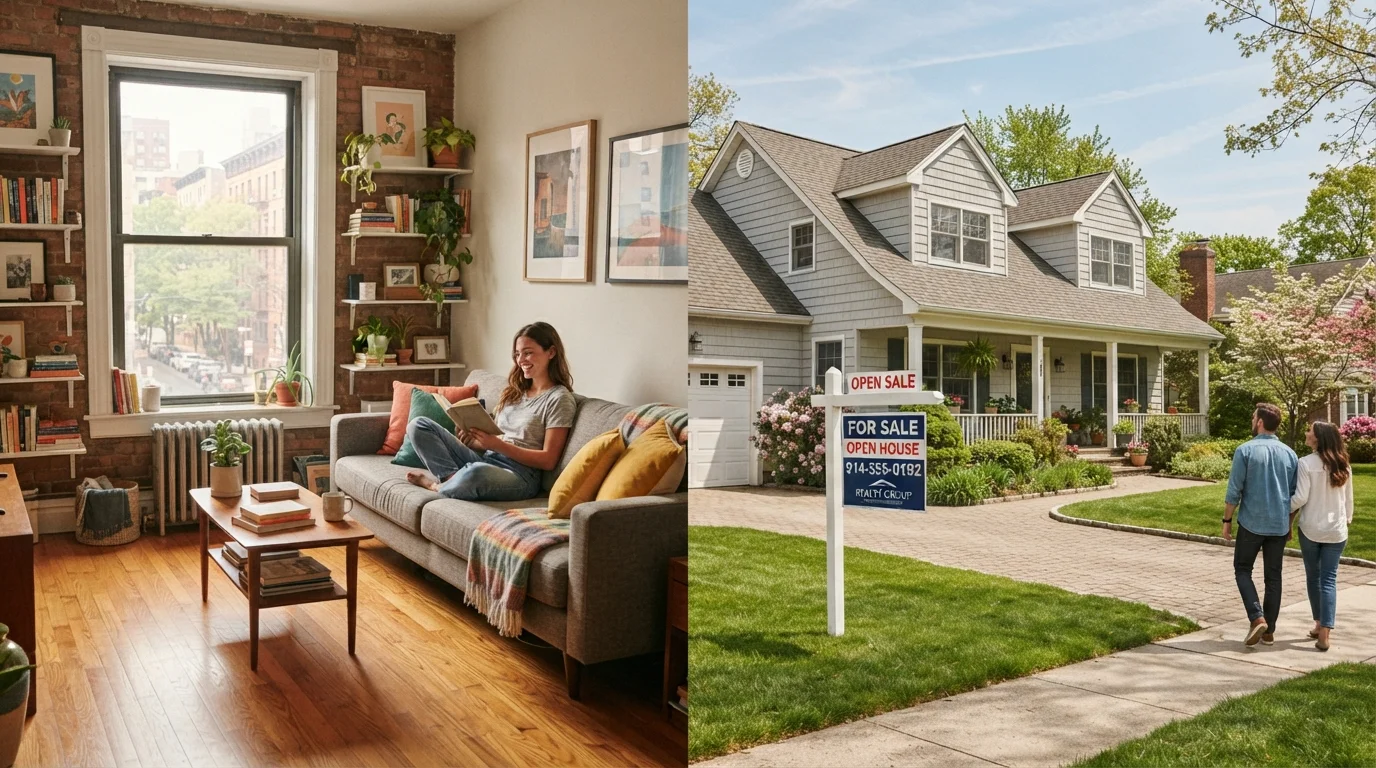
The phrase "renting is throwing money away" has been repeated so often it sounds like financial fact. It isn't. Rent buys something real: shelter, a place to live, and freedom from a long list of ownership obligations. The question worth asking isn't which path is inherently superior - it's which set of trade-offs fits your current financial situation and life goals.
That calculation looks different depending on where you live, how long you plan to stay, what you have saved, and how stable your income is. A framework that works for a household in a mid-sized Midwestern city may be completely wrong for someone in a coastal metro where home prices have decoupled from local incomes.
If you're already thinking about the broader picture of large spending commitments, the same analytical approach applies to vehicles. Our piece on the real cost of owning a car beyond the monthly payment illustrates how headline costs routinely understate total financial exposure - a pattern that plays out in housing too.
What Renting Actually Costs - And What It Buys You
Renters pay monthly rent plus, in most cases, renter's insurance (typically modest) and utilities. What they don't pay: property taxes, homeowner's insurance, HOA fees, mortgage interest, or the cost of repairs when something breaks. A broken water heater or a failing roof is the landlord's financial problem, not theirs.
The real financial upside of renting is optionality. Renters can move with relatively short notice, respond to job changes, and avoid being overexposed to a single illiquid asset. In high price-to-rent markets - where purchasing the same home you're renting would cost far more monthly - renting can free up meaningful cash each month for savings, investments, or other goals.
The downside is real too: rent payments don't build equity, landlords can raise rents or decline to renew leases, and renters have limited ability to customize their space. For ideas on what improvements are actually worth making as a renter, see our guide on which home improvements are worth making as a renter.
| Criterion | Renting | Owning |
|---|---|---|
| Upfront costs | Security deposit, first/last month | Down payment, closing costs (2-5%) |
| Monthly obligations | Rent + renter's insurance | Mortgage, taxes, insurance, HOA |
| Maintenance responsibility | Landlord handles most repairs | Owner responsible for all costs |
| Equity building | None directly | Yes, as principal is paid down |
| Flexibility to relocate | High - typically 30-60 day notice | Low - selling takes time and money |
| Exposure to market risk | Minimal - rent can rise | Significant - values can fall |
| Customization | Limited by lease terms | Full control within local codes |
What Owning Actually Costs - Beyond the Mortgage Payment
Homeownership costs are routinely underestimated because the mortgage payment gets all the attention. A more complete picture includes property taxes, homeowner's insurance, HOA fees where applicable, and ongoing maintenance - commonly estimated at 1-2% of a home's value annually, though that figure varies significantly by home age and condition.
Then there are the transaction costs: closing costs when buying (roughly 2-5% of the purchase price) and agent commissions plus fees when selling. These costs mean that short-term ownership often destroys value rather than building it. Most financial planners use a break-even horizon of five to seven years as a general benchmark - below that, owning frequently costs more in total than renting would have.
Ownership also concentrates wealth in a single illiquid asset. If local property values decline or your circumstances change, that concentration carries real financial risk. And as homes grow more technologically complex, even maintenance costs can surprise owners. Our article on the hidden costs of smart home ownership is one example of how ongoing costs accumulate in ways that don't show up when you're touring a property.
5-7 years
Typical break-even horizon for homeownership
Financial planners commonly cite this range as the minimum stay needed for buying to offset transaction and early-ownership costs versus renting.
1-2%
Annual home value spent on maintenance
This widely-used rule of thumb suggests owners of a $300,000 home should budget $3,000-$6,000 per year for upkeep, though older homes often require more.
2-5%
Typical buyer closing costs as share of purchase price
Closing costs vary by location and loan type, but commonly include lender fees, title insurance, escrow, and prepaid taxes and insurance.
How to Think Through the Decision for Your Situation
No single formula works for everyone, but a few questions sharpen the analysis considerably.
- How long do you plan to stay? The longer your horizon, the more favorable ownership tends to look - transaction costs spread over more years, and equity has more time to accumulate.
- What is the price-to-rent ratio in your area? Divide the purchase price of a comparable home by the annual rent you'd pay. Ratios above 20 generally favor renting; below 15 tend to favor buying. This is a rough guide, not a rule.
- What do you have in savings? A down payment, closing costs, an emergency fund, and move-in expenses all come due at once. Stretching to buy can leave households dangerously illiquid.
- How stable is your income? A mortgage is a fixed, long-term obligation. Job uncertainty or variable income raises the stakes of ownership significantly.
For a deeper foundation on managing housing within a broader budget, our budgeting basics hub offers practical frameworks for tracking where your money actually goes.
This article is for general informational and educational purposes only and does not constitute personalized financial or legal advice. Please consult a qualified financial professional before making decisions about home purchases, financing, or major financial commitments.