How the Warning Light System Works
Modern vehicles communicate through a network of sensors tied to the vehicle's onboard computer - the OBD-II system. When a sensor reading falls outside acceptable parameters, the system logs a fault code and triggers the corresponding dashboard light. Color is your first clue: red signals an urgent, potentially vehicle-damaging or safety-critical condition; amber or yellow indicates a service need that should be addressed soon but isn't necessarily an immediate emergency; green or blue lights are simply status indicators (headlights on, high beams active, cruise control engaged).
Understanding that system-level context matters: a single warning light can sometimes represent dozens of different underlying fault codes. That's why illuminated lights should be read as prompts to investigate, not final diagnoses. An inexpensive OBD-II scan tool - or a free scan at many auto parts retailers - retrieves the specific fault code to give you a starting point.
| TPMS Required Since | September 2007 (all new US passenger vehicles) (National Highway Traffic Safety Administration (NHTSA)) |
| OBD-II Standard Applied | All US vehicles model year 1996 and later (US Environmental Protection Agency (EPA)) |
| Red Light Response | Stop driving as soon as safely possible (General industry guidance from ASE-certified mechanics) |
| Yellow/Amber Light Response | Schedule service promptly; monitor closely (General industry guidance) |
| Check Engine Causes | Hundreds of possible fault codes (OBD-II system specification) |
| Scan Tool Availability | Many auto parts retailers offer free OBD-II scanning (Common retail industry practice) |
The Warning Lights You Must Know
These are the most critical lights every driver should recognize on sight.
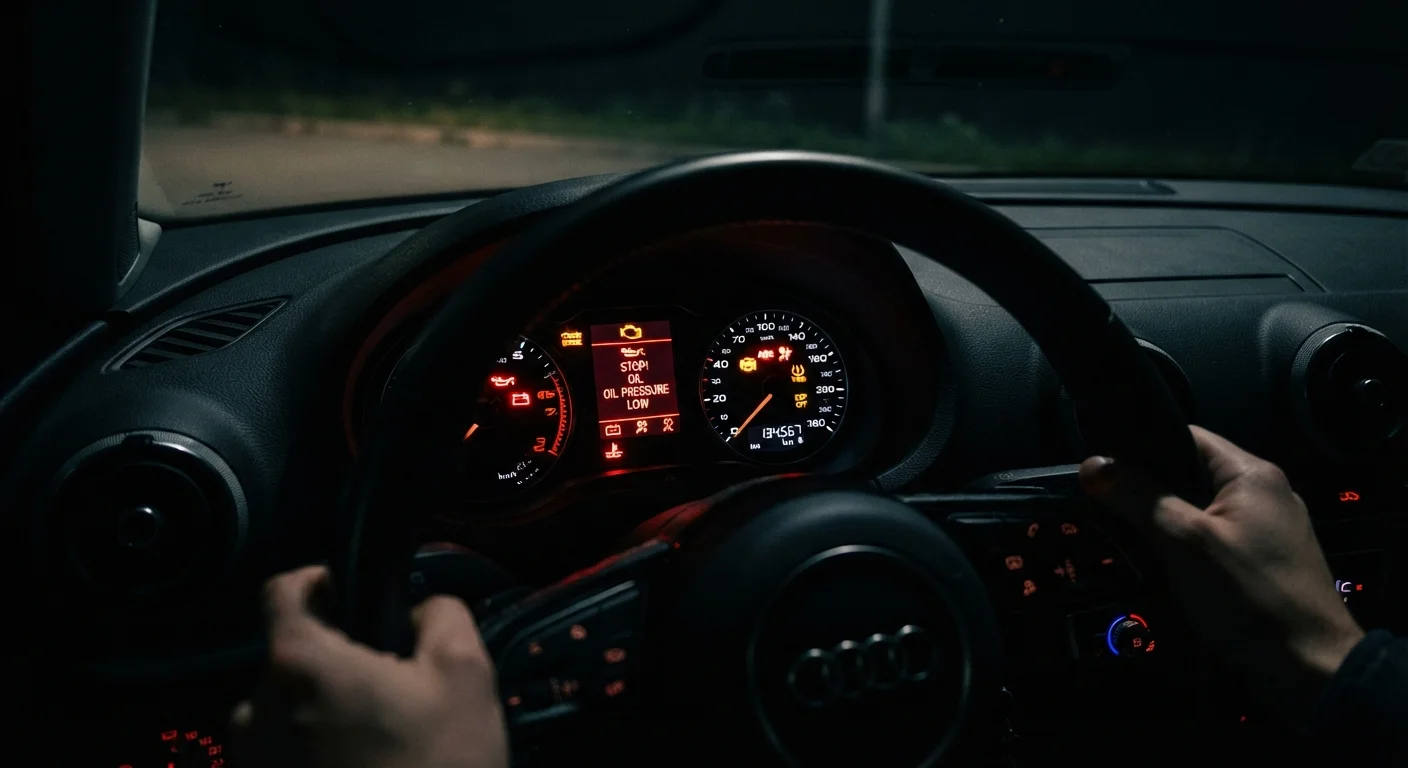
Oil Pressure (Red Oil Can)
This is not the same as an oil-level warning. It means oil pressure has dropped dangerously low. Pull over immediately and shut off the engine. Driving with low oil pressure can destroy an engine within minutes. Check the oil level; if it's adequate and the light remains on after restart, do not drive - call for service.
Engine Temperature (Red Thermometer)
The engine is overheating. Pull over safely, turn off the engine, and let it cool. Never open the radiator cap on a hot engine - escaping steam causes serious burns. Overheating can warp cylinder heads, a repair that runs into thousands of dollars.
Battery / Charging System (Red Battery)
The charging system isn't maintaining voltage - the alternator may be failing or a connection is loose. The car may keep running temporarily on battery power alone, but electrical systems will begin shutting down. Drive directly to a service location without turning the engine off if possible, as restarting may not be possible.
Check Engine / Malfunction Indicator Lamp (Amber Engine Outline)
This covers a wide range of issues - from a loose gas cap to misfiring cylinders to catalytic converter failure. A steady amber light warrants a prompt scan and service appointment. A flashing check engine light is more urgent: it typically indicates an active misfire that can damage the catalytic converter - reduce speed and seek service soon. See our common first-year owner mistakes article for context on why ignoring this light is one of the most expensive habits new owners develop.
TPMS (Amber Exclamation in Tire Profile)
One or more tires have dropped significantly below the recommended pressure - typically 25% or more below spec. Underinflated tires affect handling, fuel economy, and wear. Check all four tires with a gauge; do not rely solely on visual inspection. The light may also illuminate in cold weather as air contracts. Correct inflation, then consult your manual if the light persists after inflation, as the sensor may need resetting.
ABS (Amber ABS Letters in Circle)
The Anti-lock Braking System has detected a fault. Normal braking remains functional, but the ABS - which prevents wheel lock-up during emergency stops - may not engage. This is a safety system: schedule service soon and drive with extra caution, especially in wet conditions.
OBD-II
On-Board Diagnostics II - a standardized system built into most vehicles sold in the US after 1996 that monitors engine and emissions performance and stores fault codes when something goes wrong.
Malfunction Indicator Lamp (MIL)
The formal name for the check engine light. It illuminates when the OBD-II system detects a fault in the engine, transmission, or emissions system.
ABS
Anti-lock Braking System - a safety feature that prevents wheel lock-up during hard braking, helping the driver maintain steering control. An ABS warning light indicates a fault in this system.
TPMS
Tire Pressure Monitoring System - a federally required sensor system on US vehicles made after September 2007 that alerts drivers when a tire's pressure drops significantly below the recommended level.
Fault Code (DTC)
A Diagnostic Trouble Code stored by the vehicle's computer when a sensor or system reports an abnormal reading. Mechanics use a scan tool to retrieve these codes and diagnose the underlying issue.
Oil Pressure Warning
A light indicating that engine oil pressure has dropped below safe operating levels - not necessarily that the oil level is low. This is a stop-immediately situation requiring immediate attention.
When to Act Immediately vs. Schedule Service
The practical rule: red lights stop you now, amber lights stop procrastination. Here's a simple framework:
- Stop immediately: Oil pressure, engine temperature, brake system warning (red exclamation in circle)
- Drive to service today: Battery/charging, flashing check engine light
- Schedule within the week: Steady check engine light, ABS, traction control system (TCS/ESC)
- Monitor and address soon: TPMS, service reminder lights
When in doubt, consult your owner's manual before dismissing any light. If you've recently purchased a used vehicle and want to understand its history and prior issues, our guide on how to read a vehicle history report can help you identify whether recurring problems have been documented.
Your Owner's Manual Is the Authority
Warning light symbols and their exact meanings can vary between manufacturers and model years. While this article covers the most common standards, your vehicle's owner's manual contains the definitive guide to every light on your specific dashboard. Keep a digital or physical copy accessible. If you've bought a used vehicle without one, most manufacturers make them available as free PDF downloads on their official websites.
This article is for general informational purposes only. Warning light meanings can vary by vehicle make, model, and year. Always consult a qualified mechanic for diagnosis and repair of any vehicle system fault.