Minimalism Is a Philosophy, Not an Organizing Method
Minimalism has had a long cultural moment - and for good reason. Its emphasis on intentionality resonates with people drowning in stuff they didn't choose. But somewhere along the way, minimalism became synonymous with home organization. They're not the same thing.
Organization is about creating systems where things have a place and can be found when needed. Minimalism is about owning less by choice. You can have one without the other. A person who owns very little but keeps it scattered has no organizational system. A family with three kids and a full kitchen can be highly organized without owning a single matching linen basket.
The conflation causes real problems: people attempt a complete purge when what they actually need is a better drawer system. They feel like failures when their home doesn't look like a design magazine spread - even if everything in it is used and loved. Understanding the distinction frees you to solve the right problem.
Myth
To get organized, you need to own less stuff.
Fact
Organization is about systems and access, not quantity. Many well-organized homes contain a lot of things - all of them findable and stored purposefully.
The ownership level of a household reflects its life circumstances, not its organizational competence. What determines whether a home feels organized is whether items have a logical, consistent home - and whether that home makes them easy to retrieve and return. Reducing ownership can simplify organization, but it doesn't replace it. A person who discards half their belongings without changing their storage habits will recreate clutter within weeks.
Myth
A visually bare home is an organized home.
Fact
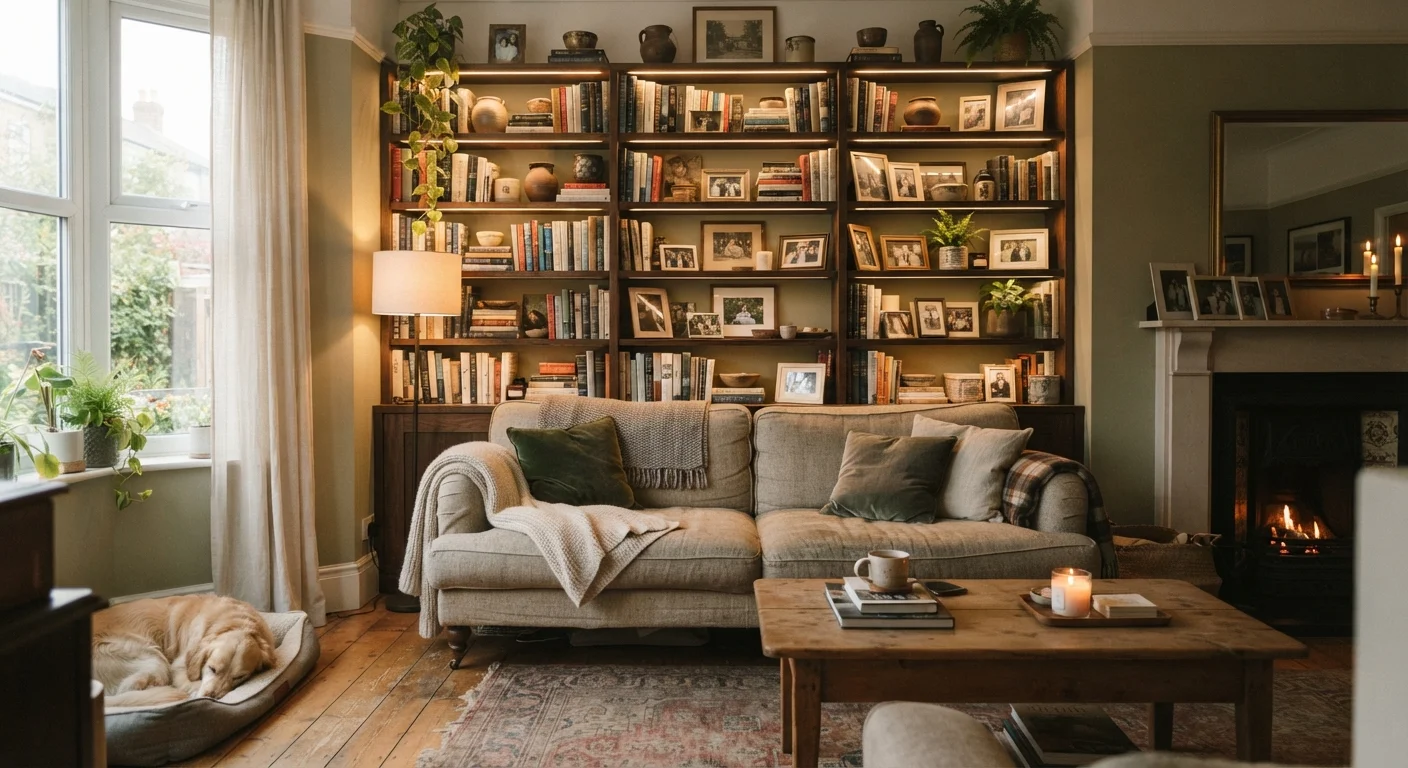
Visual emptiness and functional organization are two different things. A sparse-looking room can hide chaos inside cabinets, while a fuller room may be perfectly sorted.
Minimalist aesthetics prioritize what's visible. But a kitchen where every countertop is clear while the drawers are jammed with no logic is not an organized kitchen - it's a staged one. True organization is measured by how quickly and calmly you can find what you need, not by whether the room photographs well. Chasing the look without the underlying system is a cosmetic fix.
Myth
If you haven't used something in a year, get rid of it.
Fact
Usage frequency is one factor in deciding what to keep - but context matters significantly. Seasonal items, sentimental objects, and specialized tools may rarely be used yet still earn their place.
The "one-year rule" is a useful heuristic for everyday items, but it's a blunt instrument. Emergency supplies may go unused for years and remain essential. A sewing machine used twice a year still serves a clear purpose. The better question is: does keeping this item cost more - in space, maintenance, or mental load - than the value it provides? That calculation varies by household and can't be resolved by a calendar.
Myth
Minimalism works for every household if people just commit to it.
Fact
Households vary enormously in size, needs, life stage, and culture. A system that works beautifully for one person living alone may be functionally impossible for a family of five.
Minimalism developed largely in the context of single adults or couples without children, often in urban environments with easy access to services and rentable equipment. It can be genuinely freeing in those circumstances. Applied rigidly to a multigenerational household, a home with young children, or a space used for a home-based business, the same philosophy often creates friction rather than calm. Good organization is always context-specific. See also: how small-space constraints can guide smarter decisions.
Myth
Decluttering once will keep your home organized long-term.
Fact
Decluttering resets a space; habits maintain it. Without consistent systems, clutter reliably returns regardless of how thorough the initial purge was.
A one-time purge is a starting point, not a solution. The same behaviors and patterns that created clutter the first time will recreate it unless something structural changes - where items land when they come through the door, how quickly things without a home get assigned one, whether maintenance is a daily habit or a periodic crisis. Organization is ongoing, not a project with an end date.
What Minimalism Gets Right (and Where It Stops Being Useful)
Minimalism's most useful contribution to home organization is the question: does this belong here? That question - asked honestly - is the engine behind every effective decluttering session. Keeping things you don't use creates maintenance burden without benefit. On that point, minimalism is genuinely helpful.
Where it breaks down is in its assumption that less is universally better. That assumption doesn't account for life stage, household size, hobbies, disability, or culture. A crafter needs supplies. A cook needs equipment. A parent of young children needs gear. Telling those households to own less isn't organizing advice - it's lifestyle pressure.
The more productive question isn't "how little can I own?" but "does the way I store and access my things support how I actually live?" That question leads to real solutions: using vertical space more effectively, building consistent habits, and designing systems around actual behavior rather than ideal behavior.
Purging Sentimental Items Under Pressure Can Cause Regret
Minimalist frameworks sometimes encourage rapid, sweeping decluttering that includes items with emotional or cultural significance. Discarding such items impulsively - especially under time pressure or social influence - is one of the most commonly reported organizing regrets. Take extra time with anything irreplaceable before deciding to let it go.
Building an Organizing System That Actually Fits Your Life
Sustainable organization starts with observation, not purging. Before moving or discarding anything, spend a few days noticing where things tend to pile up and why. That spot on the counter where mail accumulates? It's probably accumulating there because there's no clear landing zone near the door. The fix is a system, not a lecture about clutter.
In shared homes, this matters even more. When household members have different habits, a minimalist aesthetic is often the first casualty - and the system should be designed around the least naturally tidy person, not the most. If a system only works when everyone is equally motivated, it isn't a system.
Also worth remembering: storage products aren't the starting point. Containers won't save a disorganized home - the categories and logic have to come first. Once you know what you're storing and how often you need it, the right container becomes obvious. Do that in the wrong order and you end up with beautiful bins full of things you still can't find.
Finally, organization requires maintenance. Small daily habits - not periodic overhauls - are what prevent clutter from rebuilding. Minimalism can spark a reset, but habits are what sustain it.
25%
of Americans with two-car garages can't park in them
According to a U.S. Department of Energy survey, roughly one in four households with a two-car garage uses it primarily for storage rather than vehicles.
~$1,000
average annual spend on household storage products
Research from the Self Storage Association suggests American households spend significantly on bins, racks, and containers, often before establishing an organizing system.