The Gap Between Promise and Performance
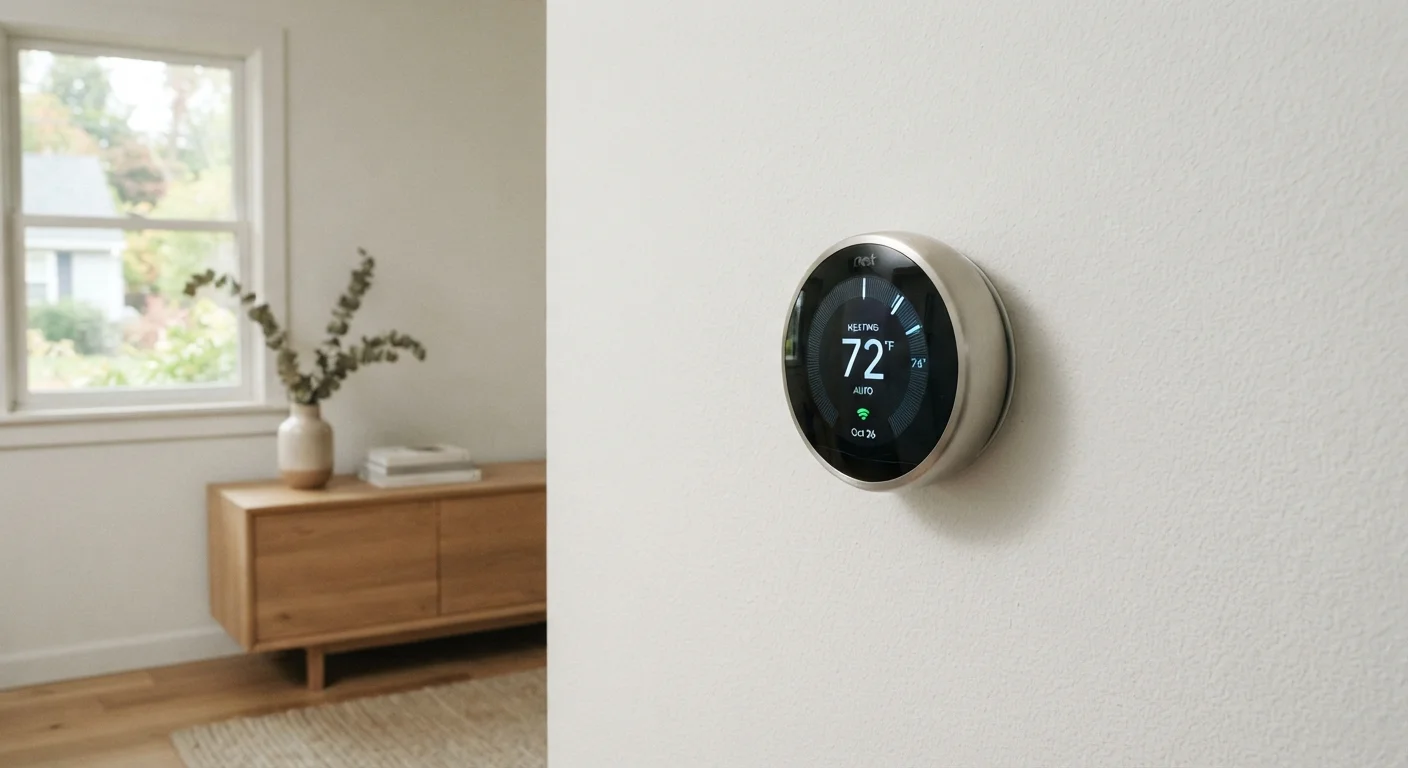
Smart thermostats are frequently marketed with energy-saving percentages attached. Those figures come from controlled studies or ideal conditions - not every household. Whether your device delivers comparable results depends on a set of variables that manufacturers rarely spell out up front.
The technology itself is sound: smart thermostats can adjust temperature automatically, respond to occupancy, and reduce conditioning when no one is home. But those capabilities only produce savings when the home, the occupants, and the setup all support them. For a broader look at what smart devices actually do and don't do, see what a smart home really means.
Myth
Installing a smart thermostat automatically lowers your energy bill.
Fact
A smart thermostat creates the conditions for savings, but the reduction only materializes when the device is correctly configured and household behavior supports it.
The thermostat is a control tool, not an efficiency upgrade to your HVAC system. If you set an aggressive schedule and then override it manually every evening, or if the home leaks conditioned air through poor insulation, the device has little to work with. Savings are behavioral and structural as much as they are technological.
Myth
Smart thermostats 'learn' your preferences and optimize themselves without any input.
Fact
Learning features require a consistent pattern of behavior over days or weeks, and they can be disrupted by irregular schedules or frequent manual overrides.
Most learning algorithms observe when you adjust the temperature and try to anticipate those adjustments. Households with variable schedules - shift workers, remote workers, families with young children - may find the learned schedule inaccurate or unhelpful. Some devices allow you to set a manual schedule directly, which can actually outperform the learning mode in less predictable homes.
Myth
The energy savings percentages in thermostat marketing apply to most homes.
Fact
Published savings estimates typically reflect optimal conditions; real-world results vary significantly based on climate, home size, insulation quality, and prior thermostat habits.
If a household was already using a programmable thermostat with a sensible schedule, the incremental gain from upgrading to a smart model is smaller than if they were using a basic manual thermostat set to one temperature all day. The baseline matters enormously, and most published estimates assume a poorly managed starting point.
Myth
A smart thermostat works equally well with any HVAC system.
Fact
Compatibility between the thermostat and HVAC system affects both functionality and efficiency; some features don't activate on certain system types.
Heat pumps, multi-stage systems, and radiant heating setups each have different wiring and control requirements. A thermostat installed on an incompatible or partially compatible system may not be able to use all of its efficiency features - and in some cases, incorrect wiring can cause the HVAC to run less efficiently than before. Verifying compatibility before installation, or having a qualified technician handle setup, prevents this problem.
Myth
Geofencing ensures your home is always at the right temperature when you arrive.
Fact
Geofencing depends on consistent phone use, location permissions, and app reliability - all of which can fail in practice.
If your phone battery dies, location services are restricted, or the app fails to sync, the thermostat won't respond to your location. In multi-person households, the feature typically tracks all paired users, meaning the system stays in 'home' mode if any one person is present - which may not reflect actual occupancy patterns and can reduce the energy setback benefit.
When Savings Materialize - and When They Don't
The households most likely to see measurable bill reductions share a few traits: they have predictable daily schedules, a reasonably well-insulated home, and a utility rate structure that rewards off-peak usage. When those conditions aren't met, the thermostat may be working correctly while still failing to move the needle on costs.
~8%
Average heating savings reported by thermostat studies
Independent analyses suggest average heating savings in the range of 8-10%, but results vary widely depending on home type, climate, and prior thermostat habits.
50%+
Users who frequently override smart thermostat schedules
Research on programmable and smart thermostat behavior indicates that a significant share of households regularly override preset schedules, reducing automated efficiency gains.
Geofencing - which uses your phone's location to trigger temperature setbacks when you leave - only works if everyone in the household carries a paired phone and the app has reliable location permissions. A family of four where one person works from home unpredictably may find the feature more disruptive than helpful.
Manual overrides are another quiet drain on efficiency. Studies of smart thermostat behavior consistently find that frequent manual adjustments reduce the benefit of automated scheduling. If occupants regularly override the preset temperatures, the device behaves like a standard programmable thermostat at best.
Home envelope quality matters more than the thermostat choice. Gaps around windows, insufficient attic insulation, or an aging HVAC system can erase any scheduling gains. Addressing those issues often produces larger savings than the thermostat upgrade itself. For households weighing simpler cooling options, ceiling fans versus window AC units covers cost-effective alternatives worth considering.
Incorrect Installation Can Reduce Efficiency
Smart thermostats require correct wiring to your HVAC system to function as intended. Incorrect installation - particularly on heat pumps or multi-stage systems - can cause the system to run more frequently or less efficiently than before the upgrade. If you're unsure about compatibility or wiring, consult a licensed HVAC technician before proceeding.
If you're thinking about total cost of ownership, the device's purchase price is only part of the picture. Hidden costs of smart home ownership - including subscription tiers, app dependencies, and compatibility issues - can affect long-term value. And for general guidance on managing household spending, spending by category offers practical frameworks across major cost areas.