Why Paris Trips Go Wrong Before They Start
Paris is one of the most visited cities on earth, which creates a paradox: because so much has been written about it, first-time visitors often arrive overconfident and underprepared. They've seen the photos, watched the films, and assume the city will be self-explanatory. It rarely is.
Most mistakes fall into three categories - cultural missteps, planning gaps, and timing errors. None are hard to avoid once you know what to look for. If you're still in the early stages of building your trip, the ground-up trip planning guide covers the fundamentals that apply here too.
Not greeting in French before switching to English.
Why it happens: American travelers assume English is universally accepted and skip the social preamble that French culture considers baseline courtesy.
Showing up to major attractions without timed-entry tickets.
Why it happens: Visitors expect to buy tickets at the door the way they would at most U.S. museums, not realizing Paris's top sites have moved to mandatory reservation systems.
Trying to eat on an American schedule.
Why it happens: Travelers used to all-day dining don't realize that most Parisian restaurants serve lunch from roughly noon to 2:30 p.m. and dinner from 7:30 p.m. onward, with little flexibility outside those windows.
Treating the Paris Metro as the only way to get around.
Why it happens: Visitors default to the Metro for every journey because it feels efficient, without realizing many central attractions are well within comfortable walking distance of each other.
Dismissing neighborhoods outside the tourist core.
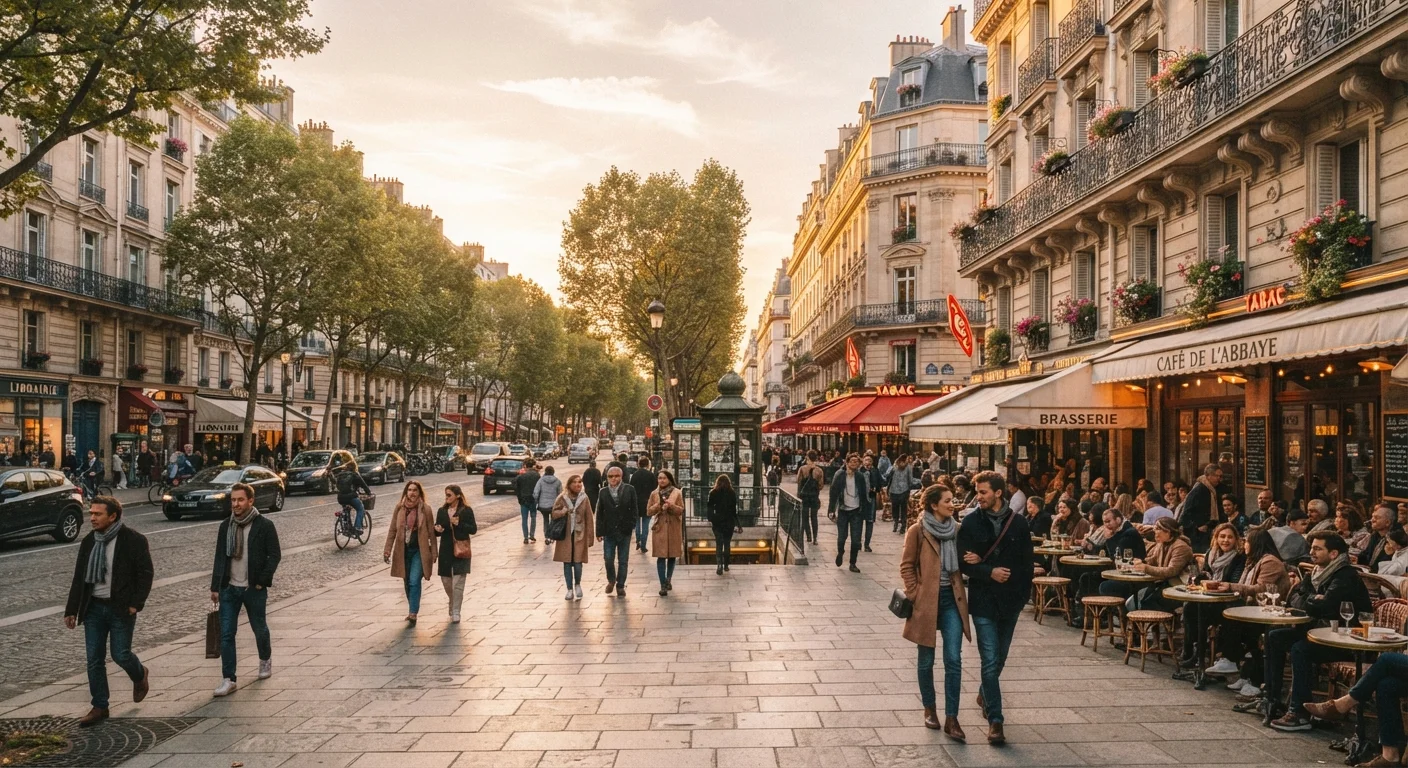
Why it happens: First-time visitors concentrate on the 1st-4th arrondissements and miss the character of areas like Montmartre, the Canal Saint-Martin district, or the 11th arrondissement.
Underestimating jet lag's impact on the first full day.
Why it happens: Travelers arriving from the U.S. face a six-to-nine-hour time difference and often pack their first day with major sights, only to hit a wall by early afternoon.
The Planning and Logistics Mistakes That Cost Real Time
Beyond culture, the logistical errors are where trips quietly fall apart. Paris is a large, dense city, and the gap between what looks doable on a map and what's actually achievable in a day is significant.
~9M
Annual Louvre visitors
The Louvre consistently draws around 9 million visitors per year, making walk-up ticket availability unreliable during any busy period.
6-9 hrs
Time difference from U.S. to Paris
Depending on your U.S. time zone, Paris is 6 to 9 hours ahead - enough of a shift to derail a poorly planned first day.
Many visitors book a hotel based on price alone, not realizing that staying far from central arrondissements (neighborhoods) means spending 30-40 minutes each way on the Metro just to reach major sights. The 1st through 7th arrondissements put you within walking distance of most landmarks. The tradeoff is cost - hotels there run higher - but factor in Metro fares and lost time before dismissing the central option.
Overstuffed itineraries are another reliable trip-killer. Visitors routinely try to hit six to eight attractions per day without accounting for queues, travel time, or the simple fatigue of navigating an unfamiliar city. Realistic itinerary building means planning for three to four anchor activities per day and letting the rest happen organically.
Budget surprises are common too - airport transfer costs, museum audio guide fees, and sit-down café prices all catch visitors off guard. For a broader look at where vacation budgets quietly leak, see travel spending traps worth knowing before any international trip.
Airport Transfers Cost More Than Visitors Expect
Getting from Charles de Gaulle or Orly airports into central Paris is not cheap if you default to a taxi or private transfer. The RER B train connects CDG to central Paris for a fixed fare and is generally faster during peak traffic hours. Verify current fares and schedules on the official RATP or SNCF websites before you travel, as prices and service details change.
Paris rewards the visitor who slows down. The travelers who remember their trip most vividly are rarely the ones who checked off the most landmarks.