Why the Tourist Trail Barely Scratches the Surface
New Orleans is one of the most misread cities in America. Visitors arrive expecting a party and leave having seen a theme-park version of a place that runs far deeper. The French Quarter is worth your time, but it accounts for maybe ten percent of what makes New Orleans genuinely unlike anywhere else in the country.
Locals navigate a city shaped by African, Caribbean, French, Spanish, and Indigenous influences - and they know which streets, kitchens, and traditions hold that history. The tips below aren't obscure trivia. They're the practical, cultural, and logistical knowledge that changes how you move through the city. Much like the planning errors that derail trips elsewhere - see our guide to what first-time Paris visitors get wrong - the gaps in New Orleans knowledge tend to be consistent and avoidable.
The neighborhoods outside the Quarter are where culture actually lives
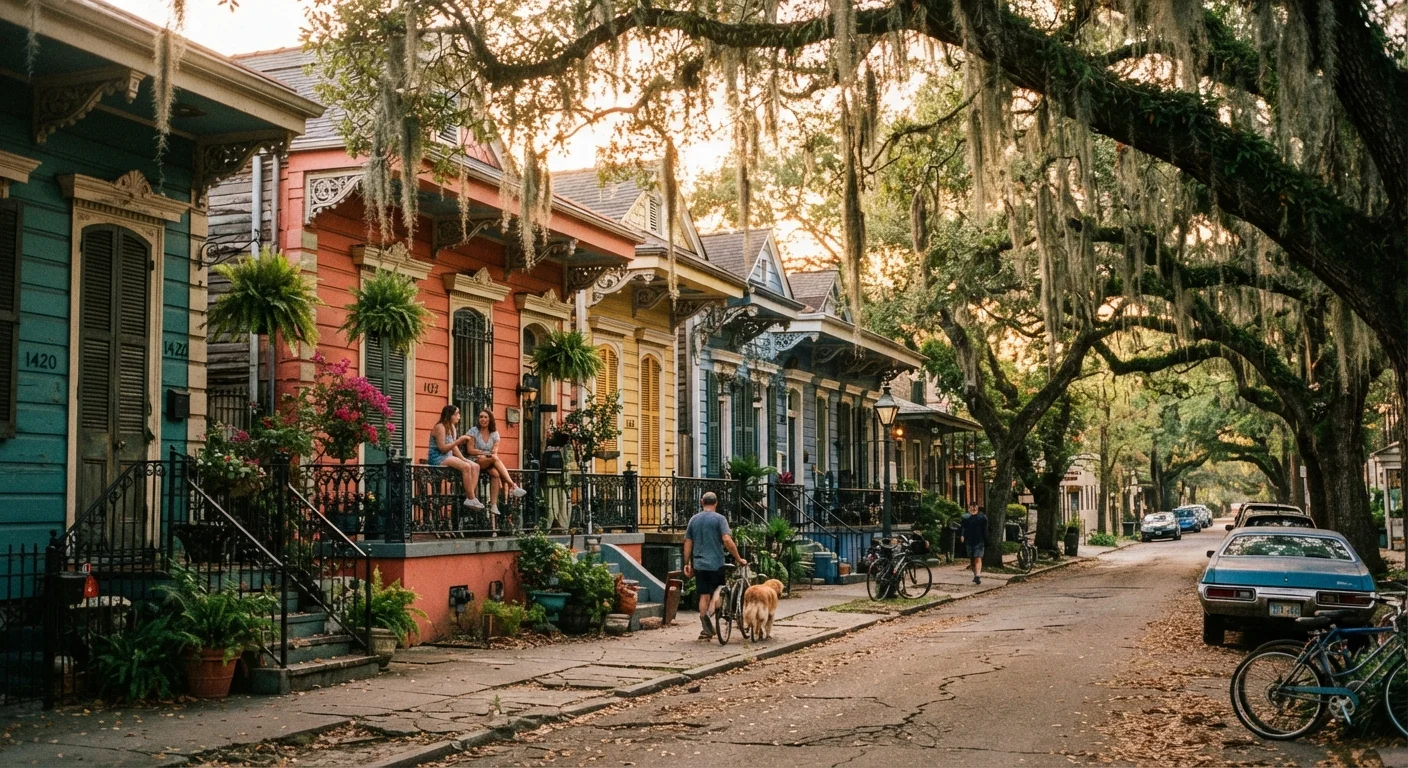
Tremé, the Bywater, Mid-City, and the Marigny aren't detours - they're the destination. Tremé is widely considered the oldest African American neighborhood in the country, and its influence on jazz, Mardi Gras Indian culture, and second-line parades is foundational. The Bywater has a dense concentration of working artists and some of the city's most interesting food. Mid-City sits around City Park, one of the largest urban parks in the United States and home to the New Orleans Museum of Art.
Locals tend to live, eat, and socialize in these areas. Spending even one afternoon in Tremé or the Bywater shifts your understanding of what the city actually is.
Tremé, the Bywater, and Mid-City hold more of the city's soul than the French Quarter.
Second lines happen year-round and anyone can join
A second line is a neighborhood parade rooted in the city's Social Aid and Pleasure Club tradition - brass band out front, community following behind with dancing and umbrellas. They happen almost every Sunday from fall through spring, organized by specific clubs with deep community ties.
The routes are published in advance and the public is welcome to follow along. This is participatory street culture, not a performance for tourists. Come dressed for weather, wear comfortable shoes, and follow the crowd's lead on where to walk. There's no ticket, no velvet rope, no itinerary - just the city in motion.
Second line parades are public, free, and one of the most genuine cultural experiences the city offers.
The real food scene runs on lunch specials and neighborhood joints
New Orleans has world-class restaurants, but locals often eat their best meals at lunch counters, corner groceries, and family-run spots that don't show up in national food media. A plate lunch - typically a protein, two sides, and cornbread - is a deeply local format and usually costs well under $15.
Grocery stores like Dong Phuong in New Orleans East are known regionally for Vietnamese bánh mì and king cakes. Neighborhood spots in the 7th Ward and Gentilly serve red beans, smothered pork chops, and fried chicken that reflect the city's African American culinary tradition. Ask your hotel staff or an Airbnb host where they actually eat - not where they send tourists.
A plate lunch at a neighborhood counter often reflects the city's food culture better than any restaurant on a tourist list.
Geography here is genuinely confusing - and it matters for safety
New Orleans doesn't follow a grid. The city curves along a bend in the Mississippi, which is why locals use "lakeside" and "riverside" instead of north and south. Streets that appear parallel on a map can diverge significantly. Uptown and Downtown are directional terms, not neighborhoods.
More practically: the city's safety landscape changes block by block in ways that aren't intuitive to visitors. Some areas that look walkable on a map are less advisable at night. Locals don't necessarily avoid these areas - they know the context. Visitors who don't know the context should stay aware, travel in groups after dark, and check in with locals or hotel staff before walking unfamiliar routes.
In New Orleans, one block can mean a significant change in context - local knowledge of geography is a practical safety tool.
Mardi Gras is a season, not a single night on Bourbon Street
Carnival season runs from January 6th (Twelfth Night) through Fat Tuesday. Locals attend dozens of parades across multiple weeks, many of which run through Uptown and Mid-City neighborhoods rather than the French Quarter. These neighborhood parades are family-oriented, free, and often more festive than the Bourbon Street scene most visitors default to.
The krewes (parade organizations) vary enormously in size, tradition, and character. Some have centuries of history. Catches - the beads, cups, and decorated throws that riders toss from floats - are considered keepsakes, not junk. Understanding the structure of Carnival makes even a single parade feel like participation rather than spectacle.
Carnival season spans weeks and dozens of parades - most of the best ones happen nowhere near Bourbon Street.
The city runs on its own clock - and fighting it costs you
Kitchens stay open late. Brunch is serious and slow. Businesses that say they open at 11 may open closer to noon. This isn't disorganization - it's a different relationship with time that locals have long since made peace with. Visitors who build tight itineraries around specific times often end up frustrated.
Build buffer into your plans. Don't schedule back-to-back reservations. Leave room for a conversation that turns into an invitation, a parade that blocks your route, or a bar that turns out to have a jazz set starting in twenty minutes. The city tends to reward the unscheduled hour more reliably than the pre-planned one.
New Orleans operates on its own rhythm - loose itineraries consistently outperform rigid ones here.
Make the Most of What You Now Know
New Orleans rewards travelers who treat it as a living city rather than a backdrop. The locals who love it most are the ones who eat at the neighborhood lunch counter, follow a second line down an unfamiliar block, and sit on a porch long enough to feel the rhythm of the place.
Ask locals for the current second-line schedule
The Tremé Creole Brass Band and various Social Aid and Pleasure Clubs post parade routes through community boards, local news sites, and neighborhood social media. A quick search for 'second line schedule New Orleans' in the weeks before your trip will surface the relevant dates and routes. Show up a few minutes early to find a good spot along the route.
If you're the kind of traveler who enjoys decoding a city neighborhood by neighborhood - the way you might approach navigating New York City's distinct neighborhoods - New Orleans will reward exactly that instinct. The city isn't hard to read once you slow down enough to let it show you what it is.
Travel conditions, local events, and neighborhood dynamics change over time. Always verify current information - including safety advisories, event schedules, and entry requirements - through official local and government sources before your trip.