The Real Question Isn't Skill - It's Risk
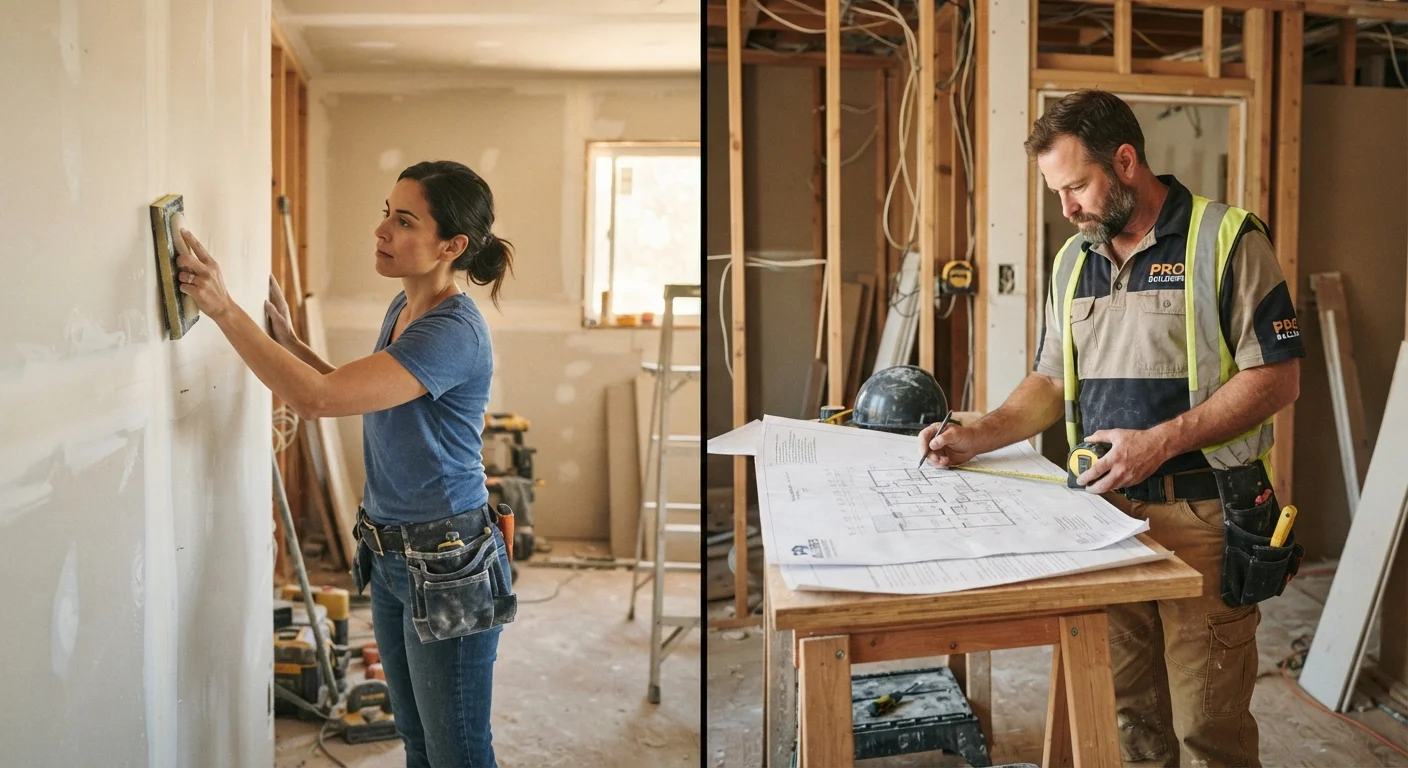
Most homeowners frame the DIY-vs-contractor question as a confidence test: Am I good enough to do this myself? That's the wrong starting point. The better question is: What happens if something goes wrong?
A poorly painted bedroom can be repainted. A mishandled electrical connection can cause a fire. That gap in consequence is where the decision actually lives. Before assessing your skill level, assess the failure mode. If a mistake is correctable and low-cost, DIY is reasonable. If a mistake creates a safety hazard, a code violation, or structural damage, a licensed contractor is the appropriate choice - regardless of your confidence.
For homeowners building their knowledge base, the Home Improvement From Scratch guide provides a grounded overview of tools, systems, and how to approach early projects without overreaching.
| Criterion | DIY | Hiring a Contractor |
|---|---|---|
| Typical cost | Materials + tools + your time | Labor + materials (often marked up) |
| Safety accountability | Homeowner assumes all risk | Contractor carries liability insurance |
| Code compliance | Homeowner responsible for meeting codes | Licensed contractor familiar with local codes |
| Permit handling | Homeowner must apply and arrange inspections | Usually managed by contractor |
| Skill requirement | Varies; beginner to advanced | Professional trade certification or license |
| Time investment | High - learning curve adds hours | Low for homeowner; contractor manages timeline |
| Quality guarantee | None; depends on individual | Typically warrantied workmanship |
Where Permits and Codes Draw the Line
A significant number of home projects - particularly anything touching electrical wiring, load-bearing walls, roofing, plumbing connections to the main supply, or HVAC systems - require permits in most U.S. jurisdictions. Pulling a permit means the work will be inspected and must meet local building codes.
Skipping a required permit doesn't just risk a fine. It can create problems when you sell your home, file an insurance claim, or have the work inspected later. Some unpermitted work must be demolished and redone at the homeowner's expense. See Permit or No Permit for a detailed breakdown of when official sign-off is legally required.
Licensed contractors typically understand local permit requirements and build that process into their workflow. If you choose to DIY a permitted project, you take on full responsibility for code compliance - which is a manageable task for some projects but genuinely complex for others.
When DIY Is Legally Restricted
In many U.S. states, certain types of work - including electrical panel upgrades, gas line modifications, and load-bearing structural changes - must legally be performed by a licensed professional, regardless of the homeowner's skill level. This isn't just a recommendation; performing regulated work without a license can void your homeowner's insurance and trigger code violations. Always check with your local building department before starting any project that touches your home's core systems.
The True Cost Comparison
Labor is the largest line item in most contractor quotes - and avoiding it is what makes DIY financially appealing. But the honest cost comparison is more nuanced than labor versus no labor.
DIY projects require tools (which must be purchased or rented), materials (which you'll price without contractor trade discounts), and your time. A project that takes a professional four hours may take an inexperienced homeowner two full weekends - and still require a fix. Errors in certain categories, such as tile work or drywall, often cost more to correct than the original contractor quote would have been.
Contractor costs also vary significantly by region, project scope, and market conditions. Getting multiple quotes and understanding what each covers is essential. The article What a Home Improvement Project Actually Costs walks through the line items that estimates frequently omit.
~35%
DIY projects that require professional correction
Industry estimates from home warranty and inspection organizations suggest roughly a third of DIY repairs eventually need professional remediation, often at higher total cost.
30-50%
Typical labor share of contractor project cost
According to general construction industry data, labor commonly accounts for 30-50% of total project cost, which is the primary saving potential in DIY work.
For projects well within DIY range, Weekend Projects That Make a Real Difference highlights high-value tasks that most homeowners can complete without professional help.
A Practical Framework for Making the Call
Run any project through these four questions before deciding:
- Is this work regulated or permitted? If yes, verify whether DIY is legally permitted in your jurisdiction, or whether a licensed trade is required.
- What is the failure risk? Classify the worst-case outcome: cosmetic, financial, structural, or safety-related. Safety and structural failures belong with professionals.
- Do you have the tools, time, and realistic skill level? Honest self-assessment here prevents costly mistakes. First-timers should start small and build up.
- Does the project affect home systems or resale value? Improper work on HVAC, plumbing, or electrical systems can affect home insurance coverage and complicate future sales.
When in doubt, consult a licensed contractor for an assessment even if you plan to DIY - many offer paid consultations and can tell you where the genuine risk points are. Spending smarter on home maintenance over time, including knowing when professional input is worth it, is covered in Spending Smarter on Home Maintenance.