Why Organizing Terminology Matters
Walk into any organizing conversation online and you'll encounter a cascade of terms: decluttering, zoning, the one-in-one-out rule. These aren't just buzzwords - they describe specific, repeatable strategies that professional organizers use to create lasting results. Learning the vocabulary helps you understand which method fits your space and habits, so you can skip trial-and-error and build a system that holds.
This glossary covers the foundational language of home organization, from broad philosophies to room-specific techniques. Use it as a reference whenever a term comes up in an organizing guide or conversation.
Zone-based storage
An organizing approach that groups items by where they're used rather than by category alone. Each activity or routine gets its own designated area so items are always accessible at the point of need.
Capsule closet
A deliberately small wardrobe made up of versatile pieces that mix and match easily. The goal is to reduce decision fatigue and eliminate items that don't serve a clear purpose.
Decluttering
The process of removing items from a space - not reorganizing or tidying them. True decluttering reduces the total volume of possessions before any storage system is applied.
Prime real estate
The most accessible storage locations in any space, typically between hip and eye height and within arm's reach. Frequently used items should occupy these spots.
Dead space
Underutilized areas in a home such as high shelves, the backs of deep cabinets, or the area beneath furniture. Identifying dead space often reveals hidden storage capacity.
One-in-one-out rule
A maintenance guideline where every new item brought into the home requires removing an existing item of similar type. It helps prevent gradual clutter accumulation.
Reset
A brief daily or weekly routine that returns each organized zone to its baseline state. Resets prevent small disorder from compounding into large clutter over time.
Vertical storage
The use of wall space above standard shelf height - through hooks, stacked shelves, pegboards, or overhead racks - to increase storage capacity without expanding a room's footprint.
Editing
In organizing contexts, editing means curating a collection down to only what is useful, meaningful, or regularly used. It is essentially a thoughtful, selective form of decluttering.
Command center
A designated area - often near an entry or kitchen - that consolidates household management tasks: mail sorting, key storage, calendars, and charging. It reduces scatter throughout the home.
Core Concepts and Methods
Most organizing frameworks share a common backbone of key concepts. Understanding these helps you evaluate any method you encounter - whether you found it in a book, a video, or a neighbor's advice.
| Most common organizing mistake | Buying storage containers before decluttering |
| Zone-based storage benefit | Items stored at point of use, reducing search time |
| Capsule closet typical size | 30-40 intentional, versatile pieces |
| Reset frequency (recommended) | Daily or weekly, per zone |
| Prime real estate height range | Hip to eye level, front-facing |
Zone-based storage is one of the most practical organizing models for everyday homes. Instead of organizing by item type alone, you arrange your space around activities: a homework zone near the kitchen, a charging station by the entryway, a cleaning caddy in each bathroom. This reduces the time spent searching for items because everything lives where it's actually used.
The concept of a capsule closet applies similar logic to clothing: a small, intentional wardrobe where every piece pairs with others, reducing decision fatigue. See our closet organization guide for a step-by-step approach to building one from scratch.
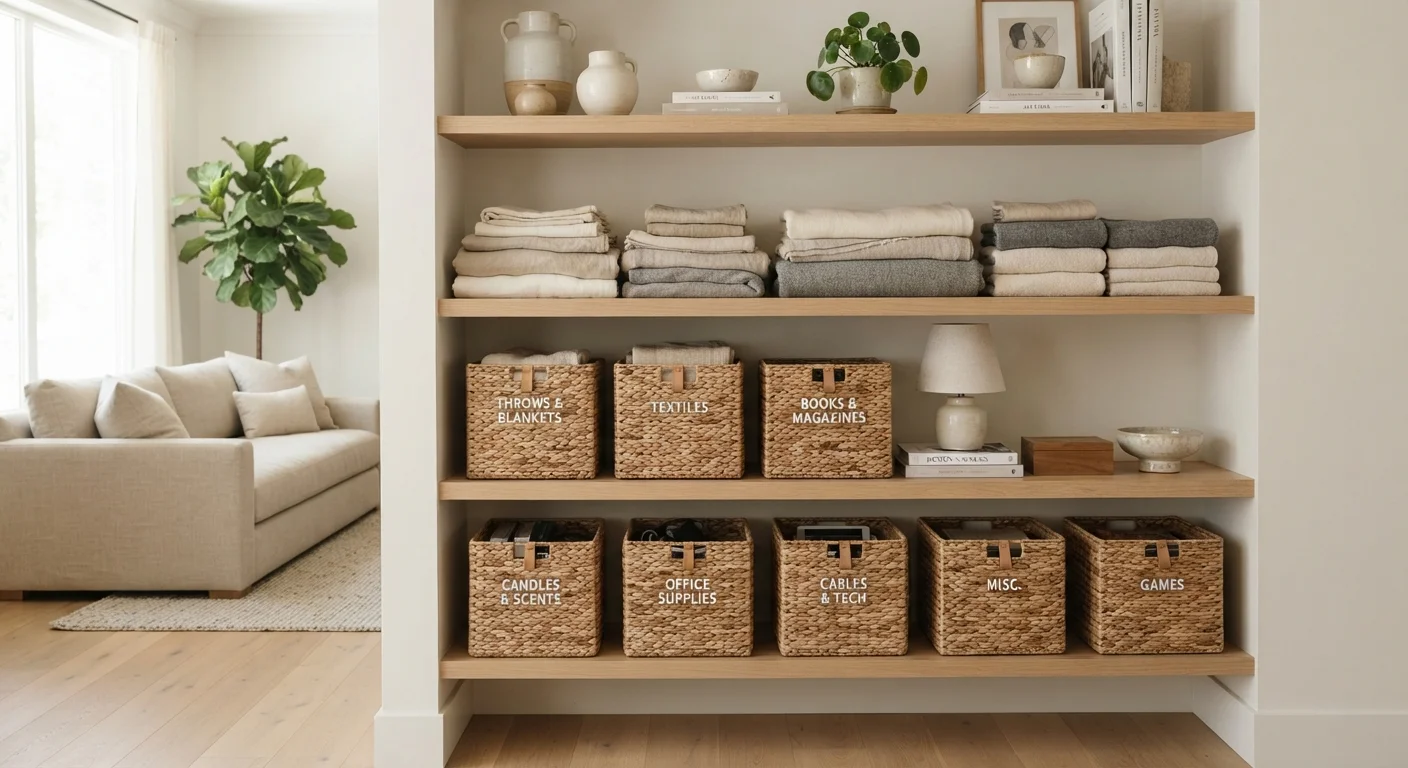
Before buying a single bin or label, it helps to understand that containers follow systems - they don't create them. Storage containers won't save a disorganized home until the underlying structure is in place.
Terms Related to Space and Layout
Physical space has its own vocabulary in the organizing world. These terms describe how to think about a room's structure rather than just its contents.
Vertical storage refers to using wall space above standard shelf height - hooks, stacked shelving, pegboards, and overhead racks. Most homes have significant untapped capacity here. Our guide to vertical space as underused storage real estate covers the specifics room by room.
Prime real estate is organizing shorthand for the most accessible storage locations - between eye and hip height, front-facing, easy to reach. Items you use daily should occupy prime real estate; seasonal or rarely used items go elsewhere.
Dead space is the opposite: the back corners of deep shelves, the floor beneath a bed platform, or the gap between a refrigerator and wall. Recognizing dead space opens up opportunities most people walk past every day.
Terminology Differs Across Methods
Different organizing philosophies sometimes use the same word to mean different things. For example, 'editing' in one framework means the same as 'decluttering' in another. When following a specific method or guide, check how that source defines its terms before applying them to your space.
When organizing shared spaces, the physical layout matters as much as the labeling system. If one person can't reach the designated zone, the system breaks down. Shared spaces with different standards require extra thought about placement and accessibility for everyone in the household.
Maintenance and Habit Language
Organization isn't a one-time project. The terminology around maintenance reflects this reality.
The one-in-one-out rule means that for every new item entering the home, one existing item leaves. It's a simple guideline that prevents gradual accumulation without requiring periodic purges. The reset is a related concept - a daily or weekly routine that returns each zone to its baseline state before clutter has a chance to compound.
Decluttering specifically refers to removing items, not reorganizing them. It's often confused with tidying, but the distinction matters: tidying moves things around; decluttering reduces the total number of things. Doing decluttering first - before any containers or labels - is the standard professional advice.
Building these small practices into a routine is what separates a system that lasts from one that collapses within weeks. For a deeper look at the habits side, see habits that keep a home organized over time.