The Gap Between Browsing Price and Final Total
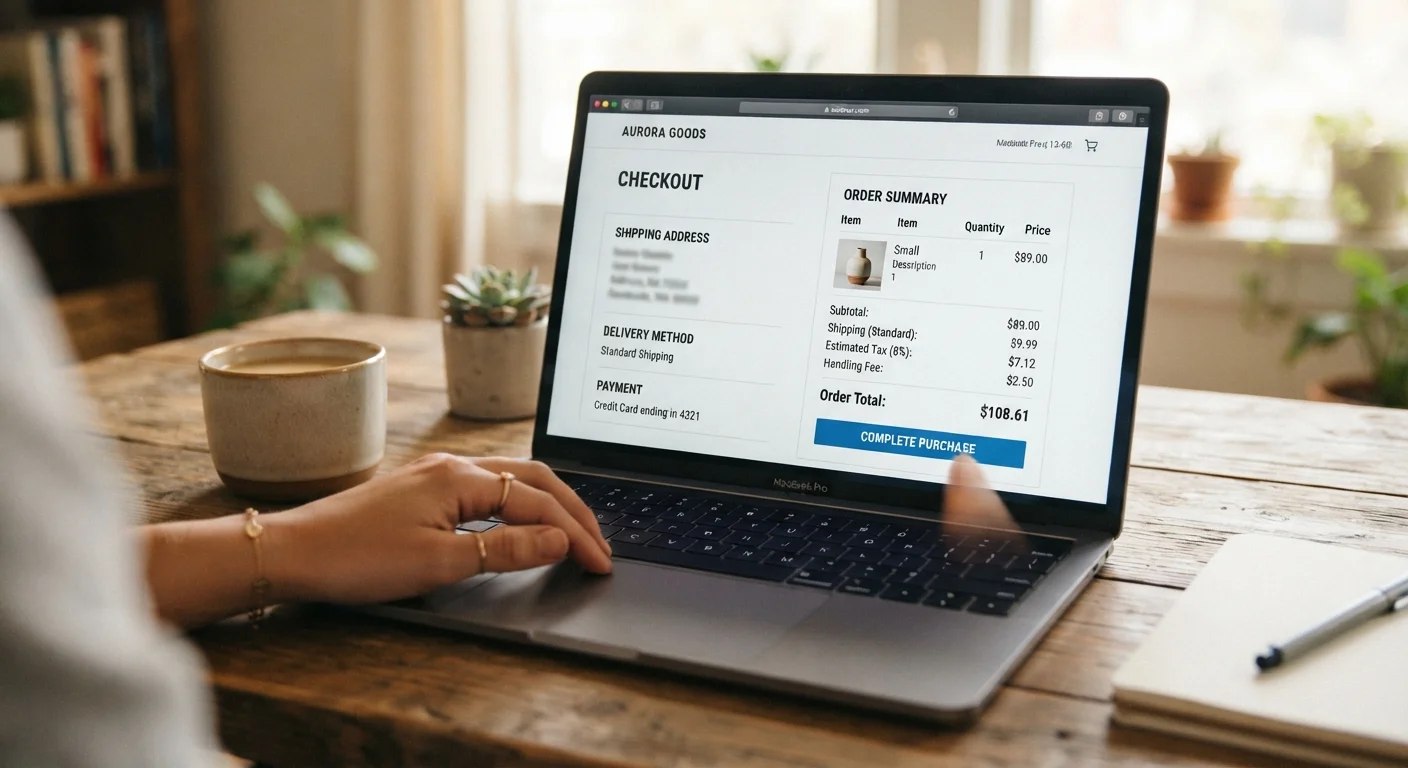
You find an item listed at $34.99, add it to your cart, and feel good about the purchase - until you hit the checkout screen and the total reads $48.72. That $13.73 gap didn't appear out of nowhere. It's the sum of several charges that retailers are not required to show you upfront.
Understanding what fills that gap helps you shop without surprises. It also makes it easier to compare true costs across retailers before you commit. See how this connects to broader pricing tactics in our guide to deceptive online deals.
~10%
Average US combined sales tax rate
According to the Tax Foundation, the average combined state and local sales tax rate in the US is approximately 10%, though it varies significantly by location.
49 states
States collecting online sales tax
Following the 2018 South Dakota v. Wayfair decision, 49 US states with a sales tax now require online retailers to collect it based on buyer location.
Up to 30%
Extra cost added by fees and tax
Consumer finance educators note that taxes, shipping, and handling fees can collectively add 10-30% or more to a product's listed price depending on location and retailer.
Sales Tax: The Biggest Variable
Sales tax is usually the largest single addition at checkout. The rate you pay depends on your state, county, and sometimes city - and on what you're buying. Groceries may be tax-exempt in one state and taxed at full rate in another. Digital downloads are taxed differently than physical goods in many jurisdictions.
Since the US Supreme Court's 2018 ruling in South Dakota v. Wayfair, online retailers are generally required to collect sales tax based on where the buyer lives, not where the company is headquartered. This closed a loophole that once made some online purchases cheaper than in-store equivalents. If you're unsure of your local rate, your state's department of revenue publishes current figures online.
Tax Rates Vary More Than You Might Expect
US sales tax is not uniform. Rates differ by state, county, and municipality - and some product categories are exempt in certain states. For example, clothing under a certain value is tax-exempt in Minnesota but fully taxable in California. If you're comparison shopping across retailers or states, the tax difference alone can meaningfully affect your total.
Shipping, Handling, and Fuel Surcharges
Shipping costs are the most visible add-on at checkout, but they're rarely the only one. Many retailers also charge a handling fee - a separate line item covering the cost of packaging materials and labor. This fee can range from under a dollar to several dollars, depending on the retailer and item size.
Less obvious are fuel surcharges, which some carriers pass through to retailers, who then pass them to you. These often appear as a small percentage added to the base shipping rate. To understand how carriers structure delivery costs more broadly, our shipping carrier basics guide is a useful reference.
Retailers that advertise free shipping often recoup those costs through minimum order thresholds or slightly elevated product pricing - a topic covered in detail in our piece on hidden costs buried in free shipping offers.
Check the Total Before Saving Payment Info
Get in the habit of reviewing the full order summary - with shipping and tax applied - before entering or confirming your payment method. Some retailers apply additional fees at the very last step. A quick scan of the itemized breakdown takes seconds and prevents unwanted surprises on your statement.
Service Fees, Payment Surcharges, and Other Line Items
Beyond tax and shipping, a growing number of retailers add service fees for specific payment methods, expedited processing, or marketplace transactions. These vary significantly:
- Payment processing fees: Some retailers charge 1-3% extra for certain credit cards or digital wallets.
- Service fees: Common on ticket and marketplace platforms, these can be a flat amount or a percentage of the subtotal.
- Subscription or membership upsells: Some checkouts prompt you to sign up for a paid membership to reduce shipping costs - worth scrutinizing before agreeing.
These charges are disclosed somewhere in the checkout flow, but they're often presented in small print or added only on the final confirmation screen. Always expand the full order summary before entering payment details. For a broader look at how shopping habits quietly add up, see our piece on costly habits that drain your online shopping budget.
How to Shop Knowing the Real Price
The most reliable way to see the full cost of an order is to proceed to checkout and enter your address before committing. Most platforms display a complete itemized breakdown - including tax and shipping - at that stage, without requiring you to enter payment information.
Before you reach that point, reading price tags more carefully can reveal whether the listed price reflects discounts or markups that affect your comparison. And once you've seen the final total, run through the smart shopper's pre-purchase checklist before clicking confirm - it's a quick way to verify you're not leaving savings on the table.
The checkout screen isn't the finish line. It's where the real price finally becomes visible. Treating it that way puts you in control of the transaction.
“Consumers who understand the structure of online pricing - including taxes, fees, and shipping costs - are better equipped to make accurate comparisons and avoid spending more than they intended.”
— Consumer Financial Protection Bureau, US Federal Consumer Finance Watchdog