
Why a Pre-Purchase Pause Matters
Online shopping is fast by design-and that speed works against you. Retailers invest heavily in reducing friction at checkout, which makes it easy to commit to a purchase before you've thought it through. A 2023 survey by the National Retail Federation found that return rates for online purchases run significantly higher than for in-store buys, with a large share driven by unmet expectations around price, fit, or product accuracy.
This checklist gives you a repeatable process to run through before finalizing any order. It's not about slowing you down for the sake of it-it's about making sure the deal in front of you is actually a deal. For a broader look at how to evaluate value across purchase options, see our comparison shopping framework.
Price Verification
Seller Credibility
Product and Reviews
Return, Refund, and Shipping Policies
Tools That Make the Process Faster
You don't need to run every check manually. A few free browser tools and habits can cut your pre-purchase review time in half.
Browser price-history extension
Displays a product's price history chart so you can see whether the current price is actually lower than its recent average.
Incognito or private browsing mode
Prevents personalized pricing based on your browsing history, giving you a cleaner view of the actual listed price.
WHOIS domain lookup (e.g., whois.domaintools.com)
Lets you see when a website domain was registered-very recently registered domains are a common flag for fraudulent storefronts.
Credit card with purchase protection
Provides an additional layer of dispute resolution if a product doesn't arrive or significantly differs from its description.
For guidance on keeping your payment details protected throughout this process, see our article on protecting your payment information when shopping online. And if you're newer to online shopping in general, Shopping Online for the First Time covers the foundational habits worth building early.
Fake Reviews Are Common
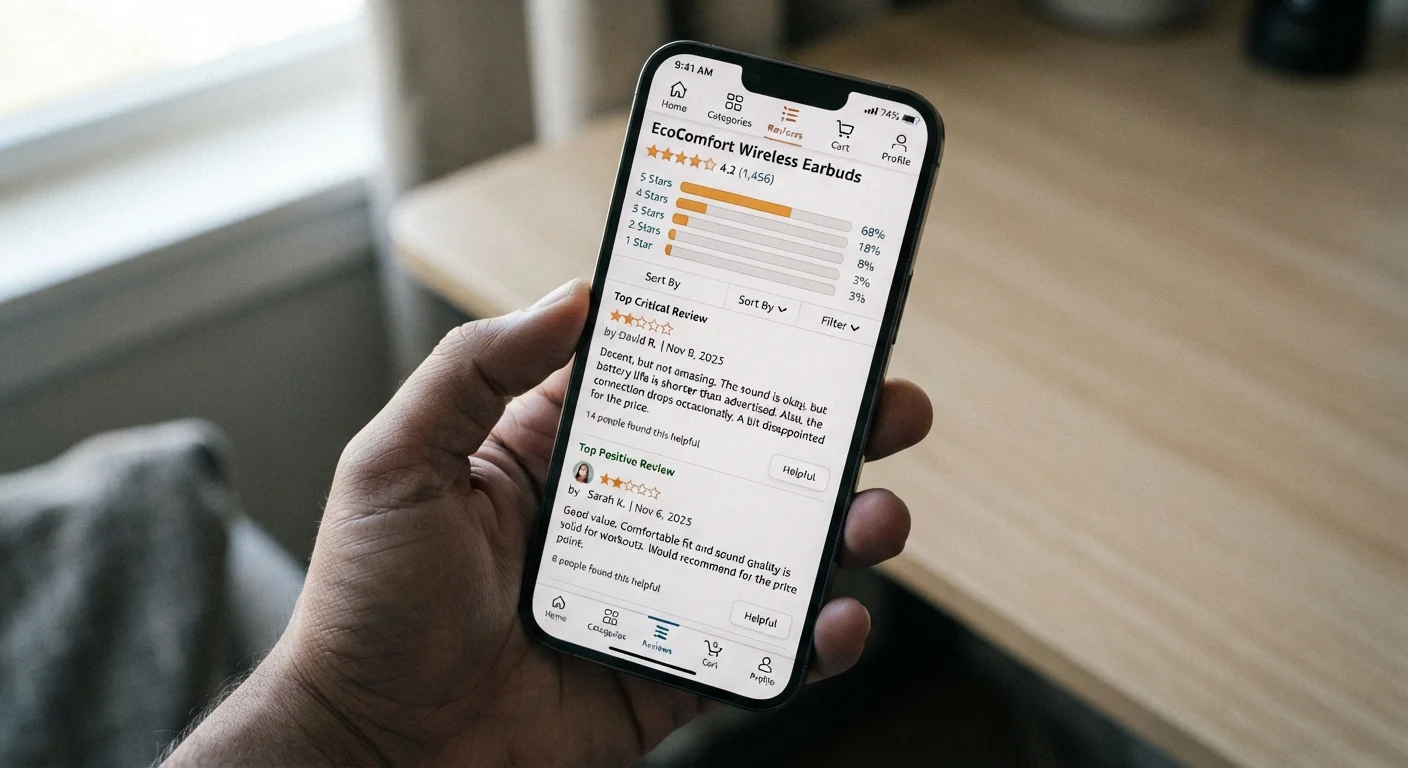
Review manipulation is widespread on major retail platforms. Look for patterns: a sudden cluster of five-star reviews posted the same week, reviews that describe a different product, or reviewers with no other purchase history. Third-party review analysis tools can help flag these patterns, but manual spot-checking remains the most reliable method.
What to Do If Something Looks Off
If a price seems dramatically lower than everywhere else, a return window is missing entirely, or contact details are hard to find, trust that instinct. Legitimate sellers generally have transparent policies and verifiable contact information.
Too-Good-To-Be-True Pricing Is a Red Flag
Prices that are 40-60% below every other retailer for the same in-stock product are statistically unusual and warrant extra scrutiny. Common outcomes include counterfeit goods, bait-and-switch listings, or non-delivery. If you can't verify the seller's legitimacy through multiple independent signals, it's reasonable to walk away regardless of how attractive the price appears.
When in doubt, step away from the cart. Most prices hold-and if they don't, a slightly higher price from a seller you can trust is usually worth it. This checklist is part of a larger playbook covered in our complete consumer guide to online shopping, which walks through everything from product search to dispute resolution.