Why Groceries Are Worth Your Attention First
Housing and transportation costs are largely fixed - you can't easily renegotiate your rent or car payment this week. Groceries are different. Food spending is one of the few genuinely flexible line items in a household budget, and most people have more control over it than they realize.
The average American household spends a significant portion of its monthly income on food at home. Even modest adjustments to shopping habits - done consistently - tend to compound into real annual savings. And unlike cutting entertainment or subscriptions, smarter grocery habits don't require living worse. They require living more intentionally. For a broader look at which budget categories respond best to small behavior shifts, see this breakdown of high-spend categories.
~$475/mo
Average U.S. household food-at-home spending
According to the U.S. Bureau of Labor Statistics Consumer Expenditure Survey, American households spend roughly this amount monthly on groceries, making it one of the largest controllable expense categories.
30-40%
Share of food purchased that goes to waste
The USDA estimates that between 30 and 40 percent of the U.S. food supply is wasted, much of it at the consumer level - meaning a significant portion of grocery spending produces no nutritional value.
Practices That Actually Move the Needle
The following habits are drawn from consumer research and practical financial guidance. None require extreme couponing or sacrificing the foods your household actually eats.
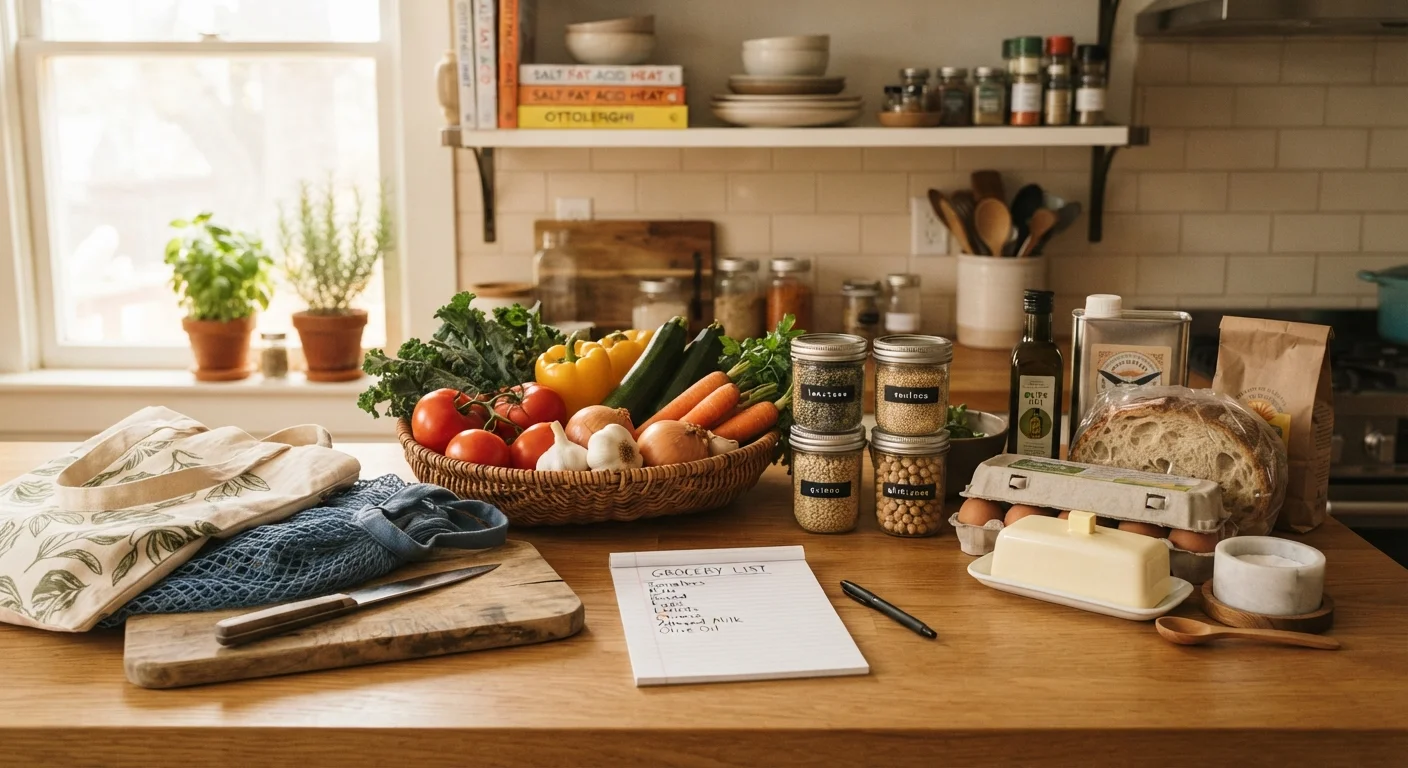
Plan meals for the week before writing your shopping list.
Without a plan, shoppers tend to buy ingredients that don't combine into complete meals, leading to food waste and extra mid-week trips. A weekly meal plan anchors your list to what you'll actually cook, which directly reduces waste and impulse buys.
Compare unit prices rather than package prices.
A larger package is not always the better value, and a lower shelf price doesn't mean a lower cost per ounce. Unit price labels - usually displayed on the shelf tag - give you a direct apples-to-apples comparison regardless of package size.
Default to store-brand products for staples and pantry basics.
Store-brand and private-label products are frequently manufactured in the same facilities as name-brand equivalents and meet the same safety and quality standards. The price difference is largely marketing cost, not product quality.
Build meals around what's already in your pantry and freezer.
Most households have more usable food on hand than they recognize. Inventorying what you already have before shopping prevents duplicate purchases and reduces the likelihood that perishables expire unused.
Set a firm budget number before you enter the store.
Shoppers who enter without a spending target have no real-time feedback mechanism for slowing down. A specific dollar limit - even an approximate one - creates a decision boundary that curbs overspending.
Buy shelf-stable and frozen staples in larger quantities when your budget allows.
Foods like dried beans, canned goods, frozen vegetables, oats, and rice don't spoil quickly and cost less per serving in larger packages. Stocking up during normal shopping - not as a panic purchase - smooths out spending over time.
Quick Wins You Can Use This Week
You don't need to overhaul everything at once. Starting with one or two concrete actions this week builds momentum without feeling overwhelming. If your broader budget has been slipping in other areas too, understanding common early budget pitfalls can help you spot patterns beyond the grocery aisle.
Nutrition Doesn't Have to Take the Hit
A common fear about cutting the grocery bill is that it means eating worse - more processed foods, less produce, fewer nutrients. In practice, some of the most nutritious foods are also among the most affordable: dried beans, lentils, oats, eggs, frozen vegetables, and canned fish regularly appear on both budget-friendly and nutrition-dense food lists.
The key is deliberate substitution rather than wholesale cutting. Swap premium cuts for less expensive proteins with similar nutritional profiles. Choose frozen spinach over fresh when it'll be cooked anyway - the nutrient content is comparable. Shift the proportion of your plate toward plant-based staples, which tend to cost less per serving than meat. For a structured way to check whether your current haul covers nutritional basics, the Weekly Grocery Nutrition Audit is a useful, no-diet-plan tool.
Frozen Produce Is a Nutritional and Budget Win
Frozen vegetables and fruits are typically flash-frozen shortly after harvest, which preserves most of their nutrient content. For vegetables you plan to cook - spinach, peas, broccoli, corn - frozen versions often perform as well nutritionally as fresh while costing noticeably less and generating zero spoilage waste.
Understanding why grocery prices behave the way they do also helps. Store layout, product placement, and supply-chain factors all influence what ends up in your cart and at what cost - Grocery Bill Creep explains those forces in plain terms.