The Reference Price Illusion
The foundational trick behind most fake sales is the reference price - the crossed-out figure sitting above the sale price, often labeled 'Was,' 'Compare At,' or 'Original.' That number is supposed to represent what you'd normally pay, making the discount feel like a rescue.
The problem is that reference prices are often set by the retailer, not the market. An item might be listed at $120 'originally' when it has never, in practice, sold at that price - or sold there for only a day or two before being immediately 'discounted.' The $72 sale price then feels like a windfall, even though $72 may be exactly what this item always costs everywhere.
This is sometimes called phantom pricing, and it works because our brains naturally anchor to the first number we see. Once you've registered $120, paying $72 feels like a win regardless of whether $72 is a fair market price. Learning to read price tags critically is the first step toward seeing past this framing.
87%
Shoppers influenced by reference prices
Research on anchoring effects in retail consistently shows the majority of consumers adjust their willingness to pay based on a displayed 'original' price, regardless of its accuracy.
Weeks to months
Typical 'perpetual sale' duration
Consumer advocacy investigations have documented numerous retail products remaining at 'sale' prices for extended periods, with the reference price never actually charged.
~40%
Online shoppers who check price history
Surveys from consumer research organizations suggest a minority of shoppers verify price history before purchasing, leaving most relying on the retailer's stated savings.
Manufactured Urgency: Timers, Stock Warnings, and 'Event' Sales
Once a retailer has anchored your expectations with a reference price, the next layer is pressure. Urgency cues - countdown timers, 'Only 3 left!' warnings, and named sale events - are designed to make you feel that hesitation has a cost.
In practice, many of these cues are scripted rather than data-driven. A countdown timer might reset nightly. A low-stock warning might be triggered at an arbitrary threshold rather than genuine scarcity. Sale event names like 'Summer Clearance' or 'Anniversary Sale' are marketing labels, not guarantees that prices are lower than they were last week.
Time-pressure language is rarely as fixed as it appears. Stepping back and checking whether the same price existed before the 'event' began is a straightforward way to test whether urgency is real or theater.
Pause Before You Click
When you feel urgency, that's the moment to slow down, not speed up. Copy the product name into a search engine and check what other retailers charge without a sale banner. A 30-second comparison is often enough to reveal whether a 'deal' is genuine.
How to Evaluate Whether a Sale Is Real
The most reliable tool available to consumers is price history tracking. Several browser extensions and independent websites record the historical prices of products on major retail platforms, letting you see whether a 'sale' price is actually a new low or the same price the item has carried for months.
A few questions worth asking before purchasing:
- Has this price appeared before without a 'sale' label?
- Is the reference price listed one that appears on any third-party retailer right now?
- Does the sale have a clear, fixed end date - or does it seem to roll forward indefinitely?
- What does this item cost on other platforms without a promotional banner?
For a full framework before any purchase, run through a structured pre-purchase checklist that covers these points systematically. And for a broader look at deceptive online pricing tactics beyond just sales - including hidden fees and misleading product pages - see the anatomy of a deceptive online deal.
The Bigger Picture: Promotional Noise as the New Normal
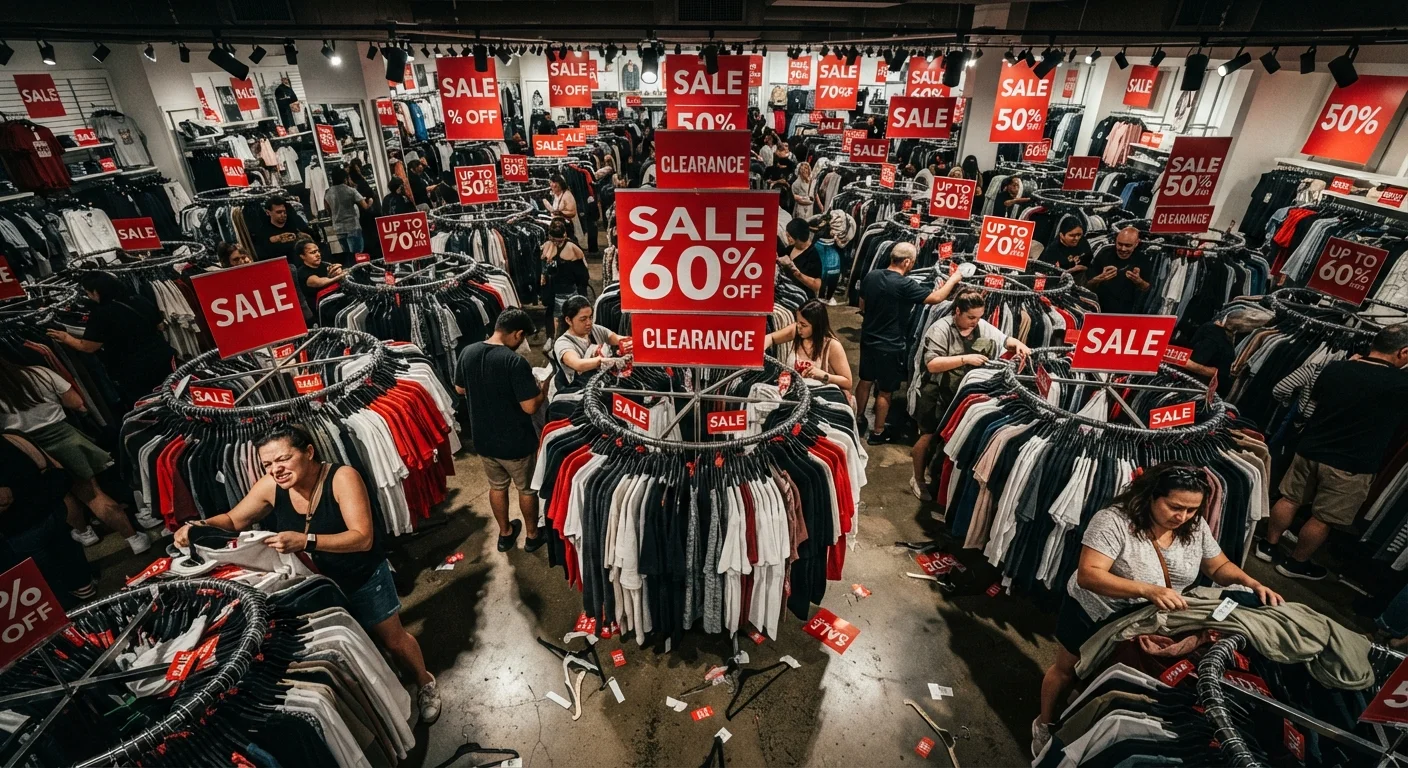
For many retailers, the perpetual sale has become the default mode of operation. Items are rarely priced at face value; instead, they exist in a continuous cycle of markdowns and re-markdowns designed to keep shopping feeling urgent and rewarding. This creates an environment where not seeing a sale badge is the exception.
Understanding this landscape doesn't mean becoming cynical about every discount. Genuine markdowns do exist - end-of-season clearance, overstock reductions, and price-matching situations can represent real savings. The goal is simply to distinguish signal from noise, which means treating the sale label as a prompt to investigate rather than a reason to act.
A complete guide to spotting genuine discounts covers this landscape in depth, including how to build a low-stress approach to deal-hunting that doesn't rely on trusting promotional framing.
What the FTC Says About Reference Pricing
The Federal Trade Commission's guidelines on deceptive pricing state that a 'former price' should reflect a price at which the item was actually offered to the public for a reasonably substantial period. Retailers who list fictitious original prices may be in violation of these guidelines, though enforcement varies. If you believe a retailer is systematically using deceptive reference prices, the FTC's complaint portal accepts consumer reports.