Why the Calendar Matters in the Car Market
Vehicle pricing isn't static. Like many large-ticket categories, the car market moves through recurring cycles tied to the production calendar, consumer behavior, and economic events. Recognizing where you are in those cycles - rather than treating every week as equivalent - is one of the more practical tools available to anyone buying or selling a vehicle.
This isn't about finding a magic date that guarantees savings. It's about understanding the forces that shift supply and demand so you can enter the market with clearer expectations. The patterns described here are real and well-documented, but they interact with individual vehicle demand, regional inventory, and broader economic conditions in ways that no calendar alone can fully predict.
For a broader view of the transaction process itself, see our guide to the full car transaction lifecycle.
~15-20%
Typical used car price variation across seasons
Industry analysts at J.D. Power and similar sources have documented that used vehicle prices can swing by roughly this range between peak and trough demand periods within a single year, though the exact figure varies by vehicle segment and market conditions.
Q4
Quarter with highest new vehicle incentive activity
Manufacturer incentive data compiled by automotive research firms consistently shows the fourth quarter as the period when new vehicle promotional financing and cash-back offers are most prevalent, tied to model-year clearance and annual sales targets.
The Model-Year Cycle and Inventory Pressure
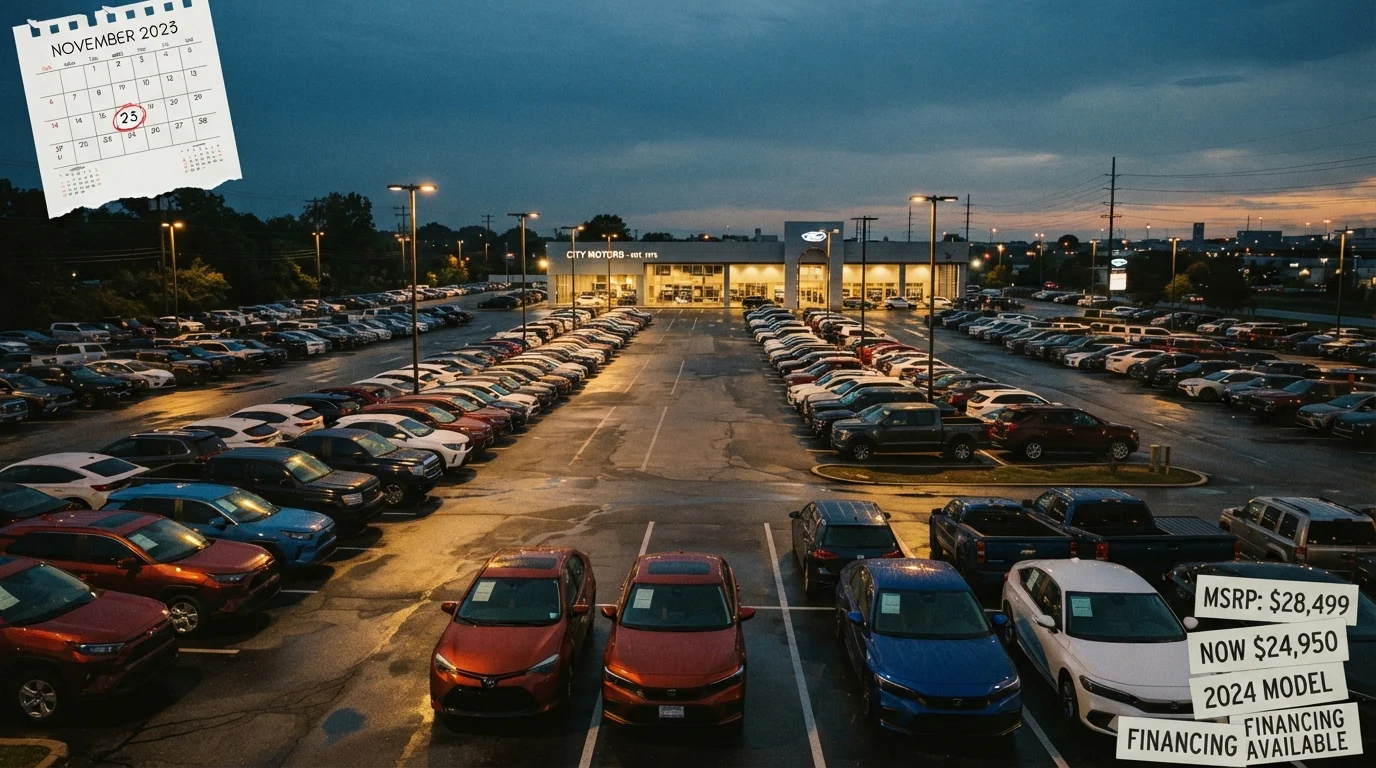
One of the most reliable annual patterns in the new car market is the model-year changeover. Manufacturers typically begin delivering next-model-year vehicles to dealerships in late summer - often July through September, though timing varies by brand and model. As new inventory arrives, dealers face increasing pressure to move prior-model-year units sitting on the lot.
Prior-year vehicles accumulate what the industry calls floor-plan costs - essentially, the interest dealers pay to finance their inventory. The longer an older model sits, the more it costs the dealer to hold it. This creates a genuine financial incentive to negotiate, which is why late summer and early fall often see more movement on new vehicle prices for outgoing model years.
Not every vehicle follows this pattern equally. High-demand models - certain trucks, SUVs, and popular trims - may see little discounting regardless of model year because turnover keeps inventory lean. Understanding the specific model you're considering, not just the calendar, matters.
Research the Specific Model, Not Just the Date
Seasonal patterns provide useful context, but high-demand vehicles - particularly popular truck and SUV trims - often see little price movement regardless of the calendar. Before assuming a time of year represents an opportunity, check current market inventory levels for the specific vehicle you're considering. Thin inventory usually means less negotiating room, even during traditionally favorable periods.
Seasonal Demand Shifts: When Buyers Drive the Market
Consumer demand for vehicles isn't evenly distributed across the year. Several recurring behavioral patterns create demand spikes and troughs that affect both new and used vehicle markets.
Tax refund season (roughly February through April) historically drives a notable uptick in used car purchases. Consumers receiving refunds often use them as down payments, compressing available inventory in the sub-$15,000 segment and reducing seller motivation to negotiate. For buyers in this price range, shopping outside this window - or being prepared to act quickly and decisively within it - tends to be the more strategic approach.
Spring and early summer bring general market activity tied to household transitions: school-year endings, moves, growing families. Demand for family vehicles, minivans, and fuel-efficient commuters tends to rise.
Winter months, particularly January and February (outside of tax season), are traditionally slower for dealers. Lower foot traffic can translate to more negotiating flexibility, though inventory selection may also be narrower.
Seasonal demand patterns apply across many spending categories - the same underlying logic is explored in our overview of seasonal pricing patterns for everyday categories.
End-of-Period Dynamics and Cyclical Opportunities
Beyond annual seasons, shorter cycles create additional negotiating context. Many dealerships operate on monthly and quarterly sales targets tied to manufacturer incentive programs. Salespeople and managers who are close to hitting a volume threshold near the end of a month or quarter may be more motivated to close a deal than they would be mid-period.
This doesn't mean walking in on the last day of the month guarantees a better outcome - dealers are aware consumers know this - but it reflects a real structural dynamic worth understanding.
For sellers, the calculus reverses: listing a vehicle during a demand trough may mean a longer time on market and more pressure to reduce price. If you're pricing a used vehicle for private sale, understanding where demand sits in the seasonal cycle is one input in setting a realistic asking price. Our practical valuation walkthrough for used car sellers covers the full pricing methodology.
Economic Events Can Override Seasonal Patterns
Supply chain disruptions, interest rate shifts, and fuel price spikes can significantly alter the seasonal dynamics described here. During periods of inventory shortage, for example, prior-year clearance discounts largely disappeared because dealers had no surplus to move. Always cross-reference seasonal expectations against current market data from sources like Edmunds, Cox Automotive, or Kelley Blue Book before drawing conclusions about timing.
This article is for general informational and educational purposes only. Market conditions vary by region, vehicle type, and economic environment. Consult current market data and, where appropriate, a qualified automotive professional before making any significant purchasing or selling decision.