What a Vehicle History Report Actually Covers
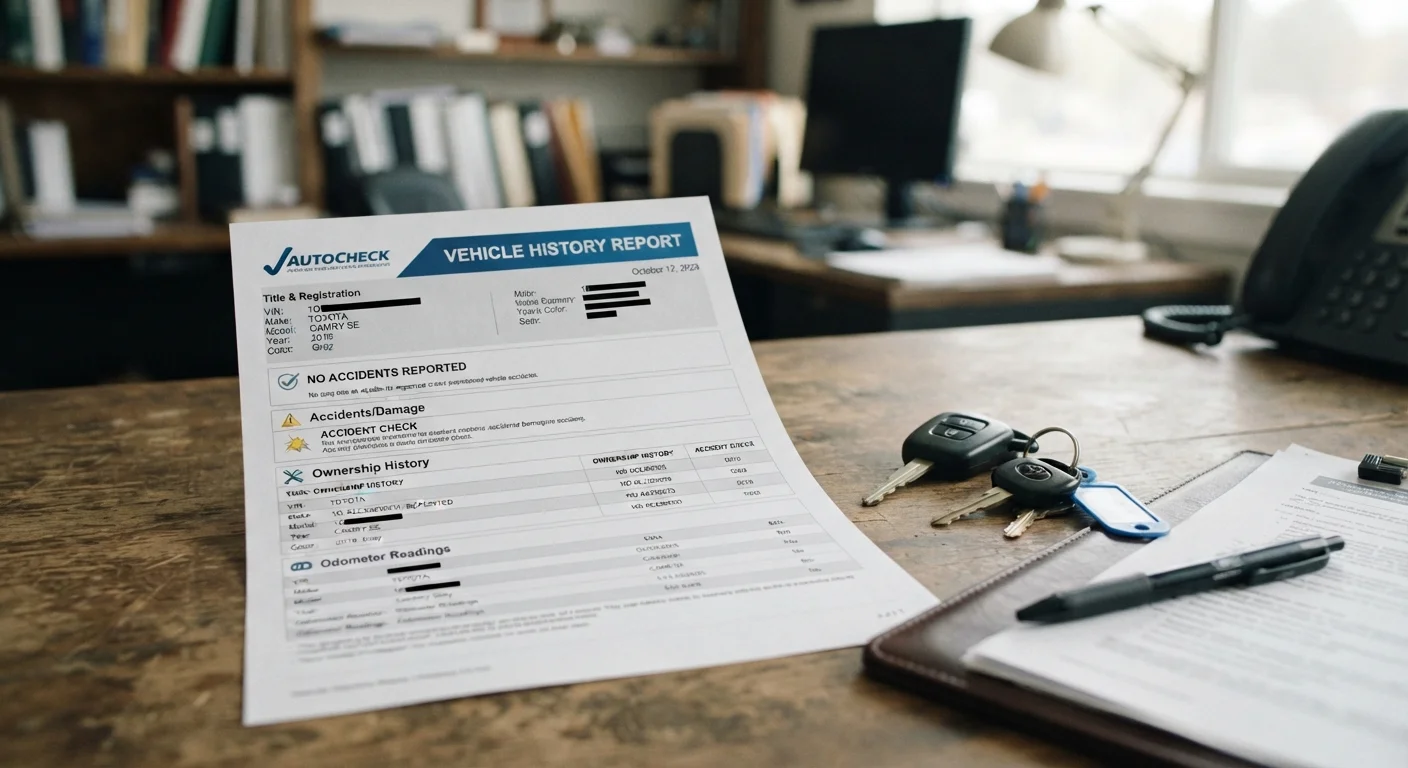
When you run a VIN through a history report service, you're pulling from a patchwork of databases - state DMV records, insurance company claims data, auction records, salvage yard reports, and participating repair facilities. The resulting document can be genuinely revealing.
Here's what a well-sourced report typically documents:
- Title history: Current and past title status, including salvage, rebuilt, flood, lemon law buyback, and odometer rollback designations.
- Reported accidents: Crashes that were reported to an insurance company or law enforcement and entered into a connected database.
- Ownership transfers: How many times the vehicle changed hands and, in many cases, which states it was registered in.
- Odometer readings: Readings logged at inspections, service visits, or title transfers - useful for spotting rollback fraud.
- Recall status: Open or completed manufacturer safety recalls tied to the VIN.
- Auction and fleet records: Whether the vehicle was sold through wholesale auctions or used as a rental, taxi, or fleet unit.
For a deeper walkthrough of how to interpret each of these sections, see how to read a vehicle history report.
~1 in 5
Used vehicles with undisclosed prior damage
Industry estimates suggest roughly one in five used vehicles on the market has prior damage that isn't fully disclosed in listing descriptions.
17+
States with NMVTIS-participating DMVs
The National Motor Vehicle Title Information System aggregates title data from participating state DMVs, though participation and reporting depth varies by state.
Where History Reports Fall Short
The gaps in a vehicle history report can be just as important as what it includes. Understanding these limitations helps you avoid misplaced confidence.
Unreported accidents
If a collision was repaired out-of-pocket without involving an insurer or police report, it almost certainly won't appear. Cash repairs - even significant ones - leave no mandatory paper trail. A vehicle could have sustained frame damage and been repaired privately with no record anywhere.
Private maintenance
Oil changes, brake jobs, and other service performed at home or by a private mechanic are never captured. A history report might show no service records simply because the owner used a local independent shop that doesn't report to any aggregator.
Cosmetic and mechanical wear
Worn suspension components, a failing transmission, or a slow oil leak won't appear on any report. History reports describe past events - they don't assess current condition.
Incomplete data across states
Reporting requirements and DMV data-sharing vary by state. A vehicle with a problematic history in one state may have a thinner-than-expected record if it spent time in a state with minimal reporting participation.
Always Get an Independent Mechanic Inspection
Before finalizing any used vehicle purchase, have an independent mechanic - one not affiliated with the seller or dealership - perform a pre-purchase inspection. This typically costs between $100 and $200 and can surface mechanical, structural, or safety issues that no history report will ever capture. It's one of the highest-return steps a buyer can take.
These limitations aren't a reason to skip the report - they're a reason to supplement it. The report narrows the field; a mechanic's inspection confirms what the report can't.
How to Use a History Report as Part of a Broader Process
A vehicle history report works best as a screening tool, not a final verdict. Think of it as the first filter in a multi-step due-diligence process.
Start with the report before scheduling a visit or test drive. If the VIN shows a salvage title, multiple owners in a short timeframe, or odometer inconsistencies, you have reason to ask pointed questions - or walk away early. This fits naturally into the broader buying process described in the full lifecycle of a car transaction.
Once a vehicle clears the report screening, move to a pre-purchase inspection with a qualified, independent mechanic. This is the step most buyers skip - and the one most likely to surface hidden mechanical issues. Questions to ask before you even get to the test drive are covered in questions every buyer should ask before a test drive.
For sellers, providing a history report upfront is a straightforward way to build credibility with buyers and support your asking price. If you're navigating a private sale for the first time, common mistakes first-time sellers make covers the documentation and disclosure details worth knowing.
History reports are one tool among several. Used correctly - alongside inspection, title verification, and direct seller conversation - they meaningfully reduce the risk of a costly surprise after purchase.