Why Driver Behavior Matters More Than You Might Expect
Most conversations about fuel economy focus on what's under the hood - engine displacement, hybrid technology, transmission type. Those factors are real, but they share the stage with something entirely within your control: how you actually drive. The U.S. Department of Energy's research consistently shows that driving behavior is one of the largest variables affecting real-world fuel economy, often overshadowing differences between vehicle classes.
This isn't about hypermiling extremes or treating every commute as a fuel-economy competition. It's about understanding which specific behaviors waste fuel unnecessarily - and making modest, sustainable adjustments that add up across thousands of miles. For most American drivers, fuel is one of the largest recurring vehicle costs. Even a 10-15% improvement in efficiency has meaningful dollar consequences over a year of driving.
MPG Estimates Are a Starting Point
The EPA fuel economy ratings on a vehicle's window sticker represent standardized test conditions, not real-world guarantees. Actual mileage varies based on driving style, terrain, traffic, and weather. Use EPA estimates as a relative comparison tool, not an absolute prediction of what you'll achieve.
The Six Practices That Move the Needle
The following practices are grounded in DOE testing data and basic automotive physics. None require specialized equipment or driving skills - they require attention and habit adjustment.
Accelerate gradually from stops rather than flooring the throttle.
Rapid acceleration forces the engine to consume fuel at its highest rate. The U.S. Department of Energy notes that aggressive driving - speeding, rapid acceleration, and hard braking - can lower gas mileage by roughly 15-30% on the highway and up to 40% in stop-and-go traffic. Smooth, progressive acceleration keeps the engine in a more efficient operating range.
Anticipate traffic flow and coast to decelerate instead of braking hard.
Every time you brake hard after accelerating, you're converting kinetic energy - energy your engine already burned fuel to create - into heat that disappears into the brake rotors. Looking ahead and lifting your foot early allows momentum to do the work, reducing both fuel use and brake wear.
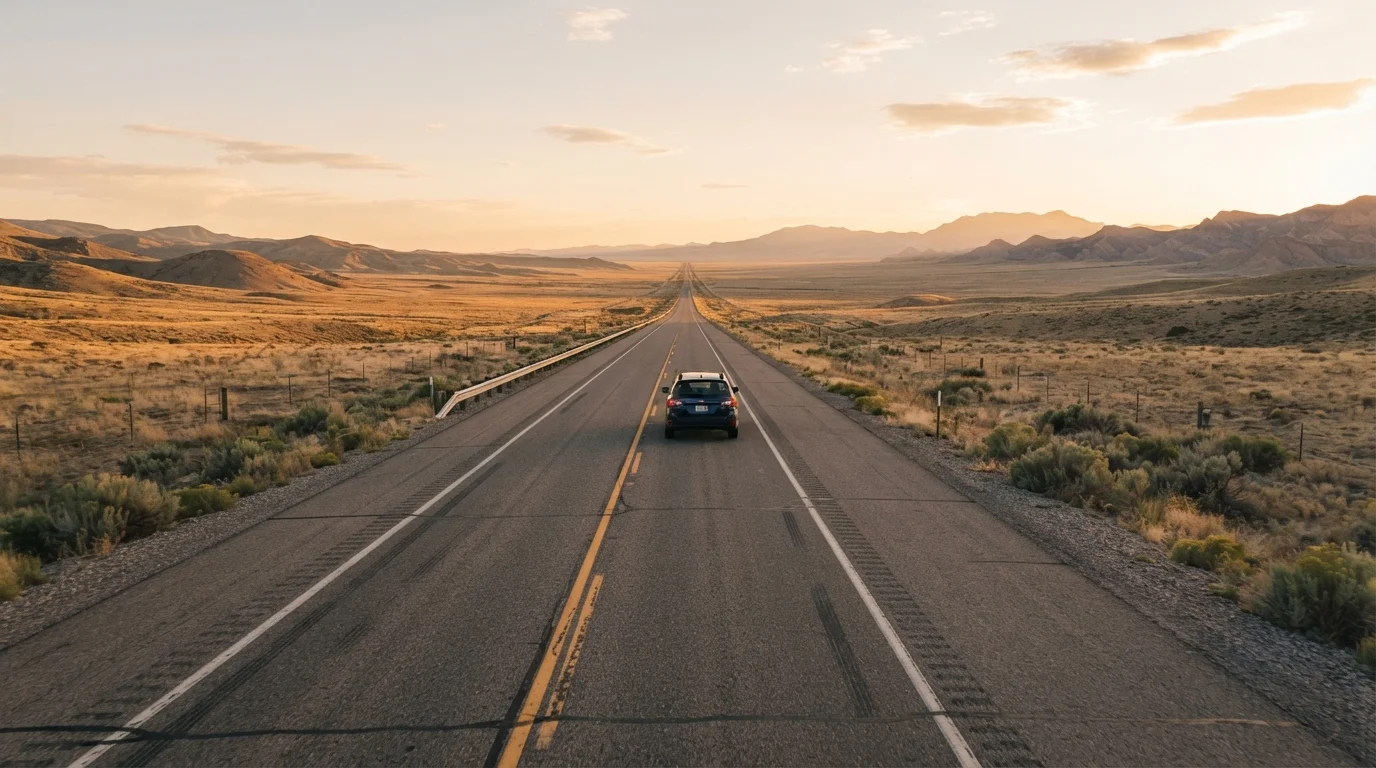
Keep highway speeds moderate - ideally between 50 and 60 mph where safe and legal.
Aerodynamic drag increases exponentially with speed. The DOE estimates that fuel economy drops off significantly above 50 mph, and every 5 mph you drive over 60 mph can cost roughly 7-14% more in fuel. On open stretches, staying in the lower legal range of speed limits is one of the highest-impact adjustments a driver can make.
Use cruise control on flat highway stretches to maintain a constant speed.
Human drivers naturally fluctuate speed unconsciously - speeding up slightly on downhills, slowing on uphills, reacting to surrounding traffic. These small oscillations add up to wasted fuel. Cruise control eliminates most of that variation on flat terrain, keeping the engine in its optimal power band.
Minimize idling - turn off the engine if you'll be stationary for more than 60 seconds.
An idling engine burns fuel while delivering zero miles of progress. The DOE estimates that idling can use a quarter to a half gallon of fuel per hour depending on engine size and air conditioning load. Modern fuel-injected engines don't need a warm-up period - idling for extended periods in driveways or drive-throughs is pure waste.
Remove roof racks, cargo carriers, and unnecessary weight when not in use.
An empty roof rack can reduce fuel economy by 6-17% at highway speeds due to aerodynamic drag, according to DOE data. Excess weight in the trunk or cabin also increases the energy required to accelerate. Stripping the car down to what you actually need for a given trip is a simple, zero-cost improvement.
For a broader look at how small behavioral shifts translate to real savings across major household costs, see our guide to high-impact habit changes.
Quick Wins to Start Today
Before adjusting anything about how you drive, there are a few immediate, low-effort actions that create the right foundation. Driving efficiently on underinflated tires or with unnecessary cargo weight partially cancels out technique improvements.
Up to 40%
Fuel economy lost to aggressive city driving
The U.S. Department of Energy estimates aggressive driving - rapid acceleration, hard braking, speeding - can cut fuel economy by up to 40% in stop-and-go traffic.
7-14%
Efficiency drop per 5 mph over 60 mph
According to DOE data, each 5 mph increment above 60 mph costs roughly 7-14% more in fuel, making highway speed one of the most controllable variables.
6-17%
Highway MPG lost to an empty roof rack
DOE testing shows an unloaded rooftop cargo box can reduce highway fuel economy by 6-17% compared to driving without it, purely from aerodynamic drag.
If you've been running on habits that may be outdated - like extended idling in winter or oil changes on a fixed short interval - our car maintenance myths article covers what the evidence actually supports.
Putting It All Together on Real Roads
The practices above work best when treated as a system rather than isolated tips. Smooth acceleration loses some of its benefit if you're simultaneously carrying 80 lbs of unused gear and running tires 8 PSI low. Think of fuel efficiency as a collection of small leaks - any one of them is minor, but several together produce a noticeable drain.
“The most effective fuel-saving technology in any vehicle is already installed - it's the driver. Behavior behind the wheel consistently outweighs hardware differences between comparable vehicles.”
— U.S. Department of Energy, Office of Energy Efficiency & Renewable Energy, fueleconomy.gov
Pair Driving Habits With Tire Basics
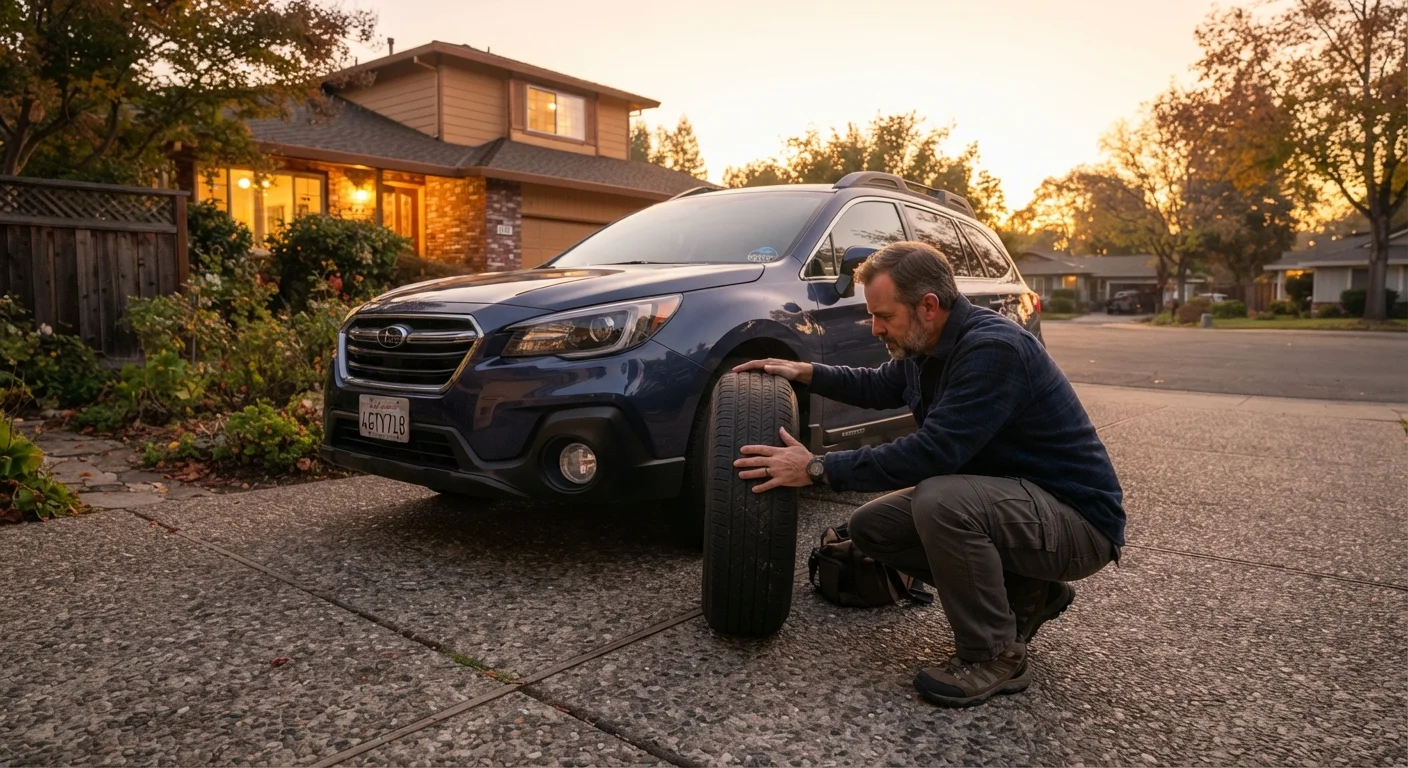
Fuel-efficient driving habits work best when paired with proper tire maintenance. Underinflated tires increase rolling resistance, quietly erasing the gains you make with smooth acceleration and steady speeds. See our tire fundamentals guide for a quick overview of pressure, tread, and rotation intervals.
Fuel efficiency also overlaps with safety and overall driving quality. Anticipating traffic rather than reacting to it - the same skill that helps you coast to stops - is also a core defensive driving principle. If you're curious about habits that quietly degrade driving quality over time, our driving habits article explores how small patterns compound. For a comprehensive foundation on vehicle ownership, the Car Ownership Basics hub is a useful reference point.
This article provides general educational information about driving behavior and fuel efficiency. Actual fuel economy results vary by vehicle, conditions, and individual driving style. Figures cited reflect U.S. Department of Energy published estimates; consult fueleconomy.gov for current data.