
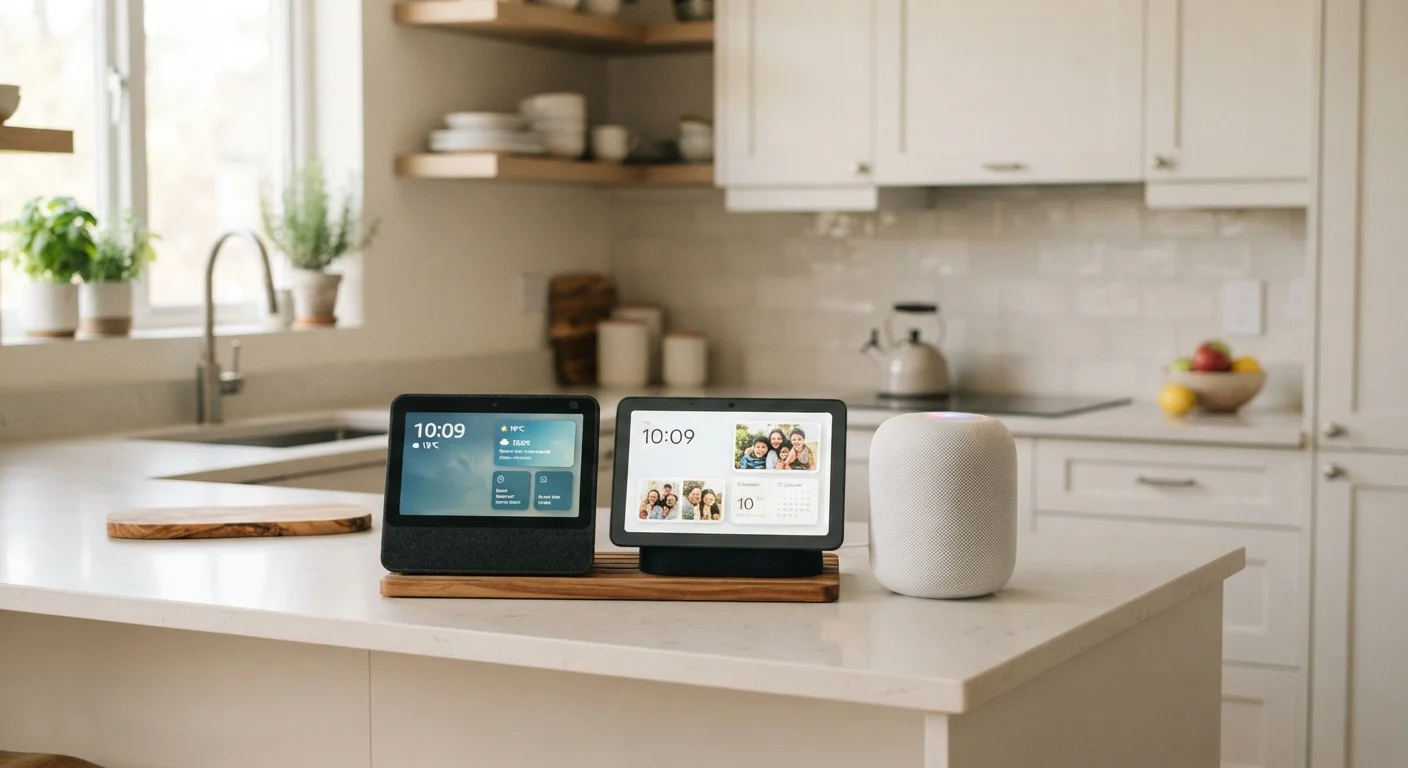
Why Your Ecosystem Choice Matters More Than Any Single Device
A smart home ecosystem is the platform - the hub, the app, and the voice assistant - that connects and controls all of your devices. Once you commit to one, every subsequent purchase tends to flow from it. Before picking a single light bulb or thermostat, it pays to understand how the three dominant ecosystems compare. If you're new to this space, our overview of what a smart home actually means is a useful starting point.
The three main contenders - Amazon Alexa, Google Home, and Apple HomeKit - each handle compatibility, privacy, automation, and voice control differently. Understanding those differences now prevents expensive regrets later.
| Amazon Alexa | Google Home | Apple HomeKit | |
|---|---|---|---|
| Device compatibility | Widest third-party library | Large, strong with Nest devices | Smaller but growing; strict certification |
| Voice assistant strength | Broad skill ecosystem | Best natural language & search | Siri; strong Apple integration |
| Privacy model | Cloud-based processing | Cloud-based processing | Mostly local; end-to-end encrypted |
| Automation depth | Feature-rich Routines | Improving visual flow editor | Clean but less complex natively |
| Required hardware | Any Echo or Alexa device | Any Google/Nest speaker | Apple TV, HomePod, or iPad as hub |
| Matter support | Yes | Yes | Yes |
| Best existing ecosystem fit | Brand-agnostic households | Android / Google Workspace users | iPhone / Mac / iPad households |
Device Compatibility: Where Each Platform Wins and Loses
Amazon Alexa has the largest library of compatible devices of any ecosystem. Thousands of third-party products - smart plugs, locks, cameras, thermostats, and appliances - carry official Alexa certification. This breadth makes Alexa the default choice for households that want maximum flexibility in what they can buy.
Google Home has a solid but somewhat smaller device catalog. It integrates seamlessly with Nest-branded hardware (Google's own line of thermostats, cameras, and doorbells) and works well with a broad selection of popular third-party devices. Android users in particular benefit from tight integration between their phone and home devices.
Apple HomeKit has historically had the strictest certification requirements, which limited the number of compatible products. That said, HomeKit's device count has grown considerably, and the arrival of the Matter standard - a cross-platform protocol now supported by all three ecosystems - is narrowing compatibility gaps. If you're planning a build-out from scratch, see our practical starting guide for new smart home setups.
Check the Label Before You Buy
When shopping for smart home devices, look for ecosystem logos on the packaging - 'Works with Alexa,' 'Works with Google Home,' or the HomeKit badge. A device marked with multiple logos gives you flexibility to switch platforms later without replacing hardware. With Matter-certified devices, cross-ecosystem support is built directly into the product.
Privacy and Data Handling: A Meaningful Difference
Privacy is a genuine differentiator across these three platforms, not just a marketing claim.
Apple HomeKit processes most commands locally on a home hub (an Apple TV or HomePod) rather than sending them to the cloud. HomeKit also requires end-to-end encryption for all accessory communication. For households with strong privacy concerns, this architecture is a notable advantage.
Amazon Alexa and Google Home rely more heavily on cloud processing. Both companies have improved transparency around voice recording storage and introduced controls to limit data retention, but the underlying model involves sending audio snippets to remote servers for processing. Both platforms offer settings to review and delete recordings.
Review Your Voice Recording Settings
Both Alexa and Google Home store voice interaction data by default to improve their assistants. If this concerns you, both platforms offer settings to auto-delete recordings on a rolling schedule or to opt out of human review of clips. Take a few minutes after setup to review the privacy dashboard in each app - these settings are not prominently surfaced during initial onboarding.
For a deeper look at how ecosystems manage data and what automation actually involves, the article on the difference between home automation and a smart home covers those distinctions clearly.
Automation, Routines, and Voice Intelligence
All three platforms support automations - rules that trigger device actions based on time, location, or sensor events. The depth and flexibility of those tools vary.
Alexa Routines are feature-rich and relatively easy to configure in the Alexa app. You can chain multiple actions, use conditional logic, and trigger routines from third-party sensors or schedules.
Google Home recently rebuilt its automation interface with a more approachable visual flow. Its voice assistant also benefits from Google's search and language model capabilities, making it particularly strong at answering natural-language questions and integrating live data like traffic or weather into routines.
Apple HomeKit Automations (managed through the Home app) are clean and reliable but have historically offered less conditional complexity than the other two. Shortcuts, Apple's broader automation tool, can extend HomeKit's capabilities significantly for users willing to invest time in setup.
If compatibility issues arise as you mix devices across brands, the guide on diagnosing smart device compatibility problems walks through common causes and fixes.
300M+
Alexa-compatible devices worldwide
Amazon has reported over 300 million Alexa-compatible devices across thousands of product categories globally.
600+
Matter-certified device types
The Connectivity Standards Alliance reported hundreds of certified Matter device types within the first two years of the standard's launch.
Choosing the Right Fit for Your Household
The most practical starting point is the hardware you already own. An iPhone user with an Apple TV already has a HomeKit hub in place. An Android user invested in Google services will find Google Home the most frictionless option. If your household has a mix of devices from various brands and no strong platform allegiance, Alexa's wider compatibility tends to reduce friction.
Budget also plays a role. Entry-level Alexa and Google Home speakers typically cost less than Apple's HomePod lineup, which may influence where you start. A room-by-room breakdown of smart home device categories can help you map out which devices you actually need before committing to an ecosystem.
Finally, consider longevity. All three platforms have committed to supporting the Matter standard, which means cross-ecosystem control is gradually improving. A device you buy today that supports Matter has a better chance of remaining useful even if you switch platforms later. For a comprehensive overview of how all these pieces fit together, see The Complete Picture: Smart Home Technology.